French
 Spanish
 Portuguese

-
 Smart Food Safe
 - No Comment
 Smart Food Safe
Your favorite star endorsing a particular food doesn’t mean that it’s safe and healthy to consume. Your food’s health factor is decided not by popularity but through the solid record history of where and how your food is grown and processed through the stages of the supply chain.
As more and more people are being aware of WHAT they consume and HOW they consume, the attention to transparency in the food industry has been a necessity like never before.
Transparency in Food Supply Chain Industries is a powerful tool to not just raise the efficiency of the industries but also to achieve sustainable health welfare among the masses.
But, what is transparency ?
Is it really necessary ? If yes, then how is it changing the game as a producer, developer and consumer?
How do we achieve it ?
What Is Transparency In the Food Industry?
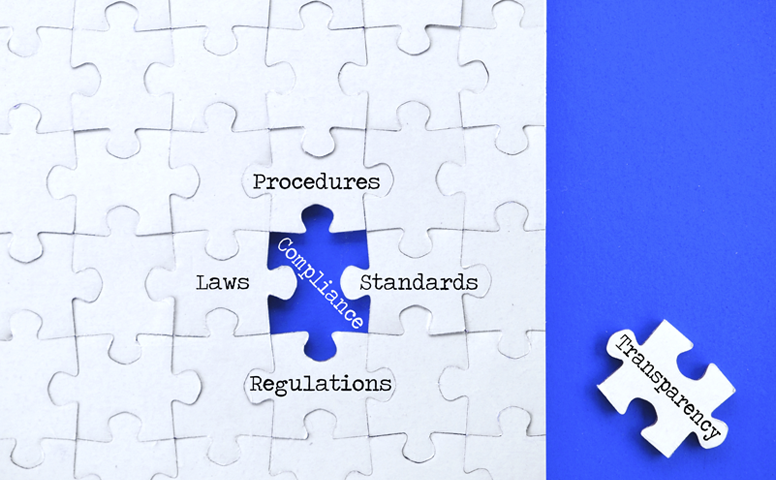
Transparency in the food industry basically means the data of the food that reaches you (ie, end consumer) being noted meticulously all along the food supply chain so that you as a consumer get to choose safer and healthier food.
For a modern consumer, transparency is not just a face-saving measure but a true essential.
“Transparency is no longer optional. It’s a basic consumer expectation.” Charlie Arnot, CEO of The Center for Food Integrity, describes the change in consumer attitudes.
This is because the food industry and modern-day shoppers have changed their approach towards food safety. As a whole, consumers have become more educated when doing their shopping and are putting that knowledge to make careful and informed purchasing decisions. Therefore, tracking the process from scratch and documenting is a need of all consumers today.
Consequences Of Ignoring Transparency Could Cost Lives!
Transparency in the food industry is a DO or DIE exercise that cannot be ignored. It is important for a company to be transparent about its operations to avoid disasters and to preserve its reputation.
One of many such incidents that happened in the past due to the lack of Transparency in Food Industry is the Chinese milk scandal.
This scandal involved milk and infant formula along with other food materials and components mixed with melamine. A chemical was used to increase the nitrogen content of diluted milk, supplying it with the appearance of higher protein content to pass quality control testing. An estimated 300,000 babies in China were sick from the contaminated milk, turned victims, primarily infants, and the kidney damage led to six fatalities.
Yanzhong Huang, a former, a former contributor to the Forbes magazine writes, ‘The incident not only damaged the reputation of China’s food exports, but also dealt a devastating blow to the booming domestic dairy industry, leading to a series of mergers and consolidations’, while revisiting the scandal.
This becomes the main reason why milk powder in Hong Kong is always in shortage, as most of them were purchased by people from mainland China.
If you thought, what transparency has to do with consumer safety? Clearly, this incident emphasizes its importance. It mirrors the disastrous damages that can happen with the lack of transparency in Food Industries. Such incidents doesn’t only put industries’ reputation at stake but also countless consumers would suffer catastrophic damages.
There are many such incidents in the past that have cost millions of lives. TRANSPARENCY is the key way to avoid any such mishaps to happen in the future.
When I say that, I can hear a few voices behind saying “It’s Impossible”. Yes, it’s impossible if you aren’t willing to evolve in the technologically advanced world.
Let go of your traditional way of managing your business because in today’s world, transparency is the foundation for your food business to strive and grow.
The Best Approach Towards Achieving Transparency Is Through Technology!
The quality standards of the food supply chain have been a matter of concern for government and regulatory authorities across the world. There used to be a lack of Transparency in the food supply chain. However, with the introduction of stringent regulations on food safety by governments, standards have risen significantly. Gone are the days when laws were lax, and food was sold without consideration for hygiene or quality standards. Brands today comply with their rules more than ever before, which raises another issue: how do they ensure smooth functioning while maintaining stringent standards? This is where technology comes into play, as it helps manage operations from a central location without compromising quality or hygiene.
With an ongoing global crisis in hygiene and safety standards, many brands are looking for ways to be transparent about their operations. Social media has made it easier to broadcast information about a brand’s progress. Achieving transparency through Food Safety Software using AI and Cloud Computing has given the food industry new tools for maintaining a safe environment.
Smart Food Safe Effortlessly Blending Technology With Transparency!
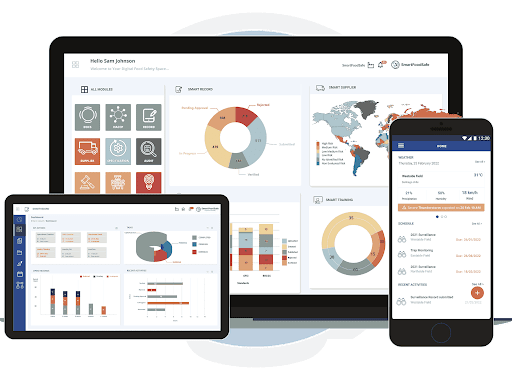
When it comes to food safety, we believe in achieving safety through software to deliver Transparency; with technology, we aim to achieve the highest standard of food safety. With 15 modules all under a single roof of Smart Food Safe to maintain and manage food safety right from the Farm to Fork the Transparency you aim for is foolproof and certain.
Replacing paper-based data collection with Smart Record-Keeping; our components bring a software developer’s power to the end-user in creating innovative templates for data collection with food safety record management that maintains activities on a day-to-day basis. The more efficient and transparent the operations become, the better chances of success there are for brands and suppliers. We have enabled our software with technologies like AI and Cloud Computing to operationalize the tasks across the supply chain seamlessly.
With every passing day to envision a healthier and safer food supply chain, we as a team focus on drafting our expertise in our software, which helps us achieve our vision.
Would you like to get an insight on what we are building to make the Food Supply Chain, Safer & Smarter?