


 English
▾
English
▾
English
▾
English
▾
Did you know that conducting a thorough gap assessment is an adequate way for food businesses to improve their chances of achieving a favorable audit result?
Gap assessment or gap analysis is a process that can help food industries identify and resolve potential quality and food safety gaps, thereby ensuring that their current way of operations meets the appropriate requirements. It is often one of the first steps for a food enterprise to implement a Food Safety Management System (FSMS).
In the food sector, gap assessment enables food industries to review their food safety and quality management systems by evaluating the present protocols and routine processes. It acts as the foundation to determine if any deficiencies or non-compliances exist and what enhancements must be made to eliminate them.
Gap assessment is usually performed in food industries to evaluate readiness for external audits such as Global Food Safety Initiative (GFSI), which provides assurance that a food company’s food safety management system works in compliance with internationally-recognized regulations and standards. Gap audits can be carried out internally in a food company or externally with a third-party gap assessment offered by certification organizations or by an independent food safety consultant to be done before running actual audits.
In conclusion, executing gap assessments in food industries is advantageous in establishing a starting point as part of the long-term plan for evolving their food safety and quality management programs (FSMP) by detecting the lacking elements and focusing on them before they become disastrous issues while also aiding in mitigating food safety risks and hazards, protecting public health, and securing compliance requirements.
There is no single set of instructions for carrying out a gap assessment covering all food industry segments. Anyhow, every gap analysis will involve defining the requirements that need to be met, benchmarking the overall processes and practices, locating areas for progress to bring compliance, and drafting a written report on where to take action. Following is a guide on how to perform gap analysis in the food industry.
“Success is where preparation and opportunity meet” is a quote that highlights the importance of being prepared to seize opportunities. Similarly, in the context of audits, proper preparation through gap assessments can be instrumental in managing audits to yield successful audit results. Let’s have a look at how gap assessment can help with audit management.
Firstly, they provide an organization with early warnings of possible issues before the audit takes place so that they can remediate them, reducing the likelihood of non-compliance and potential penalties.
Secondly, a gap assessment can assist in complying with the requirements of an audit standard, which is particularly beneficial when the business is new to a specific audit standard or has recently undergone significant changes in its operations.
Thirdly, the business can concentrate its resources and prioritize efforts on the areas or gaps grasped from a thorough gap assessment process that are most critical to attaining compliance.
Finally, when enterprises take the initiative to attend to non-conformances in advance of audits, it demonstrates their commitment to adhering to their audit standard and that they are willing to take the essential steps which help build trust with auditors.
Therefore, employing efficient gap assessment is the quick route for firms to comprehend how efficient their processes are today versus how optimized they need to be in the future, depending on which they can modify or revise their approaches for continuous improvement and stay audit ready.
Conventionally, audits are carried out using paper-based audit management systems. Several challenges are associated with this approach as they involve manual processes for documenting, tracking, and reporting on audit activities. Major challenges faced in the current audit management scenario include:
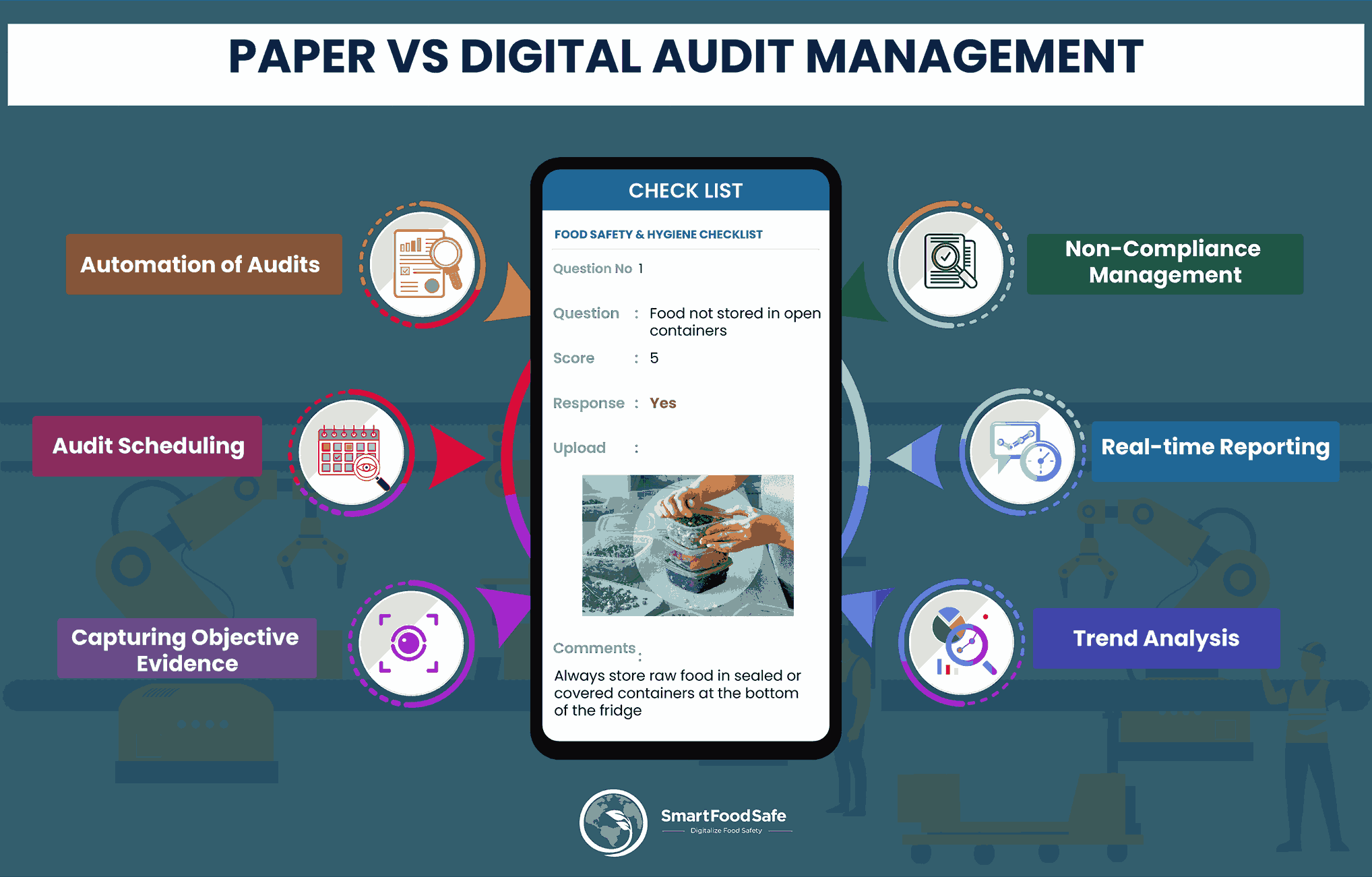
The prevalence of current challenges in audit management systems has brought forth a transformation of audit models involving a shift from traditional paper-based audit management to digital audit management systems. An audit management software simplifies the scheduling of audits by providing automated tracking and reporting features. With a centralized platform for storing audit schedules and tasks, auditors can manage their workloads more efficiently, reducing the risk of errors and delays. The software also provides reminders and notifications, ensuring that audits are conducted on time.
Digital audit management makes it easier to capture objective evidence by allowing auditors to document evidence directly in the system. This reduces the risk of errors and inaccuracies, and the evidence is readily available for review and analysis by other stakeholders.
Non-compliance management is more efficient with digital systems, providing tools for investigation, root cause analysis, and corrective action management. With a centralized platform for managing non-compliances, auditors can track and monitor non-compliances in real time, reducing the risk of any non-compliance going unresolved.
Finally, trend analysis is streamlined with digital systems, providing real-time reporting and analytics capabilities to identify patterns and trends quickly.
Overall, the transition from paper-based to digital audit management systems offers several benefits, including increased efficiency, reduced risk, and improved compliance. The adoption of audit management software has revolutionized the audit process, providing the relevant tools they need to manage their workloads more efficiently and effectively.
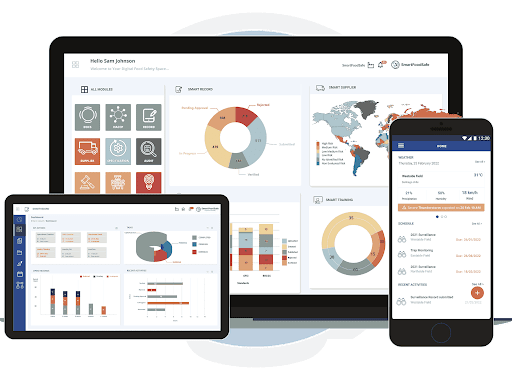
SmartFoodSafe’s Smart Audit is a vital compliance tool for achieving audit compliance across various industries. Leveraging technology, this audit management tool automates and centralizes auditing processes, ensuring accuracy, efficiency, and real-time data analysis. Smart Audit enables businesses to identify gaps, implement corrective actions promptly, and maintain regulatory compliance effectively, driving operational excellence and risk mitigation.
 French
 Spanish
 Portuguese