


 English
▾
English
▾
English
▾
English
▾

The buzz surrounding artificial intelligence (AI) is louder than ever. Even in the global food industry.
As artificial intelligence continues to reshape industries, many food manufacturers feel the pressure to act fast. Promises of streamlined supply chains, smarter formulations, and fewer compliance headaches sound too good to ignore. Yet behind these promises lies a sobering reality: without a clear strategy, many AI projects fail to deliver the returns businesses expect.
So how do you make sure your AI investment isn’t just another flashy experiment, but a value-generating engine embedded into the heart of your operations?
This article breaks down a practical approach for food businesses to filter through the noise, identify high-impact applications, and build a smart AI roadmap that delivers measurable ROI.
AI has endless possibilities, but not all of them are worth your time—or money. Start by identifying the biggest inefficiencies or cost centers in your operations. These could include demand forecasting errors, inventory mismanagement, quality control bottlenecks, or compliance reporting challenges.
AI is most effective when it solves real, high-impact problems. Instead of chasing trendy AI applications that have limited relevance to your daily operations, prioritize those that address pressing operational needs with long-term business value.
A common misconception is that AI requires massive volumes of clean, structured data to be effective. While large datasets may be needed for general-purpose language models, most operational AI tools work well with smaller, proprietary datasets—like your company’s batch records, historical sales trends, or temperature logs.
Using existing datasets allows you to move quickly, test ideas, and iterate without having to invest heavily in data infrastructure right away. Especially in food manufacturing, where operational data is often siloed, AI that can leverage fragmented but meaningful datasets can drive significant value in areas like product development, shelf-life prediction, and energy usage optimization.
One of the emerging use cases where AI adds real business value is in managing sudden supply chain disruptions. As global trade regulations and ingredient availability continue to shift, food companies are often forced to find quick replacements for key raw materials.
AI models can analyze sensory attributes, nutritional profiles, and functional properties to recommend suitable ingredient substitutes. This helps maintain product consistency, consumer expectations, and compliance with food safety and labeling regulations. By planning for volatility with AI-enabled formulation support, businesses can maintain agility without compromising quality.
AI implementation shouldn’t be an all-or-nothing approach. A balanced strategy means identifying both quick wins and long-term opportunities.
Quick wins help secure early buy-in from stakeholders and build confidence in AI adoption. But to see sustainable returns, these initiatives should be part of a broader AI roadmap that integrates into your business strategy and scales with evolving needs.
Some companies approach AI with a goal of reducing headcount or cutting labor costs. While automation can streamline repetitive tasks, over-relying on this approach can backfire—especially in industries where human judgment, creativity, and domain expertise are crucial.
AI works best when it augments the expertise of food scientists, quality assurance teams, and plant managers. For instance, AI can assist in identifying patterns that help formulation teams develop more stable products or alert operators to early signs of process deviations. Enhancing—not replacing—human capa
AI can serve as a valuable tool to meet compliance requirements. With increasing scrutiny from consumers and regulators alike, AI can serve as a valuable tool to meet compliance requirements. Whether it’s optimizing resource consumption, reducing food waste, or improving traceability, AI applications that support regulatory commitments offer dual benefits: they help meet external expectations while often reducing operational costs. For example, AI can model shelf-life dynamics to help reduce product spoilage or track carbon outputs across the supply chain.
Traditional ROI metrics don’t always capture the full picture of an AI initiative’s success. Instead of focusing solely on cost savings or revenue growth, include leading indicators like model performance, adoption rates, time saved, process improvements, and risk reduction.
AI investments often begin with smaller improvements that compound over time. For instance, reducing recall risks, improving audit readiness, or enabling faster compliance documentation may not show immediate bottom-line impact but can yield significant long-term savings and competitive advantages.
Avoid deploying AI tools in isolated departments or pilot projects that never scale. A strong ROI comes from integrating AI across systems—linking inventory data with sales forecasts, quality systems with compliance dashboards, and so on.
Choose AI solutions that are interoperable, cloud-ready, and designed to evolve with your business needs. This systems-level integration ensures that insights flow across departments, enabling smarter, faster, and more coordinated decision-making.
In the rush to adopt AI, many food businesses risk falling into the trap of investing in solutions that look innovative but lack staying power. To avoid wasted time and sunk costs, focus on solving real problems, using available data, empowering your workforce, and aligning initiatives with your business’s strategic priorities.
When AI is applied thoughtfully, it can transform how food businesses operate, compete, and grow. By anchoring your AI roadmap in operational value, measurable outcomes, and human-centric design, you ensure that your investment pays off—not just today, but in the years to come.
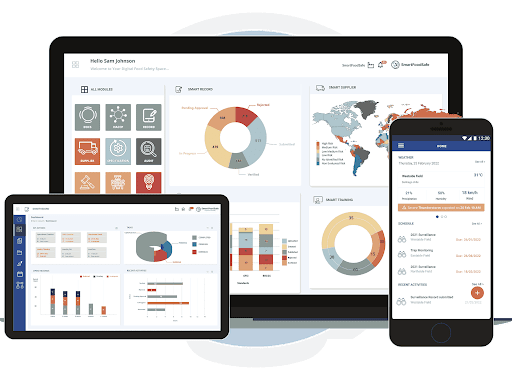
At Smart Food Safe, we have integrated AI into our core modules to help food businesses achieve the best use of AI in their operations. From data-heavy processes to real-time decision-making, our AI-enabled tools bring accuracy, speed, and intelligence into your food safety and quality systems. Here's how our AI-driven capabilities support smarter operations:
Manually reviewing Certificates of Analysis (COAs) is time-consuming and error-prone. Our AI-driven COA verification system automatically reads and interprets COAs submitted by your suppliers and instantly compares the results against your pre-defined specifications. Non-conformances are flagged in real time, allowing you to take corrective action swiftly and ensure every input meets your compliance standards.
Still working with specs buried in static PDF documents? AI technology extracts and converts specification data from PDFs into structured digital formats. This makes it easier to manage, update, and review specifications across your organization, helping you maintain a single source of truth while significantly reducing manual data entry and the risk of version control issues.
Looking for a test report, SOP, or a specific clause in a spec document? Our AI-enabled search function scans through documents, records, and databases across your Smart Food Safe system to instantly retrieve the most relevant results. It understands your query contextually, saving time and eliminating the frustration of digging through folders and files.
You no longer need to run complex queries or wait for data analysis. Our conversational AI tool allows you to ask performance or compliance-related questions in natural language—like, “Which supplier had the most non-compliances last quarter?”—and get instant answers with visual data representations. It’s like having a data analyst on standby, giving you the insights you need to make fast, informed decisions.
When a nonconformance is identified during an audit in Smart Audit, users can easily link it to Smart CAPA. This triggers the automatic creation of a CAPA record populated with relevant deviation details, enabling a smooth transition into the investigation and CAPA process.
Generate customizable templates in minutes using AI-powered prompts. Simply upload your existing Excel, Word, CSV, or PDF files—our system transforms them into editable templates for policies, procedures, or checklists that you can further refine as needed.
These features are not one-time solutions but forward-looking capabilities designed to evolve with your business, reduce manual effort, and support data-driven food safety and quality management in the long term.
 French
 Spanish
 Portuguese