


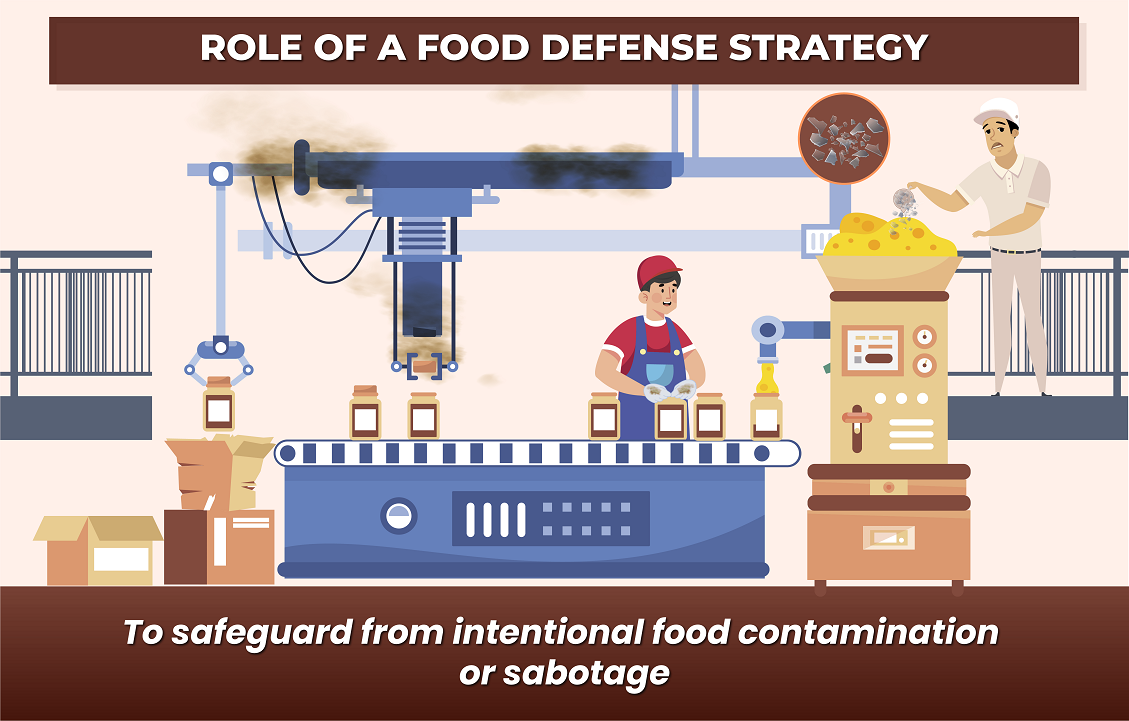
A highly disturbing incident back in October 2022 depicted a factory worker “knowingly and maliciously” contaminated food destined for Nando’s by putting plastic bags, rubber gloves, and metal rings while working at a Worcestershire food manufacturer.

Reference: https://www.bbc.com/news/uk-england-hereford-worcester-66997510
This is a classic example of intentional food adulteration with an ideologically driven motive of harming, that happened in the contemporary scenario of food production and processing. It ushers the importance of establishing a powerful food defense system in any food business enterprise.
History of Food Defense
The genesis of modern food defense concerns in the United States can be traced back to the aftermath of the tragic terrorist attack on September 11, 2001. This pivotal event underscored the vulnerability of food supply chains to deliberate acts of sabotage and terrorism. In response, the Public Health Security and Bioterrorism Preparedness and Response Act of 2002, commonly known as the Bioterrorism Act, was swiftly enacted.
This landmark legislation empowered the Food and Drug Administration (FDA), in collaboration with U.S. Customs and Border Protection (CBP), with enhanced authority to safeguard the nation’s food supply against malevolent acts and emerging threats. Among its provisions was the mandate to fortify food safety measures and strengthen defense mechanisms.
In alignment with this directive, various institutions emerged across the United States dedicated to shielding agricultural and industrial systems from potential terrorist incursions. Notable among these is the Food Protection and Defense Institute, established in July 2004 under the auspices of the University of Minnesota. It was conceived with a mission to fortify food safety systems through rigorous research and educational initiatives.
A milestone in the evolution of food defense occurred in anticipation of the 2012 Olympics in London. Prior to the global event, stringent measures were enacted necessitating all food suppliers to implement comprehensive risk-based analysis and prevention plans. These measures aimed to preempt deliberate contamination and mitigate the looming specter of terrorism.
Over time, the conceptualization of food defense has undergone refinement, resulting in clearer and more concise definitions that resonate across diverse food institutions. This evolution reflects a concerted effort to adapt to emerging threats and uphold the integrity of today’s global food systems.
Significant Definitions of Food Defense
- In 2014, the British Institute for Standardization (BSI) released a “Guide to protecting and defending food and drink from deliberate attack”. This guide outlines food defense as a set of measures and protocols aimed at ensuring the safety of food and beverages, along with their supply chains, against deliberate and ideologically motivated attacks that could result in contamination or supply disruptions.
- Shortly after, the PAS 96:2017 states that food defense represents adopted procedures to ensure food and beverage security, as well as their supply chain from malicious and ideologically driven attacks that lead to contamination or disruption of supply.
- According to USDA FSIS, food defense is the protection of food products from contamination or adulteration intended to cause public health harm or economic disruption.
- The GFSI definition of food defense is the process of ensuring the security of food and drink from all forms of intentional malicious attack including ideologically motivated attacks leading to contamination.
- FDA’s FSMA Final Rule for Mitigation Strategies to Protect Food Against Intentional Adulteration demonstrates food defense as the effort to protect food from intentional adulteration from acts intended to cause wide-scale harm to public health, including acts of terrorism targeting the food supply.
Developing a Functional Food Defense Plan
An establishment can employ a functional food defense plan as a crucial measure to prevent, safeguard against, lessen the impact of, address, and recuperate from any deliberate contamination event. The main goal of a food defense plan is to lower the opportunities as much as possible for such contamination to take place through:
- Identifying Vulnerabilities
- Implementing Controls
- Training and Awareness
- Emergency Response
As per USDA FSIS, setting up a functional food defense plan involves:
Step 1: Develop your food defense plan
The plan must be formally documented and signed, outlining mitigation strategies and protective measures. Conducting vulnerability assessments aids in identifying areas requiring mitigation strategies.
Step 2: Implement mitigation strategies and protective measures
Mitigation strategies and protective measures identified in the plan should be put into action to safeguard facilities, personnel, and operations.
Step 3: Test the mitigation strategies and protective measures
Regular testing of the food defense plan, preferably annually, is essential. Testing can involve verifying the functionality of implemented measures, such as locks and cameras.
Step 4: Review and maintain
Regular review and maintenance are crucial to keep the food defense plan current and effective. Annual reviews are recommended, with adjustments made as necessary based on routine monitoring, exercises, real-world incidents, or other changes.
However, implementing a food defense plan is equally paramount as adhering to food defense regulatory requirements, amplifying the importance of following standardized protocols consistently across the food sector. Compliance not only promotes a culture of safety and vigilance within food establishments but also fosters resilience against potential threats, ultimately upholding the fundamental right to access safe and secure food.
Comparison of Different Regulatory Body Requirements for Food Defense
Food Defense Guidelines Based on IFS Food Version 8 (Active from 01.01.2024)
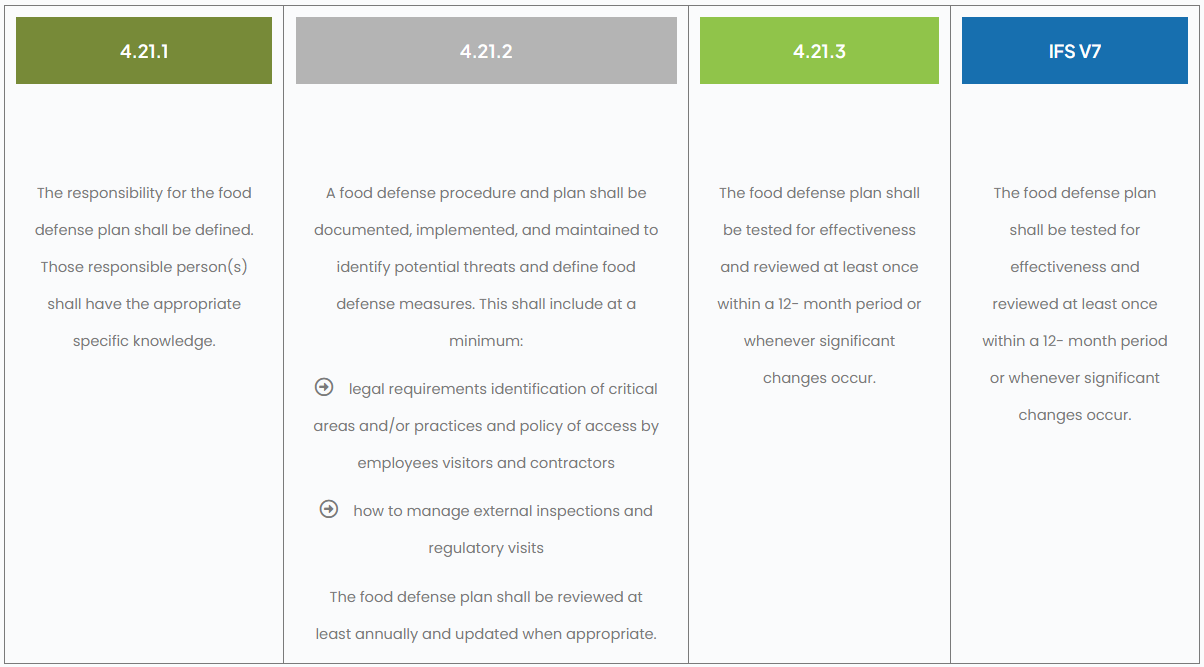
Reference: https://www.ifs-certification.com/images/ifs_documents/IFS_Food_v8_standard_EN_1711635033.pdf
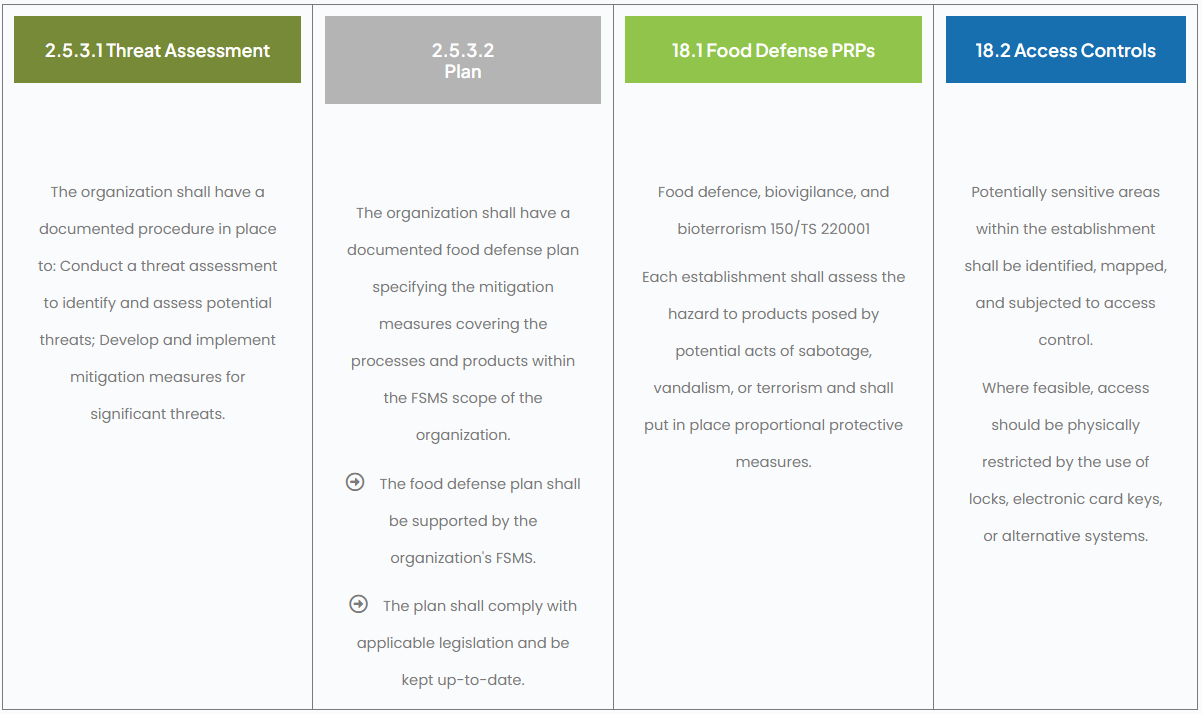
Food Defense Guidelines Based on FSSC 22000 Version 6 (Active from 01.04.2024)
2.5.3 Food Defense / FSSC 22000 Additional Requirements
Food Defense Guidelines Based on BRC Issue 9 (Active from 01.02.2024)
4.2 Site Security and Food Defence
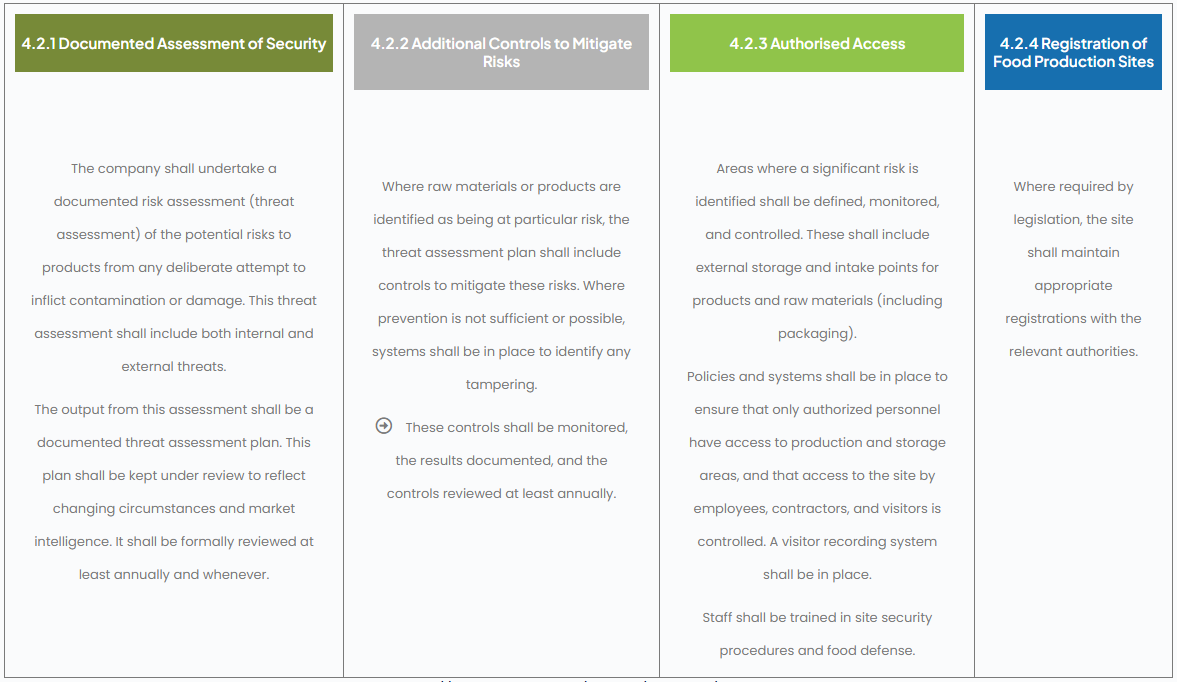
Reference: https://www.brcgs.com/media/2170948/fsi9-gn-sample.pdf
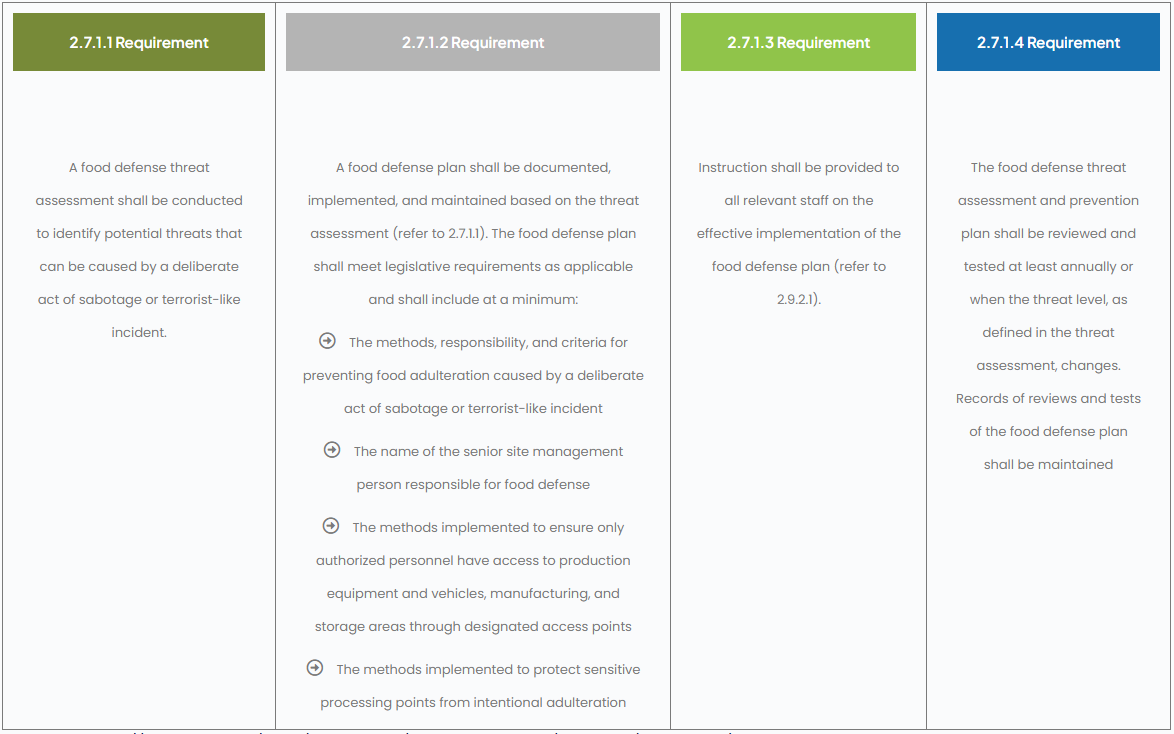
Food Defense Guidelines Based on SQF Code Edition 9 (Active from 24.05.2021)
2.7 Food Defense and Food Fraud / 2.7.1 Food Defense Plan
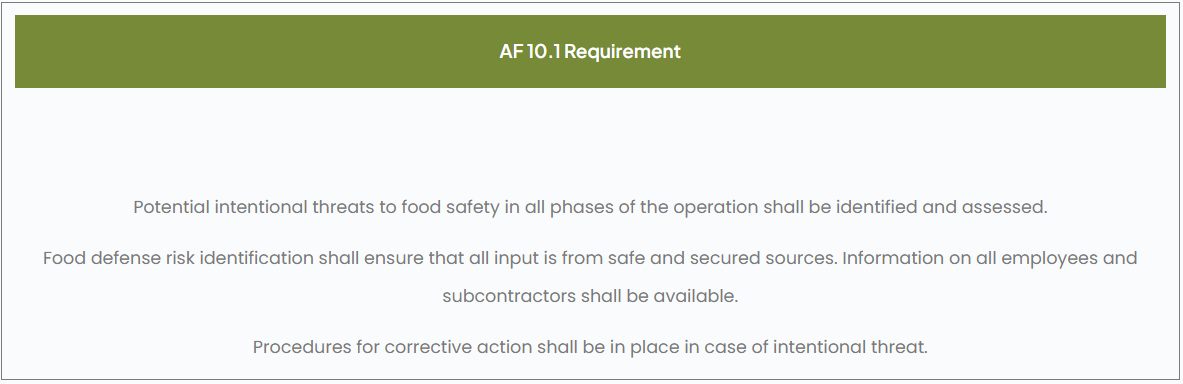
Food Defense Guidelines Based on Global G.A.P Version 6 (Active from 01.01.2024)
AF10 Food Defense
Empower Your Food Defense Compliance with Smart Food Safe’s Smart Docs
In the perpetually transforming scene of food defense compliance, staying ahead requires more than just diligence—it demands innovation. Smart Food Safe’s Smart Doc enables food businesses to fortify their food defense strategies, mitigate risks, and uphold the highest standards of safety and security. With Smart Doc, you can navigate the complexities of food defense compliance with confidence, knowing that your documents are not just managed, but mastered.