


 English
▾
English
▾
English
▾
English
▾
"A stitch in time saves nine."
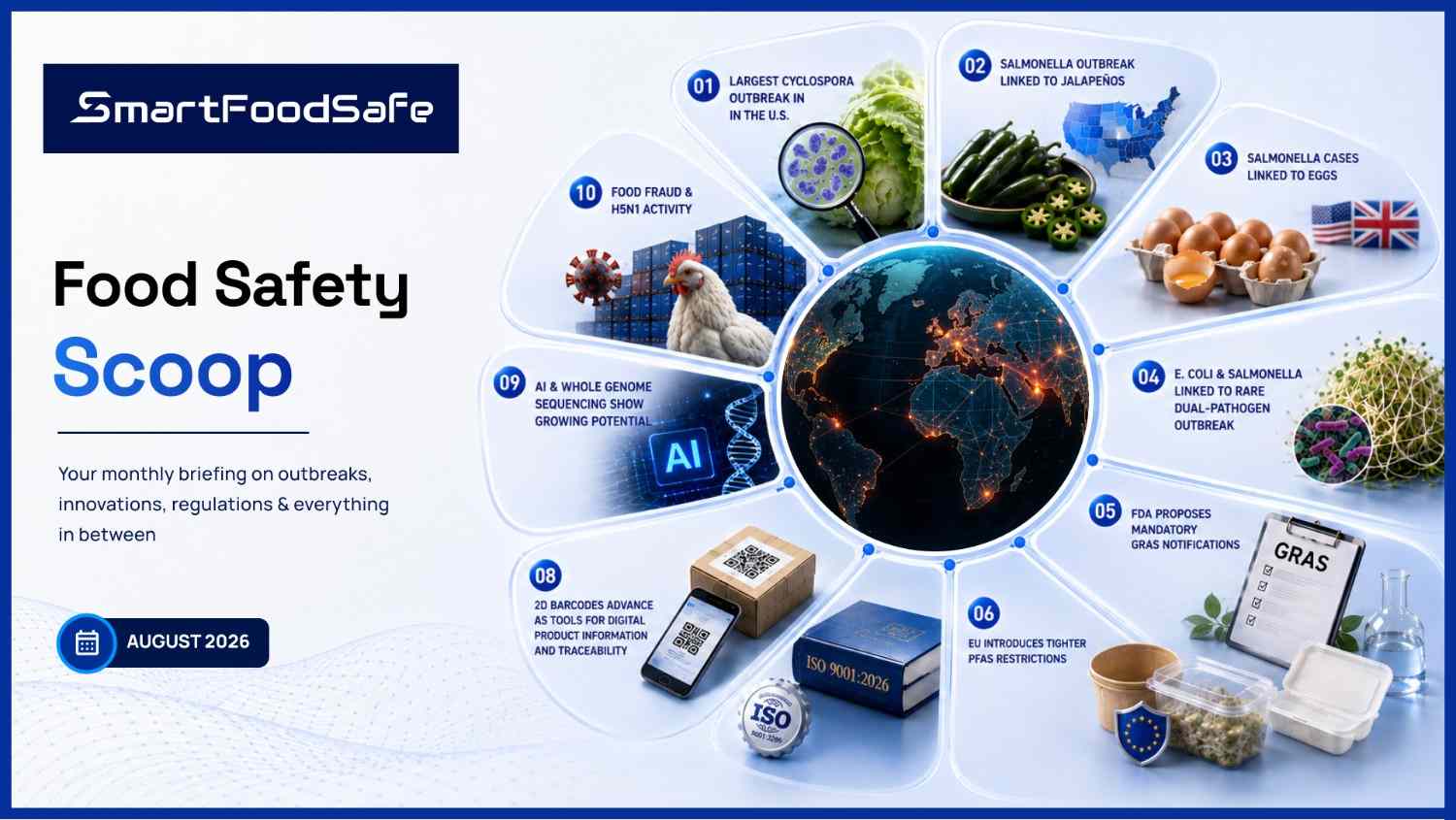
In food safety, staying ahead often begins with paying attention to the signals before they become serious concerns. August brought plenty of those signals, from emerging foodborne risks and regulatory shifts to changing approaches across the global food supply chain.
Here's a concise roundup of the food safety news and developments that shaped August 2026, bringing together the stories worth knowing and the changes worth watching.
August brought several developments with implications for food manufacturers, suppliers, retailers and food safety professionals:

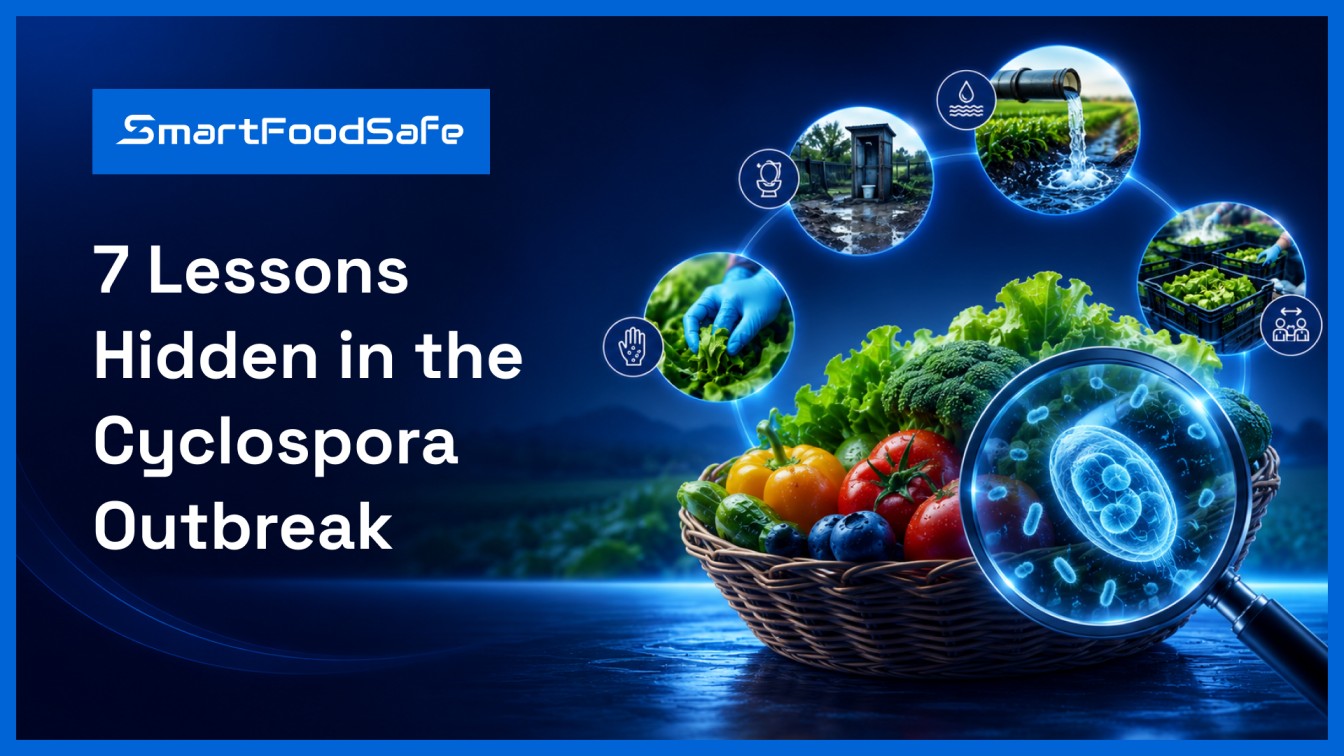
The U.S. Cyclospora outbreak linked to iceberg lettuce expanded to 20 states in August, with confirmed illnesses reaching 11,458, including 495 hospitalisations and two deaths. Georgia, Tennessee and Texas were added to the investigation in the latest update.
What makes the outbreak especially striking is how difficult it is to capture the full picture in real time. CDC says it can take about six weeks to determine whether a person with Cyclospora is part of an outbreak, meaning the numbers can continue rising even after the contaminated food is no longer on the market.
 Also Read
7 Food Safety Gaps Every Produce Business Should Address Before the Next Outbreak
Also Read
7 Food Safety Gaps Every Produce Business Should Address Before the Next Outbreak
A Salmonella Javiana outbreak linked to jalapeño peppers from Sinaloa, Mexico reached 431 illnesses across 32 states in August, with 57 people hospitalized. Investigators found that 91% of the 224 people interviewed had eaten at a Mexican-style restaurant before falling ill, while 28 illness clusters were identified across eight states.
The investigation has since triggered recalls of the peppers and a range of prepared foods containing them. The episode shows just how much reach a single ingredient can have once it enters foodservice, with the same raw material potentially ending up in salsas, guacamole, burritos, salads and other ready-to-eat foods across multiple locations.
Three Salmonella Enteritidis clusters in England reached 474 confirmed cases and two deaths by August 25, with health authorities investigating a possible link to imported eggs used across cafés, restaurants and takeaway businesses. The largest cluster accounted for 259 cases and one death.
The investigation has uncovered a wider connection through whole genome sequencing and supply-chain evidence, linking the clusters to one another and one back to a 2025 outbreak also associated with imported eggs. With the source still under investigation, the episode shows how pathogen sequencing can connect outbreaks across different time periods and help investigators follow contamination beyond the point of sale.
An outbreak linked to alfalfa sprouts sickened 55 people across 15 U.S. states, with cases involving both E. coli and Salmonella. Two people were infected with both pathogens, making the incident particularly unusual. With sprouts requiring warm, moist conditions to grow, the outbreak once again puts this high-risk commodity under the food safety spotlight.
Canada's food safety authorities issued Listeria-related recalls for ready-to-eat foods in August, including charcuterie products in Quebec.
The concern goes beyond a single recall. Listeria can survive and grow under refrigeration, allowing contamination to persist in foods that are stored cold and eaten without further cooking. For ready-to-eat manufacturers, this makes strong sanitation and environmental controls critical to keeping contamination from reaching the finished product.
A four-case infant botulism outbreak linked to powdered infant formula was declared over in August, but the investigation uncovered a much bigger story. Whole genome sequencing matched a patient sample from the 2026 outbreak with samples from a separate 2025 formula outbreak, while traceback evidence pointed to a common milk supplier and spray-drying facility.
The connection shows how genomic evidence can reveal contamination links that span different outbreaks and years, giving investigators a clearer path back through the supply chain. The exact point where contamination occurred remains under investigation.

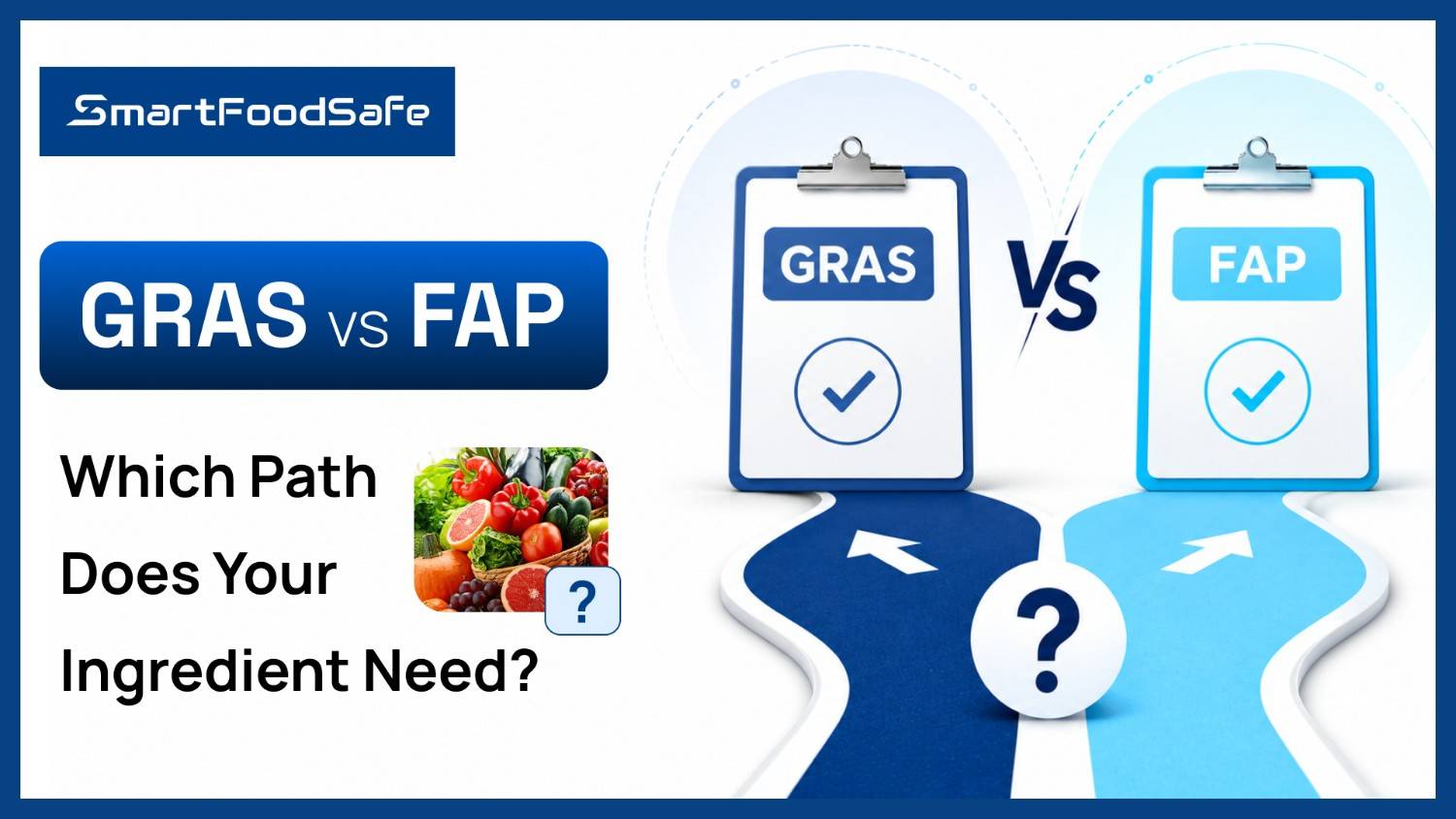
The FDA is proposing to replace its voluntary GRAS notification system with a mandatory one, requiring companies to notify the agency when they determine that a substance is Generally Recognized as Safe for use in food.
The change would give FDA and the public far greater visibility into substances entering the food supply, including the scientific evidence and documentation behind GRAS decisions. It would not introduce premarket approval for GRAS substances, but could make it harder for safety decisions to remain outside the agency's view. Comments on the proposal are open until December 9, 2026.
 Also Read
FDA GRAS vs Food Additive Petition (FAP): A Complete Guide for Food Manufacturers
Also Read
FDA GRAS vs Food Additive Petition (FAP): A Complete Guide for Food Manufacturers
The FDA is reviewing three petitions involving gardenia blue, safflower extract and carrot oil, potentially expanding the range of naturally derived colors available to food manufacturers. The proposals include new uses for gardenia blue and safflower, along with changes to how carrot oil is produced.
The developments come as U.S. food makers face growing pressure to replace petroleum-based synthetic dyes, expanding the natural-color palette to become an increasingly important part of product reformulation. More approved options could give manufacturers greater flexibility to replace synthetic colors without sacrificing the shades consumers expect.
From August 12, the EU's Packaging and Packaging Waste Regulation (PPWR) began restricting PFAS in food-contact packaging, with packaging at or above specified limits no longer allowed on the EU market.
The move puts tighter controls on so-called "forever chemicals" used in items such as takeaway containers, wrappers and grease-resistant food packaging. For food businesses, the change makes packaging materials another important part of supplier compliance and food-contact safety, particularly for products sold across the EU.
Food Standards Australia New Zealand approved chitosan extracted from white button mushrooms for use as a processing aid in wine, beer, cider and other alcoholic beverages.
The approval adds a mushroom-derived alternative to conventional processing aids, showing how ingredients from familiar food sources are finding new applications in food and beverage production.
At the GS1 Hong Kong Food Safety Forum, 2D barcodes took centre stage as a way to make product information more connected and useful. Instead of simply identifying a product, a single scan can link to details such as certification, traceability and sustainability information.
For food businesses, that shift could make traceability data easier to access at every stage of the supply chain, while giving consumers a clearer view of what sits behind the product in their hands.
Cardiff Metropolitan University has secured £176,000 in funding to explore how AI and behavioural science could improve food hygiene in workplaces and homes. The project will look at whether AI can identify unsafe practices, prompt corrective action and strengthen everyday hygiene habits.
The idea is a notable shift in food safety technology: using AI not just to detect hazards, but to understand the behaviours that create them in the first place.
Whole genome sequencing played a key role in August investigations, helping UK health officials identify a closely related Salmonella strain across hundreds of cases and connect it to an earlier outbreak.
By comparing the DNA of pathogens from different patients, investigators can spot links across time and geography much earlier, narrowing the search for a common source and helping outbreaks move from scattered cases to a clearer picture.
Food fraud sits at the core of most food safety management systems, and the UK offered a timely reminder why: on August 20, officers from the Food Standards Agency's National Food Crime Unit, supported by the Metropolitan Police, arrested a 34-year-old man in Essex on suspicion of fraud by false representation. The case centred on 55 bottles of suspected counterfeit wine sold to a single victim for nearly £10,000 a bottle, totalling more than £500,000. Economically motivated adulteration is exactly the kind of risk covered under GFSI-aligned food fraud vulnerability assessments, and cases like this are a useful prompt to revisit how current those assessments really are.
An early-August livestock disease update flagged a fresh commercial poultry outbreak in Germany and a summer flare-up in Utah that has pushed the state's 2026 commercial poultry H5N1 total past 1.4 million birds. New Zealand also confirmed its first-ever H5N1 detection, in a wild seabird found in Wellington in mid-July, underscoring how quickly the virus is establishing itself in new regions. It's a reminder that the egg recalls covered above aren't happening in isolation. Upstream animal-health risk remains one of the bigger pressures on poultry and egg supply chains going into autumn.
August 2026 showed just how many moving parts go into keeping food safe, from lab-based genomic sequencing to the age-old advice about washing and cooking produce properly. Regulators in the US, EU, UK, and Asia-Pacific all moved forward on rules designed to build more trust into the system, while new technology, from AI-assisted hygiene training to next-generation barcodes, is making that trust easier to earn. Outbreaks closed even as new ones opened, but the tools available to catch and stop them keep getting sharper, and that's genuinely worth feeling good about heading into September, when a new ISO quality standard arrives and the food safety conversation keeps going.

 French
 Spanish
 Portuguese