


 English
▾
English
▾
English
▾
English
▾
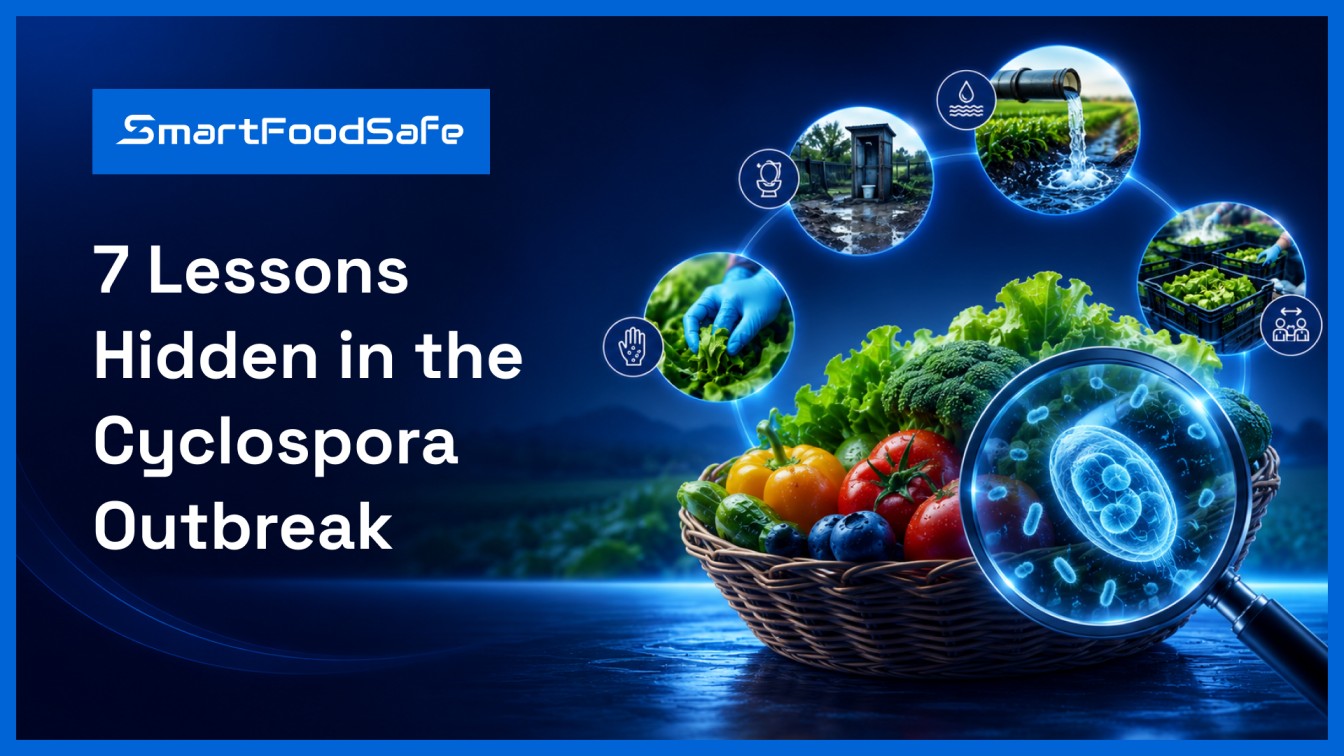
Every foodborne illness outbreak begins with a search for answers. Investigators trace supply chains, analyse laboratory findings, review patient interviews, and reconstruct the journey of food to identify where contamination entered the system. As evidence unfolds, recalls are initiated, public health advisories are issued, and businesses across the supply chain come under increasing scrutiny.
Yet, is finding the source enough?
Perhaps the more important question is not where contamination occurred, but why the conditions that allowed it to happen existed in the first place.
While investigations help contain immediate risks, their greatest value lies in exposing the weaknesses that often remain hidden until consumers become ill. They challenge the industry to look beyond the outbreak itself and reassess whether existing preventive controls are truly keeping pace with today's increasingly complex produce supply chains.
The current Cyclospora outbreak is one such moment. Even as investigators continue to gather scientific evidence, it has already reignited conversations around agricultural water quality, field sanitation, supplier oversight, traceability, and the effectiveness of preventive food safety systems. More importantly, it reminds us that food safety is not built during an investigation. It is built every day, through the decisions made long before fresh produce reaches consumers.
In this article, we explore seven critical food safety gaps the current Cyclospora outbreak has brought into sharper focus and examine how produce businesses can strengthen their preventive controls before the next outbreak becomes tomorrow's headline.
Not all foodborne hazards behave the same way, and Cyclospora is a prime example. Cyclospora (Cyclospora cayetanensis) is a microscopic parasite that causes cyclosporiasis, a gastrointestinal illness most commonly associated with contaminated fresh produce and water. Unlike bacterial pathogens such as Salmonella or Listeria, it follows a unique life cycle that makes both prevention and outbreak investigations significantly more challenging.
One characteristic sets Cyclospora apart from many other foodborne pathogens. The parasite is not immediately infectious when excreted. It must first mature in the environment over several days before it can infect another person. As a result, contamination is more commonly linked to environmental sources such as contaminated agricultural water or poor sanitation during cultivation than to direct person-to-person transmission or contamination during food preparation.
This biological behaviour shifts the focus of food safety from the processing facility to the field, where preventive controls have the greatest impact.
Fresh produce is often consumed raw, leaving little opportunity to eliminate contamination before it reaches consumers. By the time fruits and vegetables are harvested, packed, transported, and displayed on retail shelves, the opportunity to prevent Cyclospora contamination may already have passed.
For produce businesses, this reinforces the importance of robust agricultural water management, effective sanitation programmes, worker hygiene, and preventive food safety practices throughout primary production.
Fresh fruits and vegetables are among the healthiest foods available to consumers, but they are also among the most susceptible to contamination. Unlike foods that undergo cooking or other thermal processing, many produce items are consumed raw, leaving little opportunity to eliminate pathogens before they reach the consumer.
For Cyclospora, this makes prevention especially challenging. Once contamination occurs in the field, it may remain on the product throughout harvesting, packing, transportation, and retail distribution.
Each of these pathways highlights the importance of preventive controls well before produce reaches a processing facility or retail shelf.

Over the years, Cyclospora outbreaks have been associated with a variety of fresh produce, including leafy greens, herbs such as cilantro and basil, berries, and salad vegetables. While the specific commodity may vary from one outbreak to another, the underlying challenge remains the same.
Fresh produce is grown in open environments where exposure to water, soil, weather, wildlife, and human activity cannot be completely eliminated. As a result, the industry's strongest defence lies not in detecting contamination after harvest, but in preventing it through effective agricultural practices, sanitation, and risk-based food safety programmes.
Delayed Symptoms Make Traceback Difficult
Unlike many foodborne illnesses that appear within hours, cyclosporiasis usually develops about a week after contaminated food is consumed. By then, most people are unlikely to remember every ingredient in a meal, making it difficult for investigators to identify a common source. Fresh produce may also have been consumed, discarded, or distributed across multiple locations, adding another layer of complexity to traceback investigations.
Why Investigations Take Time
Outbreak investigations are rarely solved through a single laboratory result. They rely on the careful integration of epidemiological data, traceback records, laboratory analysis, and environmental assessments to build a complete picture of what happened. The current FDA investigation illustrates this well. An initial laboratory finding that suggested the presence of Cyclospora in a lettuce sample was later determined to be a false positive, reinforcing why preliminary findings must always be interpreted alongside other lines of evidence.
Every Cyclospora outbreak leaves two kinds of damage behind. One is measured in illnesses, recalls, and financial losses. The other is measured in something far more difficult to recover: trust. While operations can resume and products can return to shelves, rebuilding consumer confidence often takes much longer. That is why outbreaks should be viewed not only as public health events, but as critical tests of the resilience, transparency, and strength of food safety systems.
The following seven gaps represent some of the most significant opportunities for strengthening produce safety, improving resilience, and reducing the likelihood of future outbreaks.
Contamination is far easier to prevent than to eliminate. Because fresh produce is often consumed raw, the most effective controls begin in the field, not after harvest. Agricultural water quality, worker hygiene, and field sanitation play a critical role in reducing risk.
What produce businesses should do:
When an outbreak occurs, every hour matters. Delayed or incomplete traceability can slow investigations, expand recalls, and increase business disruption. Effective traceability is no longer just about compliance. It is about making informed decisions quickly.
What produce businesses should do:
A supplier certificate confirms compliance at a point in time. It does not guarantee that risks are consistently managed throughout the growing season. Strong supplier relationships require continuous communication, transparency, and risk monitoring.
What produce businesses should do:
Water is one of the most common pathways through which Cyclospora can enter fresh produce. As climate conditions and water sources change, managing water quality has become one of the industry's most important preventive controls.
What produce businesses should do:
Procedures alone do not prevent outbreaks. People do. A positive food safety culture encourages employees to report concerns, follow procedures consistently, and recognise that food safety is everyone's responsibility.
What produce businesses should do:
Also Read: Food Safety Culture as a Behavioural Phenomenon: Shaping Safer Outcomes Through Due Diligence
During an outbreak, how a business communicates can be just as important as how it responds operationally. Clear, timely, and transparent communication helps maintain confidence while investigations continue.
What produce businesses should do:
Meeting regulatory requirements is essential, but preventing future outbreaks requires continuous improvement. Businesses that invest in stronger systems, better visibility, and proactive risk management are better prepared for emerging food safety challenges.
What produce businesses should do:

Every outbreak eventually fades from the headlines. Investigations conclude, reports are published, and supply chains gradually return to normal. What should never return to normal, however, is the way we think about food safety.
The current Cyclospora outbreak reminds us that contamination is rarely the result of a single mistake. More often, it is the consequence of small gaps left unnoticed, assumptions left unquestioned, and risks left unmanaged until they find an opportunity to surface.
Perhaps that is the real lesson.
Food safety is not defined by how effectively an organisation responds to an outbreak. It is defined by the countless decisions made long before one ever occurs. Every choice to strengthen preventive controls, improve traceability, protect agricultural water, verify suppliers, or encourage a stronger food safety culture becomes part of a much larger promise, one that consumers rarely see, but trust every time they purchase fresh produce.
The produce industry may never eliminate every hazard. But it can choose to build systems that make hazards harder to reach consumers and easier to identify before they do.
The true measure of a food safety system is not how well it explains the last outbreak. It is whether the next outbreak finds fewer opportunities to happen.

 French
 Spanish
 Portuguese