



SQF Edition 10 audits are anticipated to begin on January 2, 2027, subject to the completion of the Global Food Safety Initiative (GFSI) benchmarking process. For food manufacturers, this makes the coming months an important time to review their Environmental Monitoring Programs (EMPs) and identify areas that need attention.
But here’s an important question: How effectively does your Environmental Monitoring Program identify contamination risks and verify that sanitation controls are working?
A negative swab result does not establish that a facility is free from contamination. It only indicates that the target microorganism was not detected in the particular sample collected and tested under the conditions of that analysis.
An effective EMP must go beyond routine sampling. It should help manufacturers assess environmental risks, identify recurring contamination patterns, investigate potential contamination pathways and determine whether corrective actions are working.
While SQF Edition 9 already required risk-based environmental monitoring, Edition 10 makes several expectations more explicit. These include documented risk assessment, annual program evaluation, detailed sampling schedules, defined acceptance criteria and appropriate responses to unsatisfactory results and trends.
What Is Changing Under SQF Edition 10?
Environmental Monitoring is addressed under Clause 2.4.8, which is designated as a Core Clause in Edition 10. This makes effective implementation particularly important, as non-conformances against Core Clauses carry greater scoring consequences.
The updated expectations call for manufacturers to demonstrate not just that environmental samples are collected, but that their monitoring programs are appropriately designed, documented, implemented and reviewed.
Here are five key areas to examine before your next SQF audit.
1. Establish a Documented, Risk-Based Environmental Assessment
A routine sampling plan may not accurately reflect the contamination risks within a facility.
Under Clause 2.4.8, manufacturers must establish a documented, risk-based environmental monitoring program covering food manufacturing processes and the immediate surrounding areas that may affect them. The program must be evaluated annually and when trends or other changes could affect product safety.
The assessment should help determine the level of monitoring required based on the facility’s actual risk profile.
Depending on the operation, relevant considerations may include:
- Product characteristics and pathogen growth potential.
- Exposure to the processing environment after a lethality step.
- Facility layout, hygiene zoning and production flow.
- Moisture, condensation, drains and difficult-to-clean equipment.
- Previous positive results and contamination history.
For example, a ready-to-eat facility handling products exposed to the environment after a lethality step may require more intensive monitoring than a low-moisture food manufacturing facility.
What to review: Check whether your risk assessment reflects current products, processes, facility conditions and historical findings. Ensure that changes and emerging trends trigger a reassessment when product safety could be affected.
2. Document EMP Responsibilities and Sampling Methods
An environmental monitoring program needs more than a list of sampling locations. Employees must understand who is responsible for collecting samples, how sampling should be conducted and how results are recorded and communicated.
SQF Edition 10 requires the responsibilities and methods for the environmental monitoring program to be documented and implemented.
Your documented procedures should clearly establish:
- Personnel responsible for sampling, testing and reviewing results.
- Sampling procedures and methods.
- Applicable laboratory testing arrangements and analytical methods.
- Procedures for recording and communicating environmental results.
The sampling approach should also be scientifically appropriate for the target organisms and the surfaces being tested.
What to review: Ensure responsibilities are clearly assigned and employees follow consistent, documented procedures. Review whether sampling methods, laboratory arrangements and recordkeeping practices are adequately defined.
3. Define Sampling Schedules and Acceptance Criteria
Sampling the same locations at fixed intervals may leave potential contamination sites undetected. An effective sampling schedule must reflect the risks identified in the facility’s assessment.
Under Edition 10, the documented sampling and testing schedule should specify:
- Target organisms: Applicable pathogens or indicator organisms based on the site’s hazard analysis.
- Sample numbers and frequency: How many samples must be collected and how often.
- Sampling times: When samples should be collected, such as pre-operational, post-operational or during production.
- Sampling locations and rotation: Where samples will be collected and how locations will be rotated.
- Acceptance criteria: The criteria used to evaluate environmental testing results.
- Result handling: How elevated or undesirable findings will be addressed.
Hygiene zoning can help manufacturers organize their sampling locations:
- Zone 1: Direct food-contact surfaces, such as conveyors, slicers and worktables.
- Zone 2: Surfaces immediately adjacent to food-contact areas.
- Zone 3: Surrounding production areas, including nearby floors, drains and corridors.
- Zone 4: Remote areas, such as warehouses, locker rooms and loading docks.
For a closer look at how these zones help control cross-contamination, read our guide to Hygiene Zoning in Food Manufacturing: How to Prevent Cross-Contamination.
Sampling time is equally important. SQFI’s Environmental Monitoring Guidance Document (March 2026) recommends collecting samples during production rather than immediately after cleaning and sanitizing, when microbial detection may be less likely. Additional for-cause sampling may also be appropriate following equipment breakdowns, water leaks or changes in production conditions.
What to review: Reassess your sampling schedule to ensure it reflects the facility’s risk profile, identifies appropriate testing criteria and defines how undesirable results will be handled.
4. Strengthen Result Trending and Corrective Actions
Collecting laboratory results is only useful when manufacturers know how to interpret them and respond to emerging concerns.
Edition 10 requires environmental testing results to be monitored, tracked and trended. This helps food safety teams recognize recurring contamination patterns that individual laboratory reports may not reveal.
Pay attention to:
- Positive results by organism and sampling zone.
- Repeated detections at the same or nearby locations.
- Patterns across production lines and sampling periods.
- Changes in results following corrective actions.
For example, repeated Listeria spp. detections around the same equipment may indicate a persistent contamination source that requires further investigation.
Statistical evaluation and visual tools, such as environmental heatmaps, can help identify recurring patterns and potential contamination hotspots.
When unsatisfactory results or trends are observed, the facility must implement appropriate corrections, corrective and preventive actions.
An effective response may involve:
- Assess the finding: Evaluate the organism, sampling location, hygiene zone and potential product exposure.
- Apply immediate corrections: Clean and sanitize the affected area and address immediate hygiene concerns.
- Investigate the source: Conduct root cause analysis to identify potential harborage sites, equipment issues, moisture problems or sanitation failures.
- Implement corrective and preventive actions: Address the identified cause and take steps to prevent recurrence.
- Verify effectiveness: Review follow-up sampling results and trends to determine whether the actions have controlled the contamination risk.
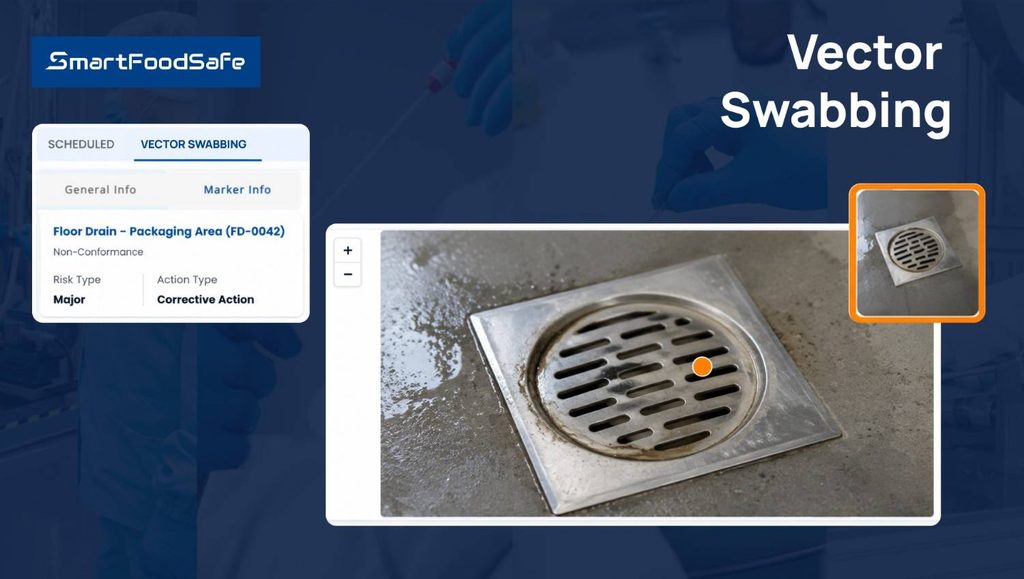
Targeted follow-up sampling, including vector swabbing, can help investigate potential contamination pathways.
What to review: Check whether your team has defined procedures for responding to undesirable results, investigating root causes, documenting actions and verifying their effectiveness.
5. Prepare Your EMP for the 2027 Audit Transition
Preparing for Edition 10 requires more than updating written procedures. Food manufacturers should be able to demonstrate that their environmental monitoring program is implemented consistently and supported by relevant records.
A practical preparation schedule could look like this:
| Timeline | Recommended action |
| November 2026 | Conduct an EMP gap assessment. Review the risk assessment, documented procedures, sampling locations and frequencies. |
| December 2026 | Update sampling schedules, acceptance criteria, result-handling procedures and trend-analysis records. |
| Before the audit | Train relevant personnel and review laboratory results, sampling records, investigations and effectiveness verification. |
During the audit, be prepared to demonstrate how sampling locations were selected, who is responsible for monitoring, how results are reviewed and what happens when undesirable findings occur.
For further preparation, refer to SQFI’s Edition 10 Guidance and Checklists, which provide supporting resources for implementing the updated Code.
How Smart EMP Supports SQF Edition 10 Readiness
Managing environmental monitoring through disconnected spreadsheets, laboratory reports and manual records can make it difficult to track results, identify recurring issues and maintain supporting documentation.
Smart EMP by Smart Food Safe brings key environmental monitoring activities together in one centralized platform, helping food manufacturers organize sampling, review results and manage follow-up actions.
Key capabilities include:
- Risk-Based Sampling and Site Mapping: Organize sampling locations, hygiene zones, organisms, risk levels and frequencies.
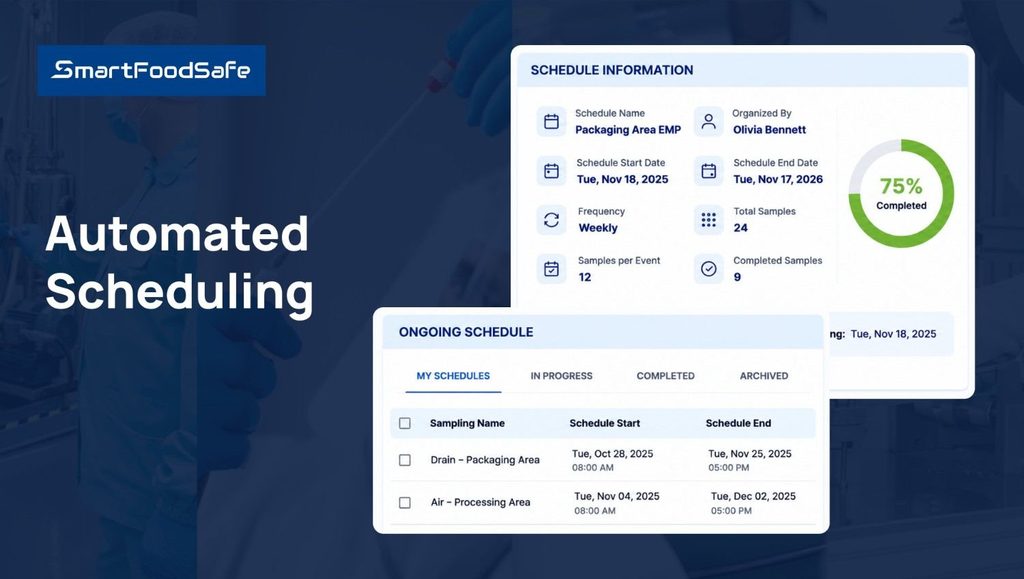
- Automated Sampling Schedules: Coordinate routine, random and additional sampling activities.
- Trend Analysis and Heatmaps: Review historical results and identify recurring positives and contamination hotspots.
- Laboratory Results Management: Record and manage environmental testing results.
- Vector Swabbing and Investigations: Document targeted sampling and investigate potential contamination pathways.
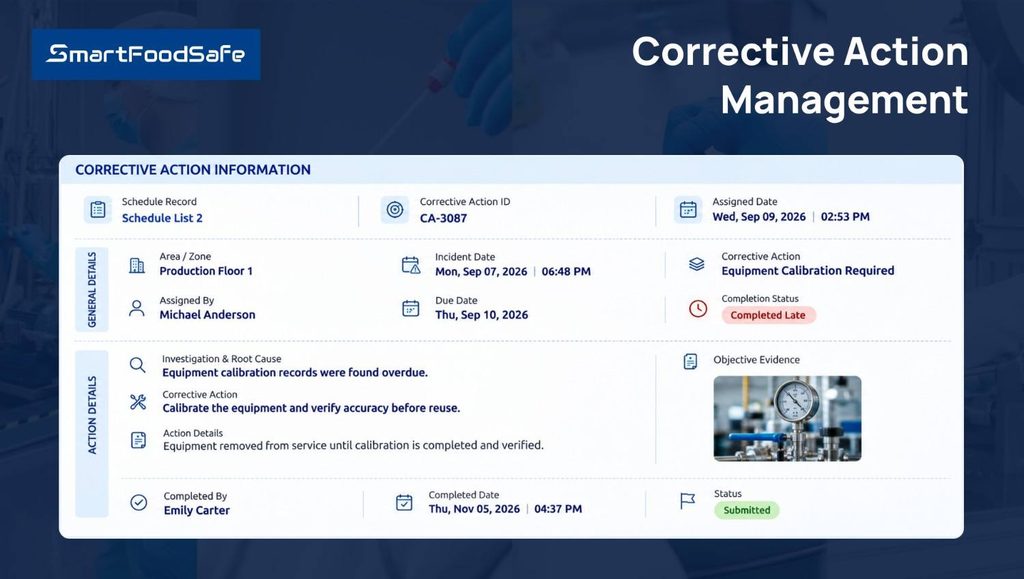
- Corrective Action Management and Reporting: Track investigations, root causes, follow-up actions and maintain supporting records for audit reviews.
- Audit-Ready Documentation: Maintain organized sampling records, test results and supporting evidence for audit reviews.
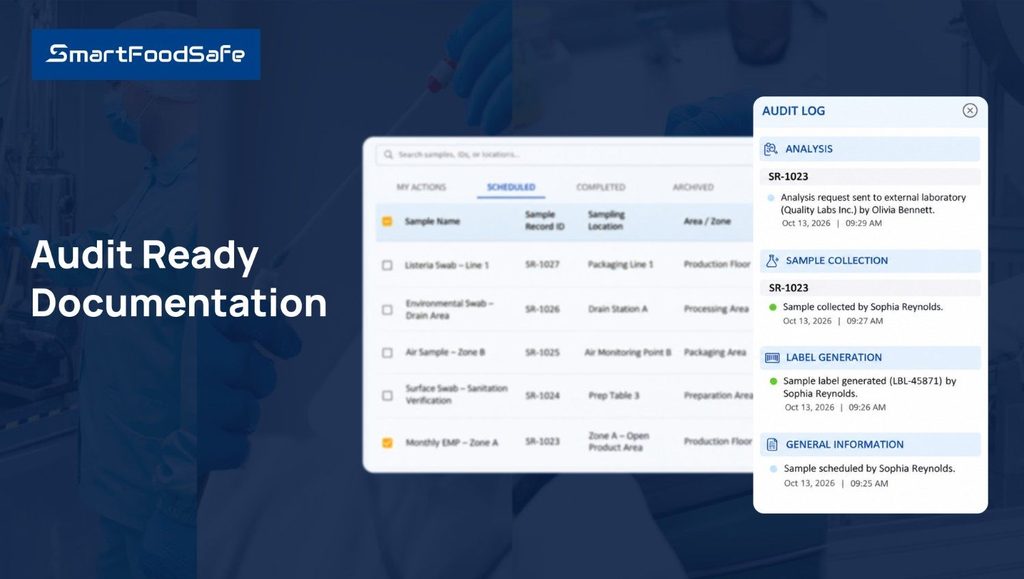
By connecting sampling, results, investigations and corrective actions, Smart EMP helps QA teams manage their Environmental Monitoring Programs and maintain documentation supporting SQF Edition 10 audit preparation.
Final Takeaway: Is Your EMP Ready for SQF Edition 10?
SQF Edition 10 places greater emphasis on how manufacturers assess, monitor and respond to environmental contamination risks.
Having a sampling schedule is not enough. Food safety teams must be able to explain why sampling locations were selected, how results are interpreted, what happens when acceptance criteria are not met and whether corrective actions are effective.
Before your next SQF audit, ask yourself: Can your Environmental Monitoring Program demonstrate that contamination risks are being identified, investigated and controlled?
Ready to strengthen your Environmental Monitoring Program?
Discover how Smart EMP by Smart Food Safe can help organize sampling schedules, manage environmental testing results, investigate contamination patterns and maintain supporting records.
Explore Smart EMP | Request a Demo