


 English
▾
English
▾
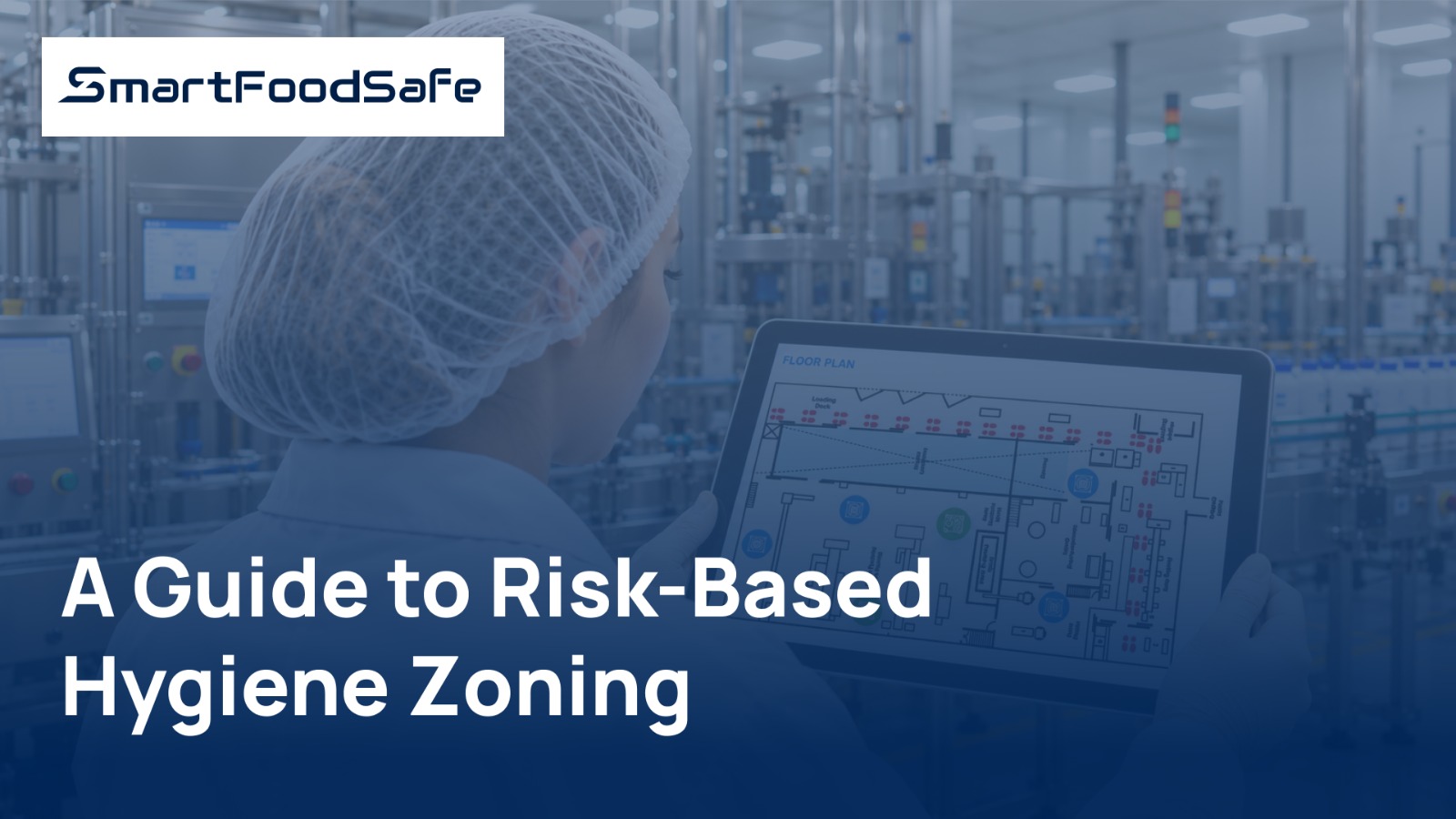
Why can cross-contamination risks persist even when a food manufacturing facility follows regular cleaning and sanitation schedules? One reason may be how people, tools, and equipment move between production areas.
For example, a trolley used in raw-material handling could carry contaminants into an area processing ready-to-eat (RTE) food if appropriate transfer controls are not in place.
Risk-based hygiene zoning helps food manufacturers identify contamination pathways and establish controls to prevent hazards from spreading between areas. This involves assessing the facility layout, controlling movement, and verifying that hygiene procedures remain effective.
Contamination can spread through personnel, equipment, materials, water, drainage, and airflow. Without appropriate controls, these pathways can compromise product safety.
Effective hygiene zoning helps manufacturers prevent cross-contamination, establish consistent hygiene practices, manage environmental contamination, and identify weaknesses in existing controls. Depending on the process, assessments may also need to consider allergen cross-contact and chemical or physical hazards.
Hygiene zoning involves organizing facility areas according to contamination risks and the level of hygiene control required. The appropriate controls depend on the product, processing conditions, and applicable food safety standards.
A zoning plan should identify production areas, movement routes, potential contamination pathways, and the measures needed to control them.
For example, an area handling raw ingredients may require different movement and sanitation procedures from an area processing exposed RTE food after a pathogen-reduction step.
The Codex General Principles of Food Hygiene provide guidance on hygienic facility design and minimizing cross-contamination.
Link the Carousel: Common Hygiene Zoning Mistakes That Weaken Contamination Control
Bring together Quality, Food Safety, Production, Sanitation, and Maintenance teams to identify risks related to equipment, cleaning, and daily operations.
Create an up-to-date layout showing production areas, equipment, access points, and zone boundaries. Map how employees, materials, products, and waste move through the facility.
Use the facility’s HACCP hazard analysis and relevant risk assessments to identify hazards and potential transfer routes. Determine where enhanced controls or greater separation may be needed.
Define entry procedures, equipment-handling requirements, and sanitation practices. Depending on the risks, use physical barriers, access restrictions, dedicated equipment, or documented cleaning procedures before transfers.
Ensure employees understand zone-specific hygiene requirements and movement rules. Maintain current facility maps, operating procedures, and training records.
Use hygiene inspections, sanitation verification, audits, and environmental monitoring where appropriate. Reassess the plan when changes to products, equipment, layouts, or processes introduce new risks.
Environmental monitoring helps manufacturers assess microbial conditions by sampling surfaces and locations throughout a facility. A commonly used framework classifies sampling sites into four zones according to their relationship to food-contact surfaces and potential contamination pathways.
| Monitoring zone | Typical sampling locations | Why it matters |
|---|---|---|
| Zone 1 | Food-contact surfaces, such as conveyor belts and processing tables. | Contamination can transfer directly to food. |
| Zone 2 | Nearby non-food-contact surfaces, such as equipment frames. | Contamination may spread to food-contact surfaces. |
| Zone 3 | More distant surfaces within processing areas, such as floors and drains, depending on risk. | Contamination may spread through water, traffic, or equipment. |
| Zone 4 | Remote areas outside immediate processing, such as certain corridors and staff facilities. | Contamination may be carried into production. |
Zone assignments depend on the sampling site’s location and potential contamination pathways, not simply its name. This framework is not a universal regulatory classification, so sampling plans should reflect the facility’s risk assessment and applicable requirements.
Hygiene zoning establishes controls to limit contamination, but how do food safety teams know whether those controls are working?
Environmental monitoring provides evidence of microbial conditions across the facility. For example, repeated positive results at a sampling point near an RTE processing line may prompt further investigation of nearby equipment, drains, and sanitation practices.
Digital monitoring tools help teams connect sampling locations with historical results and follow-up records, making recurring concerns easier to investigate and track. These findings must still be assessed alongside laboratory results and site-specific risk assessments.
Also read: Environmental Monitoring Program (EMP): A Complete Guide to Food Safety and Contamination Prevention
An effective hygiene zoning plan needs more than defined boundaries. It requires ongoing monitoring, investigation, and verification to keep contamination risks under control.

Smart Food Safe’s Smart EMP helps QA teams visualize sampling results against a digital plant layout, review historical findings through the Heat & Harborage Map, and manage non-compliant findings that require follow-up.
Beyond environmental monitoring, Smart Food Safe supports related food safety activities, including root-cause analysis, corrective action management, audit verification, and compliance documentation.
Ready to strengthen your food safety processes? Book a demo with Smart Food Safe to explore how its solutions can support your facility.

Food Safety and Quality Management Software to streamline processes, track compliance, ensure traceability and maintain audit readiness with global quality and food safety standards
 French
 Spanish
 Portuguese