


 English
▾
English
▾
English
▾
English
▾
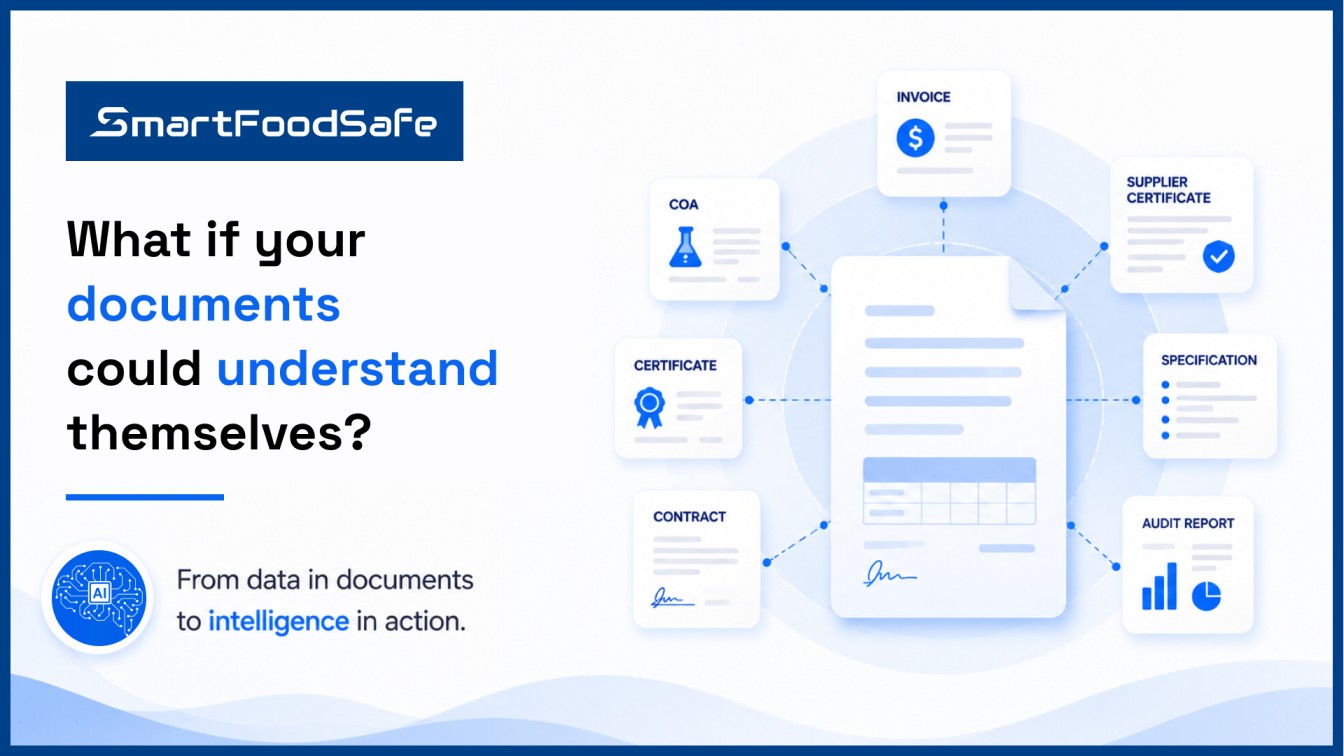
Every day, organizations receive invoices, supplier records, certificates, contracts, specifications, audit reports, and countless other documents. Each contains valuable information, yet much of it remains trapped inside files that are reviewed manually.
But, what if every document entering your organization could instantly tell you what it is, what information it contains, and what action needs to happen next?
In an age where technology can predict outcomes, detect anomalies, and generate insights in seconds, why does so much valuable business knowledge remain locked inside documents?
The answer lies in a challenge many organizations face: turning document-based information into something that is accessible, accurate, and actionable without relying on manual effort.
That is the power of Intelligent Document Processing (IDP).
By combining artificial intelligence, machine learning, and document automation, IDP helps organizations extract, understand, validate, and use the information hidden within their documents. Instead of treating documents as static records, IDP transforms them into a source of actionable intelligence that can power smarter decisions and more efficient business processes.
Think of it as giving documents the ability to "speak" to your business systems.
Instead of simply storing documents, IDP can recognize what a document is, understand the information it contains, extract important details, validate them against business rules, and make that information available for workflows, reporting, compliance, and decision-making.
In simple terms, Intelligent Document Processing (IDP) is a technology that uses artificial intelligence (AI), machine learning, optical character recognition (OCR), and automation to capture information from documents and convert it into structured, usable data.
It can process a wide range of document types, including PDFs, scanned documents, emails, forms, images, spreadsheets, and even handwritten records, helping organizations unlock the valuable information hidden within them.
For example, when a supplier uploads a certificate, an IDP system can automatically read the document, identify important details such as the product name and expiry date, and save that information in the correct place without anyone having to enter it manually.
IDP matters because documents are not just records but the backbone of daily operations.
In industries like food and beverage, manufacturing, healthcare, and logistics, documents drive compliance, quality, approvals, audits, and traceability. When document handling is slow or inaccurate, the whole workflow slows down.
IDP helps companies:
Think about how a person reviews a document. First, they identify what the document is. Then they look for the important information, check whether it is correct, and decide what should happen next.
Intelligent Document Processing follows a very similar approach, except it does it automatically and at scale.
A typical IDP workflow looks like this:
The system first identifies what kind of document it has received.
For example, it may recognize:
Once the document type is identified, the system extracts the information that matters.
Depending on the document, this may include:
The extracted information is then checked against predefined business rules.
For example:
If something appears incorrect or incomplete, the system can automatically flag it for review.
Once validated, the information is routed to the appropriate process, such as:
This eliminates much of the manual effort traditionally required to move information between systems and teams.

This is where Intelligent Document Processing becomes truly intelligent.
Traditional OCR (Optical Character Recognition) can read the words on a page, but it cannot fully understand their meaning or context.
AI adds that layer of understanding by helping the system:
For example, one supplier may submit a clean digital COA while another provides a scanned PDF with a completely different layout. A rules-based system may struggle with these variations, but AI can identify the required information regardless of where it appears on the page.
In simple terms, OCR helps the system read the document, while AI helps it understand the document. That combination allows IDP to transform documents from static files into structured, actionable business information.
Also Read: Are You Equipped with the AI Capabilities Needed for COA Automation or Still Limited by OCR
IDP can be used in many industries, but some of the most valuable use cases include:

Every document can play a role in protecting product quality, consumer safety, and regulatory compliance. A missing supplier declaration or outdated specification can create real business risk.
That is why IDP is so valuable in food and beverage operations. It helps teams:
In a sector where speed and accuracy both matter, IDP gives teams a smarter way to stay in control.
Intelligent Document Processing delivers the greatest value when the information extracted from documents is immediately put to work. Rather than simply storing files, Smart Food Safe applies IDP across its solutions to transform documents into structured, actionable business data that supports automation, compliance, and informed decision-making.
Smart Docs goes beyond traditional document management by intelligently classifying incoming files, automatically applying metadata and tags, detecting document versions, and making records instantly searchable. Instead of manually organizing folders, users can quickly locate the right document and the information within it, improving accessibility, traceability, and operational efficiency.
Supplier onboarding often involves reviewing large volumes of documents, including business licenses, certifications, declarations, and registration records. Smart Supplier uses IDP to automatically extract critical information such as company registration numbers, certification dates, expiry dates, and supplier details. This accelerates onboarding, improves data accuracy, and helps ensure supplier records remain complete and up to date.
Compliance depends on timely and accurate documentation. When suppliers upload Certificates of Analysis (COAs), inspection reports, or compliance certificates, Smart Compliance can automatically identify the document, extract key data such as lot numbers, test results, and expiry dates, and validate that information against predefined business rules. Potential issues can be flagged immediately, helping organizations strengthen audit readiness and reduce compliance risks before they impact operations.
Smart Spec uses IDP to extract product details such as ingredients, allergens, nutritional values, and other specification data from supplier documents. It can then compare this information with your approved Golden Specification, making it easier to identify differences before they become larger issues.
By embedding Intelligent Document Processing across its platform, Smart Food Safe transforms documents into structured, actionable information. Instead of spending time searching, entering, and verifying data manually, teams can automate workflows, strengthen compliance, improve visibility, and make faster, more informed business decisions.
The Benefits You Can Expect — The biggest advantage of Intelligent Document Processing is not simply faster document processing but also helping organizations unlock the value of the information they already have. By automating repetitive tasks, teams can improve efficiency, increase accuracy, accelerate approvals, strengthen compliance, and make faster, data-driven decisions. Industry studies also show that AI-powered IDP can reduce document processing costs by 60–80% while significantly improving productivity and scalability.
The future of quality and food safety will not be defined by the number of documents an organization manages, but by how effectively it uses the information within them.
Intelligent Document Processing marks a shift from simply storing documents to transforming them into actionable intelligence. By reducing manual effort, improving accuracy, strengthening compliance, and enabling faster decisions, IDP empowers organizations to build smarter, more resilient operations.
As regulatory expectations rise and document volumes continue to grow, businesses that embrace intelligent document processing will be better equipped to stay compliant, improve operational efficiency, and respond with confidence.
At Smart Food Safe, we are committed to helping organizations make that transition. Through intelligent, AI-powered solutions that connect documents with business processes, we enable teams to spend less time managing paperwork and more time driving quality, compliance, and continuous improvement.
Because the future of document management is not about storing information. It is about putting it to work.
Frequently Asked Questions About Intelligent Document Processing (IDP)
Intelligent Document Processing (IDP) is a technology that uses artificial intelligence (AI), machine learning, OCR, and automation to extract, understand, validate, and process information from documents such as PDFs, certificates, invoices, forms, emails, and reports.
IDP works by identifying a document, extracting key information, validating the data, and routing it into the appropriate workflow or system. It combines OCR, AI, and automation to turn unstructured documents into structured, actionable data.
OCR simply converts scanned documents into readable text. IDP goes much further by understanding document context, extracting relevant information, validating data, classifying documents, and automating business processes.
IDP helps reduce manual data entry, improve document accuracy, accelerate approvals, strengthen compliance, simplify audits, improve traceability, and make information easier to access across the organization.
IDP can process a wide range of documents, including invoices, contracts, supplier certificates, Certificates of Analysis (COAs), audit reports, specifications, compliance records, forms, emails, and other business documents.
Key capabilities include document classification, AI-powered data extraction, OCR technology, workflow automation, validation rules, integrations, audit trails, search functionality, security controls, and scalability.
IDP helps organizations capture, organize, validate, and track document information more effectively. This improves record accuracy, strengthens traceability, reduces compliance risks, and makes it easier to retrieve documentation during audits and inspections.

 French
 Spanish
 Portuguese