 English
▾
English
▾
English
▾
English
▾

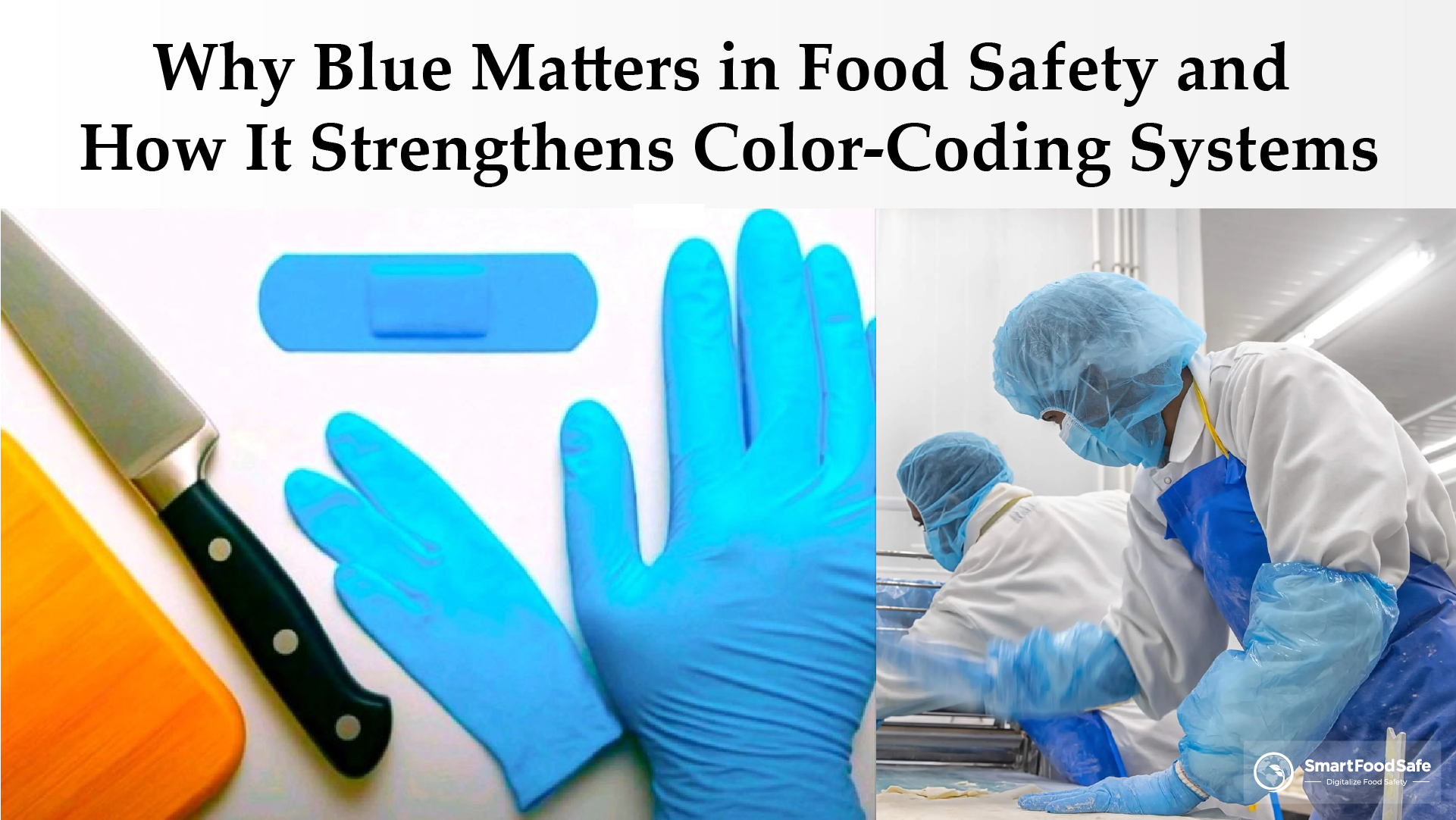
When you walk into any well-run food facility, you’ll notice something long before you spot a metal detector or a sanitation chart: color.
Not the decorative kind but the purposeful kind. The kind that guides employees, prevents mistakes, and quietly upholds the safety of every product moving across the line.
And among all those colors, one stands out almost everywhere:
Blue.
But why blue? And why does color coding continue to be one of the simplest yet most powerful preventive controls in modern food safety?
Let’s break it down in plain language and through the real, everyday scenarios that matter on the plant floor.
In food facilities, blue PPE and tools often serve two critical purposes:
But that’s only the start.
Color coding has become much more than “blue gloves on the line.”
It’s evolved into a behavioral safety system, one that guides people, reinforces hygiene zones, and reduces cross-contamination risks before they even happen.
In many facilities, colors differentiate hygiene zones:
Employees don’t have to memorize maps or overthink their movement — the color tells them exactly where they belong.
Allergen-specific tools (often yellow or purple) help prevent subtle but dangerous mix-ups that can jeopardize consumer safety.
Using different colored brushes, squeegees, and buckets prevents the same tool from being used in:
This simple step removes one of the most common vectors for environmental cross-contamination.
From aprons and gloves to hairnets and footwear, color becomes a quick visual audit:
Supervisors can identify deviations instantly without stopping production.
Beyond the production floor, blue continues to influence the food journey right into the consumer’s hands. Most people don’t consciously analyze packaging colors, yet color psychology plays a powerful role in perception. Blue, in particular, signals purity, freshness, and dependability—qualities every food brand wants to communicate.
This is why you see blue dominating categories like dairy, bottled water, nutrition products, chilled foods, and brands emphasizing safety or wellness. The color instantly evokes a sense of cleanliness and transparency, reinforcing that what’s inside is handled with care. In a world where consumers scrutinize labels, ingredient lists, and sourcing more than ever, blue quietly supports that need for reassurance. It becomes part of the brand’s promise: This food is safe. This food is honest. This food is protected.
Even the best systems fail when inconsistently applied. The biggest issues we see include:
A color-coding system should feel as natural as clocking in — not like deciphering a puzzle.
Color coding is a foundational preventive tool, but in modern facilities, it pairs best with digital support.
Platforms like Smart Food Safe help transform color coding from a physical system into a connected one by enabling:
This doesn’t replace color coding, it strengthens it.
The goal is to move from reactive discovery (“we found a glove fragment”) to proactive prevention (“the system flagged PPE non-compliance before it reached the floor”).
It is often said, big impacts on safety begin with the smallest everyday choices. Color-coding is one of those simple, visual, almost “too easy” tools that, when done right, strengthens hygiene, prevents cross-contamination, and helps teams stay aligned without constant reminders.
Color coding isn’t flashy.
It’s not new.
And it doesn’t require expensive equipment.
But that’s exactly why it works so well.
It’s a behavioral cue, a visual language, and a risk-reduction tool all in one. And when paired with digital monitoring and consistent training, it becomes one of the most reliable safeguards for keeping food safe, employees confident, and customers protected.
In the end, the most powerful part of color coding isn’t the color at all — it’s the clarity it brings to every step of food safety culture.
So the next time you spot a blue glove or a blue food label, remember: that color was chosen for a reason. It may not whet the appetite, but it ensures peace of mind by standing up for food safety.

 French
 Spanish
 Portuguese