
 English
▾
English
▾
English
▾
English
▾
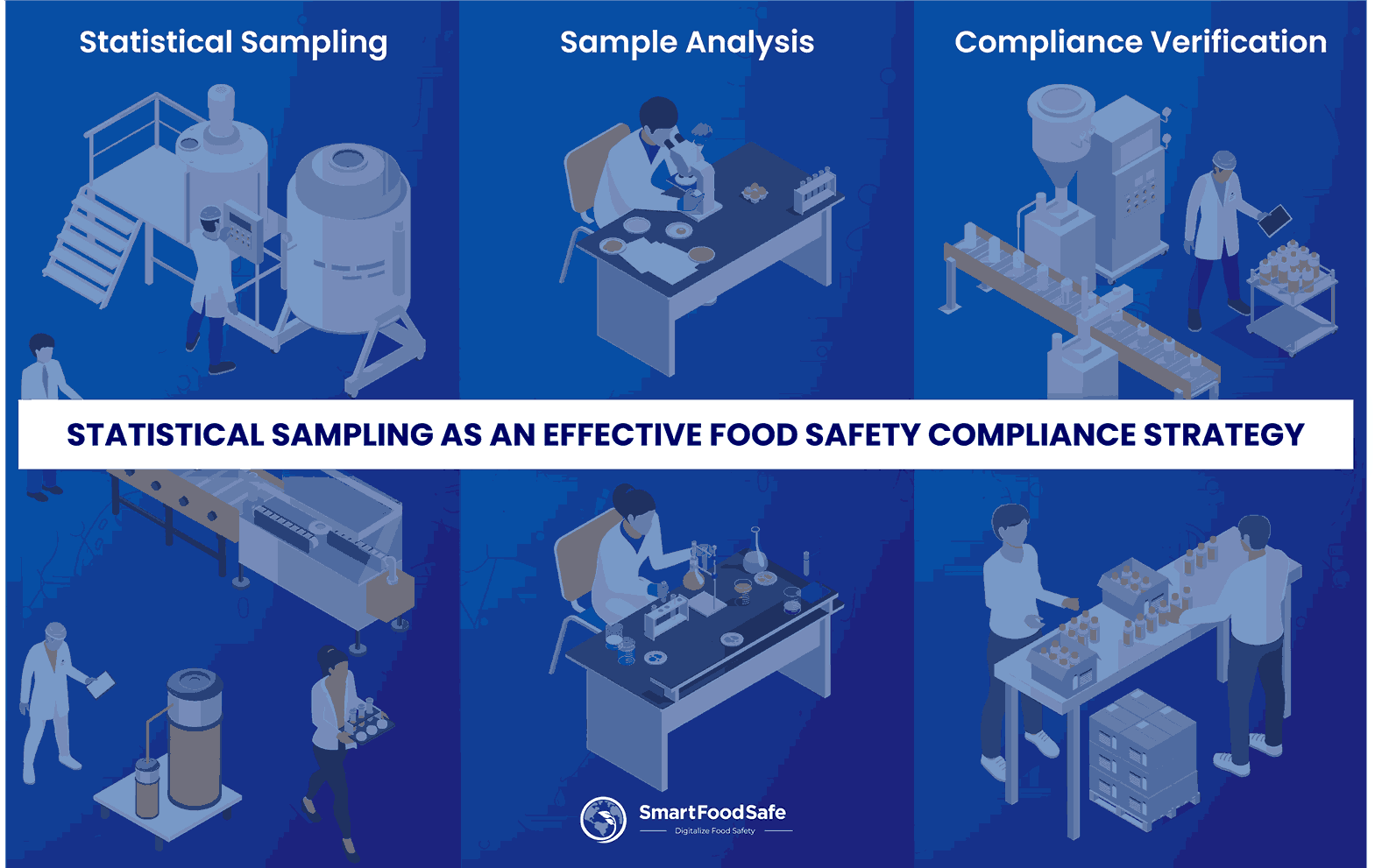
An ounce of prevention is worth a pound of cure, is a famous saying emphasizing the importance of preventing a risk before it becomes an issue. For instance, over 200 types of foodborne diseases can happen from contamination anywhere along the food supply chain, causing about 600 million (1 in 10 people) around the globe to fall ill every year. These severe consequences of food-borne diseases could have been avoided or minimized through statistical sampling during hazard control and verification.
The sampling process for analysis is critical in the verification of product conformance to mitigate the supply chain risk and prevent food safety incidents. Canadian Food Inspection Agency (CFIA) has defined sampling as the process of collecting and testing food, ingredients, the environment, or other materials. Sampling is done to monitor or verify the effectiveness of control measures put in place to prevent, eliminate or reduce to an acceptable level the hazards that present a risk of contamination of food.
Sampling comes under the domain of compliance strategy by allowing representative testing of food products to determine potential hazards and contaminants. When samples of food items are taken statistically at various stages of production, processing, and distribution and tested, it is possible to better detect the presence of harmful substances, such as bacteria, viruses, toxins, or chemical residues. This information can then be used to take appropriate corrective and preventive actions to eliminate or mitigate the risks to food safety and prevent foodborne illnesses. Proper sampling for testing provides assurance that incoming materials, finished products, and water meet the required food safety standards, hence ensuring compliance with regulatory standards and requirements.
The fundamental principle behind Food Safety Modernization Act (FSMA) is implementing a preventive system that focuses on averting incidents before they occur rather than solely reacting to instances of foodborne outbreaks.
Food sampling detects causal agents before they can contaminate food and cause harm. The following factors demonstrate the significance of sampling in controlling foodborne illnesses:
According to the ‘Bacteriological Analytical Manual’ from the U.S. Food and Drug Administration (FDA), with respect to food sampling, the adequacy and condition of the sample or specimen received for examination are of primary importance, and if the samples are improperly collected and mishandled or are not representative of the sampled lot, the laboratory results will be meaningless. This is why sampling techniques such as direct hand sampling, spigot sampling, and final product sampling present challenges, as they constitute a probability of introducing sampling bias and depicting only a random representation.
Uniform application of established sampling procedures is essential as interpretations regarding a large consignment of food are drawn from a relatively small sample of the lot. This is where representative sampling comes into play. As per the Code of Federal Regulations (CFR) Title 21 , a representative sample is defined as “ a sample that consists of a number of units that are drawn based on rational criteria such as random sampling and intended to assure that the sample accurately portrays the material being sampled.” This means that representative sampling involves taking small and incremental samples early in the production process of the food or beverage product.
When pathogens or toxins are unevenly dispersed in food or for deciding whether or not to dispose of a food shipment based on the present level of bacterial content, obtaining a representative sample becomes imperative. By adopting a proactive representative sampling, it is possible to optimize food safety and regulatory compliance to safeguard your facility by:
In food manufacturing, samples are taken from the food establishment based on the types of processes, applied control measures, and prepared food products, whereas the locations of sampling depend on the type and purpose of the sampling. The following are examples of where different types of samples are taken based on what is being assessed:
Sampling the ingredients delivered by the supplier is necessary for evaluating the supplier’s food safety control measures. Ingredient samples are collected during unloading or when the ingredients are stored.
Sampling during food preparation enables the evaluation of its attributes, such as temperature, pH, or water activity at a specific point in the production process, while also facilitating the monitoring of adherence to critical limits. Samples of food collected during preparation should be taken from the processing line at regular intervals, namely at the beginning, middle, and end of production.
At the final stage of the production line, when the food is packaged in its final form, sampling is carried out to ensure that it complies with the essential standards and is free from any contamination. Samples of food in its finished state could be taken from a lot in storage to help estimate its compliance.
Sampling is conducted on surfaces in the area or environment where food is prepared to confirm the efficiency of the cleaning and sanitation procedures. Sample sites are grouped as follows to obtain an assessment of common areas:
Water used in the food manufacturing plants should be sampled to assess the safety of the source water and affirm the efficacy of on-site water treatments. For evaluating the quality of source water, it is recommended to collect water samples before any treatment or disinfection is carried out within the facility and at a point where no additional treatment is applied, typically a tap or fixture situated in the processing area.
Ideally, each sampling unit for sample analysis should be inspected thoroughly for uniformity and properly tested for identity, but when this is not possible, statistical sampling should be utilized.
Statistical sampling is the process of selecting a smaller group of commodities from a larger population, with the goal of using the information gathered from the smaller group to draw conclusions or make predictions about the entire population.
A sampling plan indicates the number of units of product from each lot or batch which are to be inspected (sample size or series of sample sizes) and the criteria for determining the acceptability of the lot or batch (acceptance and rejection numbers). In ‘WHO guidelines for sampling of pharmaceutical products and related materials,’ WHO suggests 3 sampling plans, namely n-plan, p-plan, and r-plan:
In each case, if the results are concordant for every sample, the analytical sample is prepared from the final composite sample obtained by combining the original samples and then transferred to the laboratory for identification and compliance determination.
Appropriate sampling techniques are essential to ensure the reliability and validity of statistical inference. The technique should be representative enough for the sampling end result to maximize the chances of detecting contaminants. Following are some statistical sampling techniques that are used in the food industry to determine how the samples are collected and how they serve to be representative of the complete batch along with their pros and cons:
Each component of the lot has an equal chance of being selected.
The batch is divided into subgroups or strata based on a specific characteristic, and then samples are taken from each stratum.
The batch is divided into clusters, and then a sample of clusters is selected to be included in the study.
A sample is selected by choosing every nth item from a population.
The use of technology has revolutionized the way sampling is done in the food and pharma industries. One tech-forward solution is the implementation of automated sampling systems that use robotics and artificial intelligence. These systems provide high levels of accuracy and precision in sampling, eliminating human error and bias. Additionally, the integration of blockchain technology in the sampling process enables secure and transparent data tracking, allowing for efficient monitoring and traceability of the sampled products. Such tech-forward solutions to automate sampling ensure product safety by greatly increasing the chances of determining contamination while optimizing productivity and reducing costs in the industries.
SmartFoodSafe’s supply chain software solutions bring total peace of mind with systematic product compliance through its Smart Specification, Smart Compliance, and Smart Lab modules. Risk-based hazard characteristics and acceptance criteria are defined for raw materials, packaging materials, work in progress, and finished products in the specification management software Smart Specification. Statistical sampling requirements can be configured and followed at various stages of the supply chain through the compliance management tool of Smart Compliance Finally, these samples can be tested for the identified hazards in the laboratory using the Smart Lab’s Laboratory Information Management System and compared against the tolerance for effortless, foolproof, and timely product release decisions.

 French
 Spanish
 Portuguese