


 English
▾
English
▾
English
▾
English
▾
Quoting Robert Kiyosaki’s words, ‘Confidence comes from discipline and training.’ It highlights a universal concept applicable across various domains, particularly evident in the realm of professional development. In a work setting, the implementation of effective training programs is pivotal, in fostering employee growth and competence.
Aiding this endeavor, training management software emerges as a potent tool, streamlining the process and ensuring thorough skill enhancement. Consequently, employees become better equipped to navigate challenges, make informed decisions, and contribute meaningfully to their respective roles, thereby solidifying the foundation for organizational success.
A training management software will serve training companies and learning and development departments by optimizing training operations. It facilitates the design, organization, scaling, and maintenance of training programs. These systems cater to all learning professionals by offering functionalities to schedule, track, and evaluate training initiatives. They oversee employee training progress and certification processes.
Moreover, training management solutions can equip enterprises with tools for crafting and marketing training courses and events. Simultaneously, they empower learning and development departments with resources for training, monitoring program budgets, tracking employee performance, and more.
The Learning Management System (LMS) provides the infrastructure necessary for organizing, delivering, and tracking training programs within an organization. At its core, an LMS functions as a centralized platform where administrators can create and manage courses, instructors can facilitate learning activities, and learners can access educational materials and assessments.
Administrators can monitor participation rates, completion statuses, and assessment scores with an LMS, gaining insights into the effectiveness of training initiatives and identifying areas for improvement. This data-driven approach facilitates informed decision-making, enabling organizations to optimize their training programs to better align with strategic goals and employee development needs. The LMS brings in a dynamic learning environment by supporting various learning formats, including self-paced modules, instructor-led sessions, and virtual classrooms, catering to diverse learning preferences and ensuring maximum engagement and retention among learners.
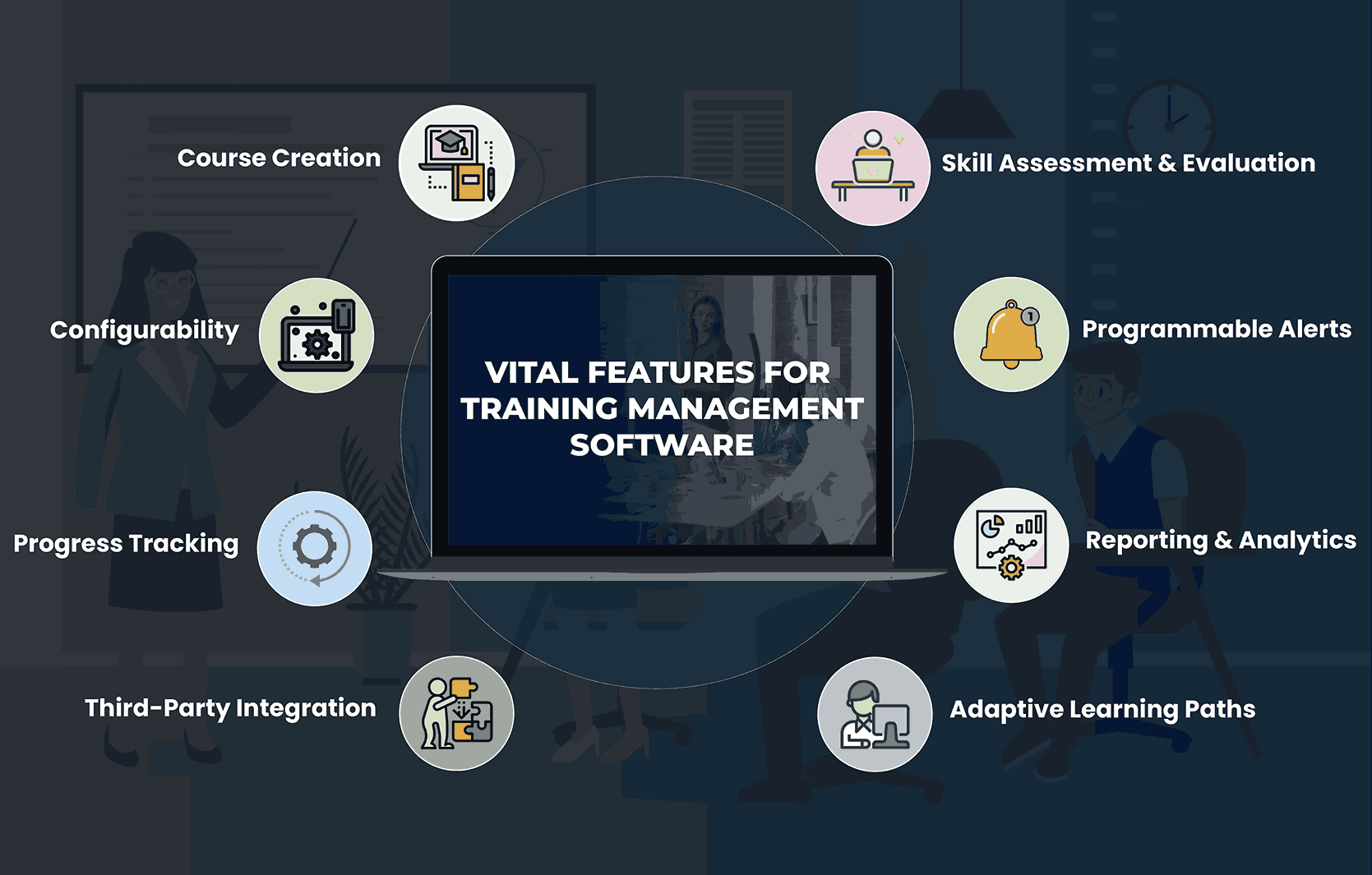
Navigating the intricacies of training operations can be made easy with training management software. However, with numerous options available, discerning which features can systematize the organization’s training endeavors is paramount. Below are some critical features to look for in training management software:
Given below is a list of some front-runners in the training management software paradigm:

Overview
Smart Training is an effective online learning management system to automate training from course creation to planning, tracking, and maintaining training programs. Smart Training transcends conventional learning management systems, targeting a strategic commitment to your company's long-term success.
Utilizing an interactive digital platform, it enables your workforce to conveniently access top-tier training resources regardless of location or time. This enhanced accessibility eliminates geographical limitations and time constraints, fostering a fluid learning journey for all everyone.
Key Features:

Overview
Absorb LMS strives to help organizations achieve their training goals through meaningful learning experiences that produce tangible results. It fosters deeper learner comprehension and retention through an intuitive platform that supports multimedia content formats, responsive design, social learning, branded interfaces, and more.
Key Features:
Overview:
Moodle is an open-source, feature-rich, secure, and scalable learning management system that integrates seamlessly with other platforms and can be customized for any teaching or training method you choose. With fresh and intuitive interfaces, Moodle has solutions suitable for K-12, higher education, vocational training, corporates, and all types of enterprise learning.
Key Features:
Overview
TalentLMS offers a customizable and user-friendly learning management system (LMS) designed to systematize training processes for teams and companies. With features tailored to fit seamlessly into existing workflows and backed by Epignosis, it aims to democratize training while providing expert guidance and support.
Key Features:
Overview
Docebo is a learning platform designed to be intuitive for admins, engaging for learners, and transformative for businesses with a key differentiator of capability for delivering a hyper-personalized learning experience to multiple audiences, including employees, customers, and partners.
Key Features:
Overview
360Learning enables internal mobility to solve the talent shortage by empowering companies to upskill from within. By turning their experts into champions for employee, customer, and partner growth, companies upskill their workforce fast to meet tomorrow’s business demands.
Key Features:
Leveraging the capabilities of digital technology, Smart Training brings forward a transformative instrument to augment individuals’ skill sets, guaranteeing your enterprise maintains a more adaptable and well-knowledgeable workforce. Smart Training’s LMS stands out with the following innovative functionalities:
Create and manage training courses with ease using our platform. Develop courses from scratch or use our pre-built library, and configure course settings for a contemporary learning process. Use our drag-and-drop course creator to design layout templates with various elements and Q&A sections. Integrate documents such as PPT, PDF, and Excel into your course templates. Select from our professional, ready-to-use, customizable courses in the training library, and enhance each course with integrated knowledge assessments.
Develop and sustain training programs by bundling multiple courses into designated learning paths for individuals or groups. Organize and deliver these programs effectively, evaluate trainee performance upon completion, and schedule programs to meet compliance requirements. Launch programs using training records generated from your customized templates.
Customize your training delivery with course settings, including duration, grading criteria, completion certificates, and other features to curate the learning experience. Integrate Q&A sections within courses to test knowledge and track progress, with options for mandatory or optional Q&A based on course requirements. Use graded assessments for scoring performance or non-graded options for feedback. Set up refresher training based on organizational needs and required frequency.
Enhance employee knowledge with collaborative group learning features that facilitate knowledge sharing. Assign trainers and reviewers to provide instruction and feedback on specific courses. Offer onboarding and refresher training to ensure new hires and existing employees stay updated. Automatically generate and issue certificates upon course completion. Utilize customized notifications to send targeted messages with course-specific information.
Optimize course organization and allocation with a scheduling feature that follows a predefined timetable. Administrators can customize scheduling parameters to meet specific requirements. Automate course scheduling based on set criteria to streamline tasks. Set course expiration dates to ensure timely completion and encourage progress. Send timely alerts and notifications to keep learners and instructors informed about updates, deadlines, and events.
Obtain visual assessments of individual skills and competencies to track and analyze proficiency levels in courses. Monitor overall user progress with a comprehensive view of training compliance and achievements. Conduct a skill gap analysis to identify and address workforce deficiencies, customizing learning paths accordingly. Allow users to access records of completed and upcoming training to plan their learning journeys. Export and download relevant data or reports for further analysis or integration with external tools.

 French
 Spanish
 Portuguese