Smart Food Safe

Notification Bar
Smart Food Safe is participating in the BRCGS Connect Europe February 12–13, 2026, at the etc.venues County Hall, Southbank, London . Meet us there!

Record Management

Advantages of an Automated Records Management System: A Smarter Way to Store Your Data with Digitalized Record-Keeping

March 31, 2023

Record Management

Advantages of an Automated Records Management System: A Smarter Way to Store Your Data with Digitalized Record-Keeping

March 31, 2023

Smart HACCP Table of Contents
Help Icon

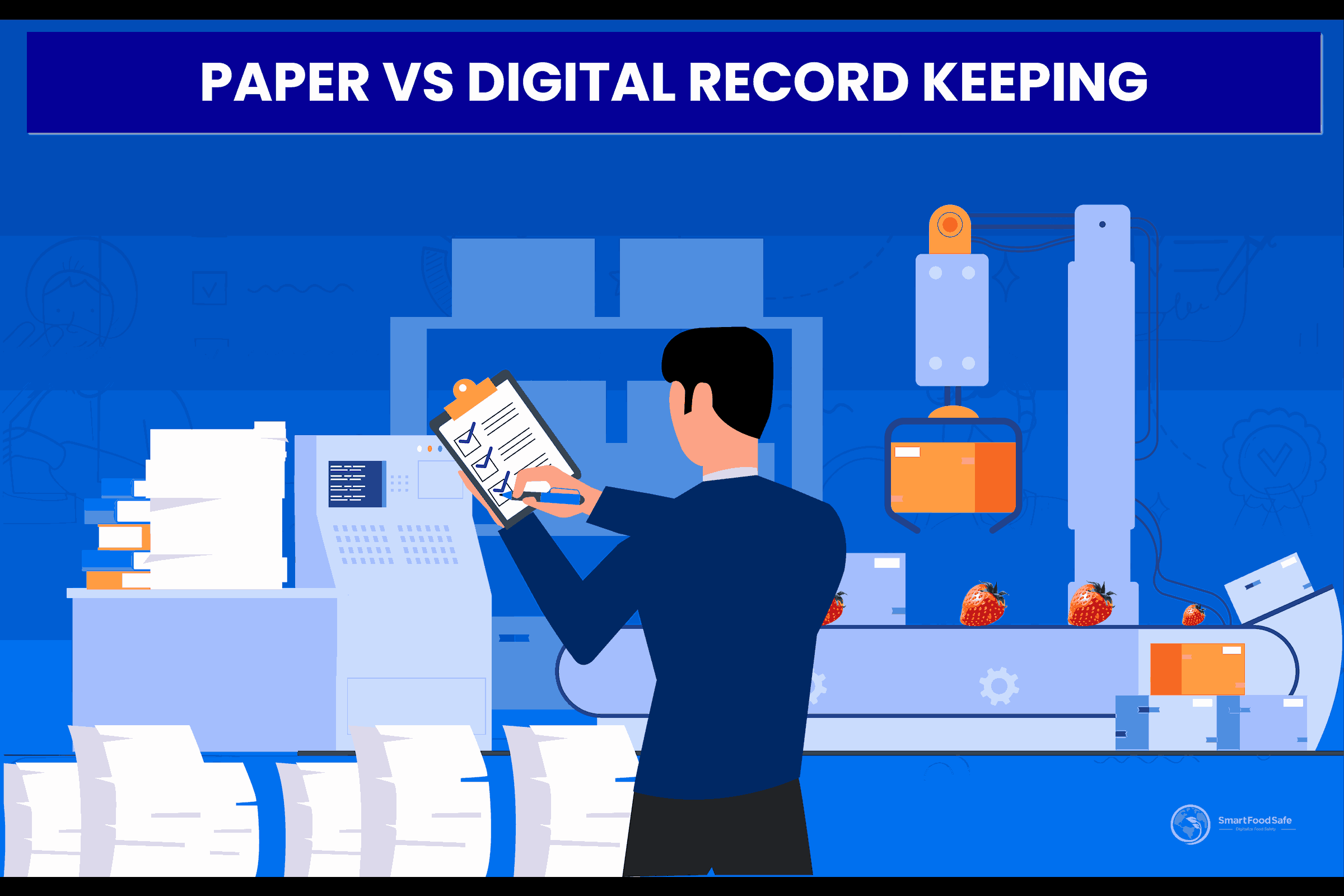
Do you wish to get rid of the heaps of record binders at your office and avoid running through binder after binder to demonstrate compliance during audits? When the world is going digital, why not your records?

  • With the advancement of technological enhancements in every aspect of an enterprise’s work, gone are the days of poring over mountains of paper records and manually searching for information as companies shift from paper-based to digital record-keeping strategies. A notable example of this phenomenon can be seen in how digital transformation impacted the pharmaceutical industry and modified the way it operates in the long term.

Since the pharmaceutical industry began its digitalization journey, they have come a long way in digitizing its data, research, and operations. Record-keeping happens to be a critical element in the pharmaceutical manufacturing space, especially batch records documenting the complete manufacturing history of the product and regulatory compliance information. Paper-based batch records involve endless pages that must be manually filled out and stored, which is a highly labor-intensive process. This is one area where the era of digitalization came to the rescue by enabling pharma companies to create digital records, which are also much easier to review and access for audits. Drawing conclusions from how digitalized record-keeping contributed to pharmaceutical companies, it is not surprising to see that the complex food supply chain is already next in line to adopt the same.

U.S. FDA has already set Part 11 of Title 21 of the Code of Federal Regulations (CFR), establishing how a company functioning in the US is supposed to maintain a compliant and paperless Quality Management System using electronic records and e-signatures in place of paper-based documentation and ‘wet signatures.’

The latest trends in record management seem promising as they are revolutionizing the way businesses can handle their information, ushering in an era of faster, safer, and more efficient record keeping than ever before.

Transition to Digitalized Record-Keeping and Prominent Benefits

As change becomes inevitable to drive efficiency and optimization in record-keeping, it is high time for enterprises to go digital regarding their record management model to upgrade their data systems to the next level and stay at the forefront of the ever-evolving business world. This can be definitively attributed to the many advantages of digitalized record-keeping.

  1. Increased Efficiency: Dealing with physical documents can slow down a team’s productivity due to the time it takes to process record requests and the chance for human error. Using digital solutions for record-keeping can amplify data management efficiency as it can significantly reduce the time and effort it takes to collect, review, store, analyze, store, and retrieve records, liberating employees to focus on more important tasks.
  2. Record Automation: Updating record management programs can be a piece of cake by implementing automated services in carrying out various record-keeping tasks such as capture, review, categorization, smart retrieval, and retention schedules. Automated record-keeping can lead to cost savings, increased accuracy of data processing, and reduced risk of human error in documenting business activities.
  3. Cost Savings: Managing physical documents can be costly, requiring recurring resources and employee time. Our case study shows digital record-keeping brings about an estimated cost saving of an average of $5000 in terms of cutting down the expenses for printing supplies alone. Whereas regarding labor costs for quality program maintenance, the expected savings of an average of $10000-$25000 for a medium-sized company. Considering factors such as the time and cost of locating, scanning, and organizing physical records, as well as the potential financial impact of lost, damaged, or stolen documents, including the cost of replacing them, businesses will have significant cost benefits by digitizing record management and can ultimately improve company’s bottom line.
  4. Real-time Access: When files are recorded digitally, it is possible to place restrictions on sensitive or confidential information efficiently while allowing customizable access options for users. Employees can access digital information even when they are out of the office, opening up the prospects for remote working, especially as the post-pandemic times are promoting work-from-home and hybrid virtual models of working arrangements. Easy accessibility and mobility of digital records enhance collaborative actions and communication in factories and offices.
  5. Improved Data Retention: For any agency or business, managing and meeting retention periods of documents has always posed a significant challenge. Digitalization in record-keeping facilitates more durability for data through migration and conversion of records assisted by tech-enabled systems, which can contribute to mitigating data retention challenges with ease. Migration retains data by moving records from an outdated or obsolete system to a new one, while conversion transforms legacy paper records into a digitalized format using suitable software systems.
  6. Cloud Storage: Digitized records demand improved storage methods such as cloud storage and digital vaults to ascertain record resilience. Cloud storage enables not only high-speed and secure information workflow but also provides location-independent access to the records and elevated security. Web-based record storage is a flexible solution that businesses of any size can employ.
  7. Searchability & Reporting: Advanced search options, such as finding digital documents using keywords, provide a much faster way to find specific information. A much more organized and visually appealing workplace is made possible with easy-to-locate digital records combined with reporting capabilities that allow users to have a consolidated overview of record-management activities and keep an eye for record-keeping trends.
  8. Enhanced Mobility of Record-Keeping: Contemporary workplaces often require their professionals to be on the go to achieve their tasks throughout the day using their smartphones or tablets. Given the fast-paced nature of today’s work environment, instant access to essential documents and records is crucial. Hence, present-day record management systems are designed to be accessible from multiple gadgets, such as mobile devices and tablets.
  9. Greater Regulatory Compliance: Tedious procedures to comply with regulations and legal requirements can be made easy with digital records such as audit checklists, which provide a secure, traceable record of transactions and activities and an accessible and accurate audit trail.
  10. Sustainability: Business sustainability is a strong criterion modern companies look for as it means that they function, preserving the well-being of the local and global environment and supporting the community and economy. Going paperless also helps establishments reduce their carbon footprint for a more sustainable future by minimizing the creation and wastage of paper.

Despite the numerous benefits, establishing optimization in digitalized record-keeping is not without its challenges. Some of the prevailing hurdles faced by industries are data security & privacy concerns, compatibility issues, reliability and longevity of stored data, and management of digital assets across multiple locations.

Smart Record as a Solution for Enterprises To Achieve Digitalized Record-Keeping

SmartFoodSafe presents Smart Record as a robust record management software that enables paperless record-keeping to support day-to-day enterprise operations while providing end-to-end business transparency and traceability. It provides a secure digital space where you can store crucial company records in a reliable and accessible manner through key highlight features such as:

Online Form Builder

Record templates can be constructed by creating digital forms that enable the migration of physical records to digital format without the knowledge of a software developer.

Conditional Formatting & Validation

There is a provision to include a variety of versatile field types for generating user-friendly and dynamic records using tools such as conditional formatting, validations, and formulas as per the convenience of the user.

Workflow

A workflow can be defined for each generated record template according to the required process flow for respective records. This feature ensures the timely and accurate execution of record-keeping.

Audit Log

An audit log authorizes users to monitor past record-keeping actions over a period of time with instant access to transactional data.

Scheduling

A scheduling feature can be included to set reminders for filling records and tracking one-time or frequent tasks. Tasks such as creating, reviewing, or verifying records can be assigned to users with schedules including forward or backward tolerance periods.

Customized Notifications

Based on the actions being performed on their records, users can receive notifications. Users also have the choice to opt for their preferred modes of notifying action, such as email, sms, or in-app notifications.

Traceability

Users can trace records both forward and backward at any stage using critical data for a tailored traceability process to monitor the movement of materials across the supply chain.

Offline Record Keeping

The Android and iOS record applications facilitate the creation of records using Smart Record in offline mode, and the records are automatically synchronized with the system when the user is online.

Dashboard and Custom Reporting

This functionality assists users in visualizing record-keeping processes, generating custom reports, supervising compliance and trends, and retrieving records effortlessly through an interactive interface.

Template Library

A collection of pre-set templates is made available, from which users can choose one that suits their needs. They can then make any necessary adjustments, preview the result for responsiveness, and save it to formulate records.

Companies still maintaining stagnant conventional record-keeping systems are burdened with a multitude of hurdles, including information overload, data integrity, compliance with regulations, tedious record retrieval procedures, missing retention schedules, and environmental issues. If your enterprise is one among those looking to make the transition to digitalized records management or trying to conquer the existing difficulties associated with adopting digital record-keeping systems, reach out to us today to help you navigate through the journey with Smart Record.

The process of digitizing existing paper records typically involves scanning the documents using specialized equipment, converting them into digital files, organizing and indexing the files for easy retrieval, and storing them in a secure electronic database or document management system.

Digital record-keeping is important for businesses as it allows for efficient storage, organization, and retrieval of data. It improves accuracy, reduces paperwork, enhances data security, facilitates compliance with regulations, enables data analysis for informed decision-making, and streamlines business processes, leading to increased productivity and effectiveness.

Yes, digital records are legally accepted in many jurisdictions. The acceptance of digital records depends on the specific laws and regulations of each country or region. However, digital records often need to meet certain requirements, such as authenticity, integrity, and compliance with relevant electronic signature laws, to be considered legally valid.

Storing records digitally can be secure if proper security measures are in place. Encryption, access controls, regular backups, and monitoring help protect data. However, it is important to implement cybersecurity protocols and stay updated on best practices to mitigate the risk of data breaches and unauthorized access.

Digital record-keeping involves using electronic systems to store, manage, and retrieve information, offering advantages like accessibility, searchability, and ease of data entry. Traditional paper-based record-keeping involves manual documentation on physical paper, which can be time-consuming, less organized, and prone to loss or damage.

Quality and Food Safety Management Software

Food Safety and Quality Management Software to streamline processes, track compliance, ensure traceability and maintain audit readiness with global quality and food safety standards

Quality and Food Safety Management Software

Food Safety and Quality Management Software to streamline processes, track compliance, ensure traceability and maintain audit readiness with global quality and food safety standards
1