


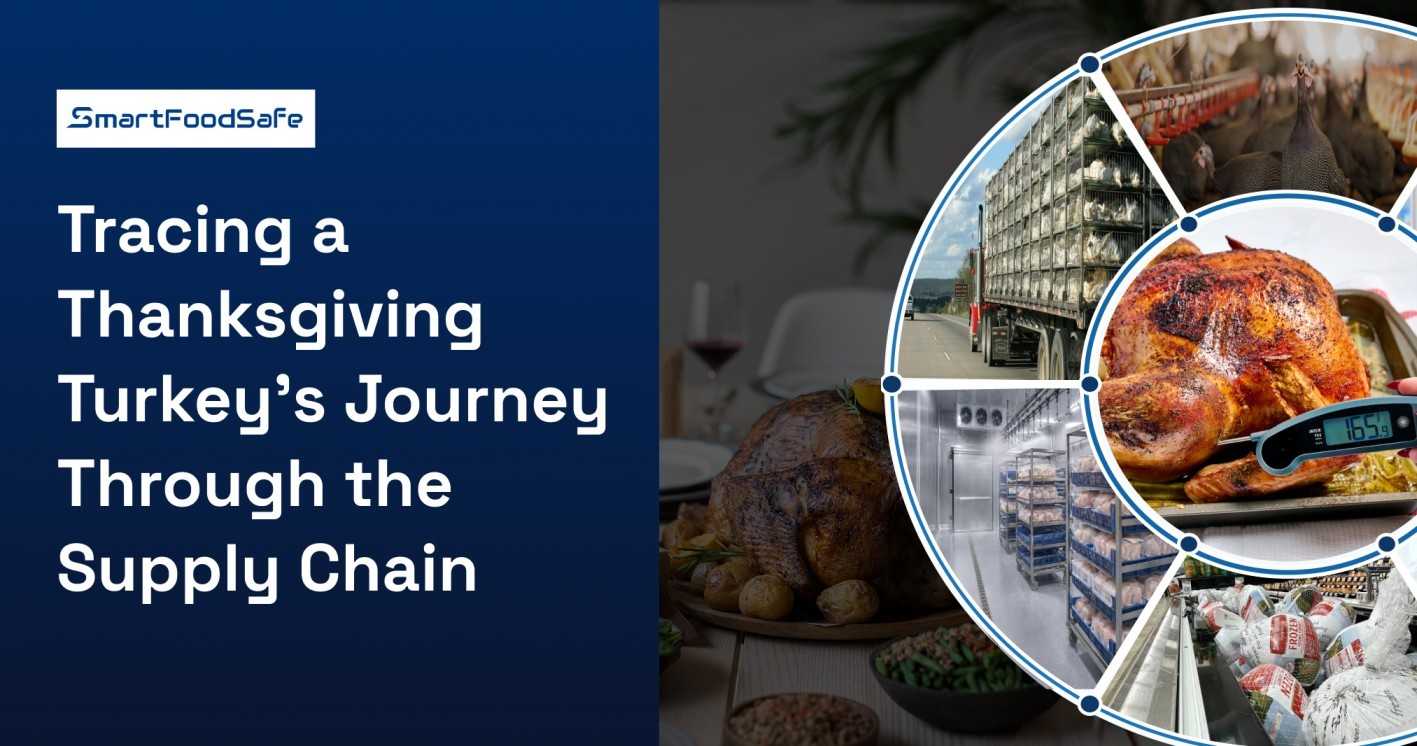
Thanksgiving is a time for family gatherings, shared meals and traditions that bring people together. Across the United States, families prepare their favourite holiday dishes, set the dinner table and look forward to enjoying a Thanksgiving feast. At the centre of many of these celebrations is a roasted turkey, often the highlight of the meal.
Also read: Thanksgiving Food Safety: The Evolving History of America’s Favorite Feast
But have you ever considered how much food safety responsibility goes into putting that turkey on the dinner table?
Long before it reaches a family’s kitchen, turkey passes through several stages of production, processing, storage and distribution. Each stage involves different food safety risks that businesses must identify and control.
As Thanksgiving approaches, rising consumer demand puts additional pressure on poultry farms, processing facilities, manufacturers and distributors to increase production and meet tight delivery schedules. When operations become busier, maintaining hygiene, preventing cross-contamination and ensuring proper temperature control become even more important. A single lapse at any stage can compromise product safety and put consumers at risk.
Past foodborne illness outbreaks linked to turkey products demonstrate the consequences of inadequate controls. A 1995 Thanksgiving dinner in Nevada was linked to a Salmonella outbreak, while a 2015 company Thanksgiving lunch in North Carolina was associated with a Clostridium perfringens outbreak. Between 2017 and 2019, a multistate Salmonella Reading outbreak linked to raw turkey products and live turkeys affected 356 people.
These incidents reinforce why food safety cannot depend on checks at just one point in the supply chain. It requires consistent preventive measures, monitoring and accountability at every stage.
Let’s explore the eight key stages of the turkey supply chain and the food safety practices businesses should prioritise to help keep Thanksgiving meals safe.
1. Maintaining Food Safety During Poultry Farming and Handling
Farm hygiene and flock health are the first lines of defence against contamination. Poor sanitation, contaminated feed or water, and weak biosecurity can introduce pathogens such as Salmonella and Campylobacter into poultry production.
Key Farm-Level Food Safety Practices:
- Restrict farm access and enforce hand hygiene and dedicated clothing and footwear for workers.
- Monitor flock health and ensure regular veterinary checks.
- Protect feed and water from contamination and pest access.
- Clean and disinfect poultry housing and equipment regularly.
- Maintain records of flock health, veterinary treatments and biosecurity practices.
Together, these measures help limit contamination before turkeys reach processing. See the USDA poultry biosecurity guidance for further recommendations.
2. Maintaining Food Safety During Live Bird Transportation
Once birds leave the farm, transportation becomes another potential source of contamination. Dirty crates, unclean vehicles and improper handling can spread microorganisms between flocks and introduce them into processing facilities.
To minimise these risks, transporters should:
- Clean and disinfect vehicles, crates and equipment between loads.
- Ensure adequate ventilation to maintain suitable conditions during transit.
- Minimise unnecessary delays during loading, transportation and unloading.
- Follow hygienic loading and unloading procedures to prevent cross-contamination.
- Maintain records of flock origin, vehicle sanitation and transport details to support traceability.
Proper sanitation and handling during transit help prevent contamination before birds enter processing facilities.
3. Preventing Contamination During Turkey Slaughter and Processing
Slaughtering and processing involve several operations, including defeathering, evisceration and carcass washing, where pathogens can spread if hygiene controls are inadequate. For instance, intestinal contents released during evisceration can contaminate carcasses, equipment and nearby surfaces.
To control contamination during processing, facilities should:
- Inspect incoming birds and follow established receiving procedures.
- Perform evisceration carefully to prevent intestinal contents from contaminating carcasses.
- Clean and sanitise knives, conveyors and other food-contact surfaces regularly.
- Keep raw poultry operations separate from cooked and ready-to-eat areas.
- Apply HACCP-based controls and verify the effectiveness of sanitation procedures.
- Train employees in hygienic handling and cross-contamination prevention.
During periods of increased production, facilities should also review whether sanitation schedules, equipment capacity and employee practices can maintain the same level of control.
4. Maintaining Temperature Control During Chilling and Cold Storage
After slaughter, poultry must be chilled promptly to limit bacterial growth. Delays or inadequate refrigeration can compromise product safety, particularly when increased production puts pressure on chilling and storage capacity.
Manufacturers should follow validated chilling procedures, monitor product temperatures and maintain refrigeration equipment. Temperature-monitoring devices must also be calibrated regularly.
Other important precautions include:
- Maintain appropriate refrigerated or frozen storage conditions.
- Inspect refrigeration equipment and address maintenance issues promptly.
- Record temperature readings and investigate deviations.
- Assess potentially affected products and document corrective actions.
5. Preventing Recontamination During Further Processing and Packaging
Turkey products may undergo cutting, grinding, seasoning, cooking and packaging before reaching the market. Ready-to-eat (RTE) products require particular attention because they may not undergo another cooking step before consumption. For example, Listeria monocytogenes can contaminate products through contact with processing equipment or environmental surfaces after cooking.
To prevent contamination during further processing and packaging, manufacturers should:
- Validate cooking and other pathogen-reduction processes.
- Maintain hygienic separation between raw and ready-to-eat operations.
- Follow documented equipment cleaning and sanitation procedures.
- Implement risk-based Environmental Monitoring Programs (EMP).
- Investigate positive environmental findings, identify potential contamination sources and verify corrective actions.
- Inspect packaging integrity and maintain accurate batch and traceability records.
6. Maintaining Food Safety During Warehousing and Distribution
After processing, turkey products must remain within safe temperature limits throughout storage and transportation. Higher Thanksgiving shipment volumes can increase the risk of refrigeration failures, temperature fluctuations and delivery delays.
Warehouses and transporters should maintain appropriate storage conditions, inspect refrigerated vehicles before loading and monitor temperatures during transit. Minimising loading and unloading delays and maintaining shipment records also support product safety and traceability.
Clear communication between manufacturers, carriers and receivers helps ensure temperature requirements are followed and deviations are addressed promptly.
The FDA’s sanitary transportation guidance outlines key practices for protecting food during transit.
7. Ensuring Turkey Safety During Retail Storage and Food Preparation
Once turkey products reach retail stores, restaurants and catering facilities, proper storage, handling and preparation become critical. Improper refrigeration, cross-contamination or inadequate cooking can allow harmful bacteria to survive or multiply. The 2015 Thanksgiving lunch outbreak in North Carolina, for example, highlighted the risks of holding cooked turkey at unsafe temperatures.
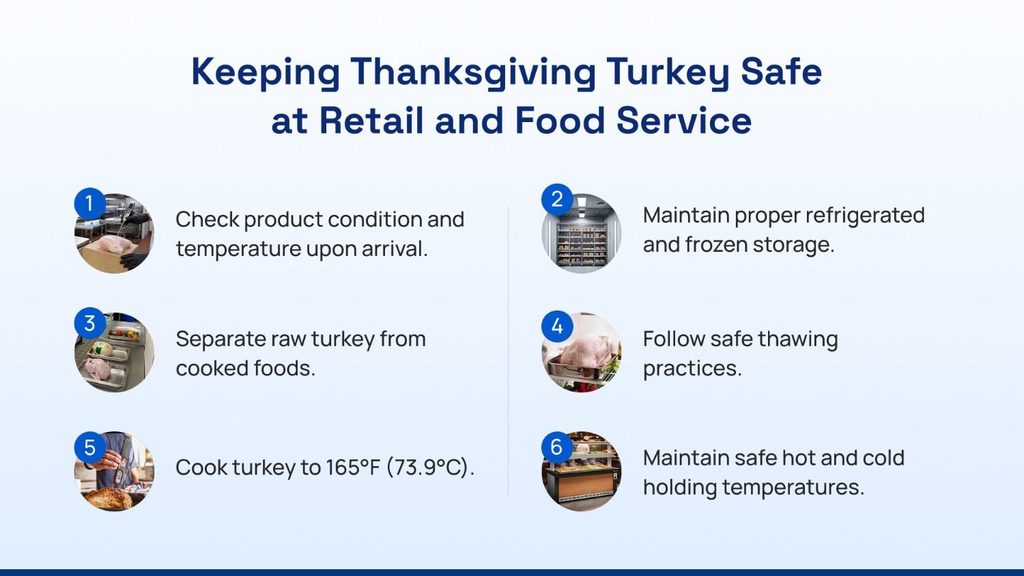
Employees should also be trained in personal hygiene, temperature monitoring and cross-contamination prevention, particularly when preparing large quantities of food for holiday events.
8. Maintaining Food Safety During Home Preparation and Leftover Storage
Food safety remains important even after turkey reaches the consumer. Improper thawing, handling or cooking can introduce contamination or allow harmful bacteria to survive. Consumers should thaw turkey safely, keep raw poultry separate from other foods and use a food thermometer to ensure it reaches an internal temperature of 165°F (73.9°C).
After the meal, leftovers should be refrigerated within two hours, stored in shallow containers and reheated to 165°F (73.9°C) before serving.
Safe food handling at home is the final step in preventing foodborne illness and protecting everyone at the Thanksgiving table.
Watch the Video Guide for: Turkey Food Safety Tips Turkey Food Safety Tips
Strengthening Turkey Supply Chain Safety Through Better Tracking and Compliance
During Thanksgiving, increased production makes it essential for food businesses to keep track of critical activities, from farm hygiene and processing checks to temperature monitoring and corrective actions. Without organised records, identifying gaps, investigating deviations and maintaining consistency across facilities can become difficult.
Effective tracking helps QA and food safety teams verify that controls are followed, address issues promptly and maintain audit-ready documentation.
Smart Food Safe supports this through a connected digital platform that centralises food safety records, streamlines monitoring and tracks corrective actions, helping businesses improve operational visibility and maintain better control over compliance as production demands grow.
A Safer Thanksgiving Starts with Consistent Food Safety Practices
As Thanksgiving brings increased demand for turkey, maintaining food safety cannot be an afterthought. Every stage of the supply chain requires careful attention, reliable monitoring and timely corrective action. When businesses keep these controls consistent and trackable, they are better equipped to protect product quality, meet food safety requirements and safeguard consumers.
Ultimately, a safe Thanksgiving meal begins long before the turkey reaches the table.