


 English
▾
English
▾
English
▾
English
▾
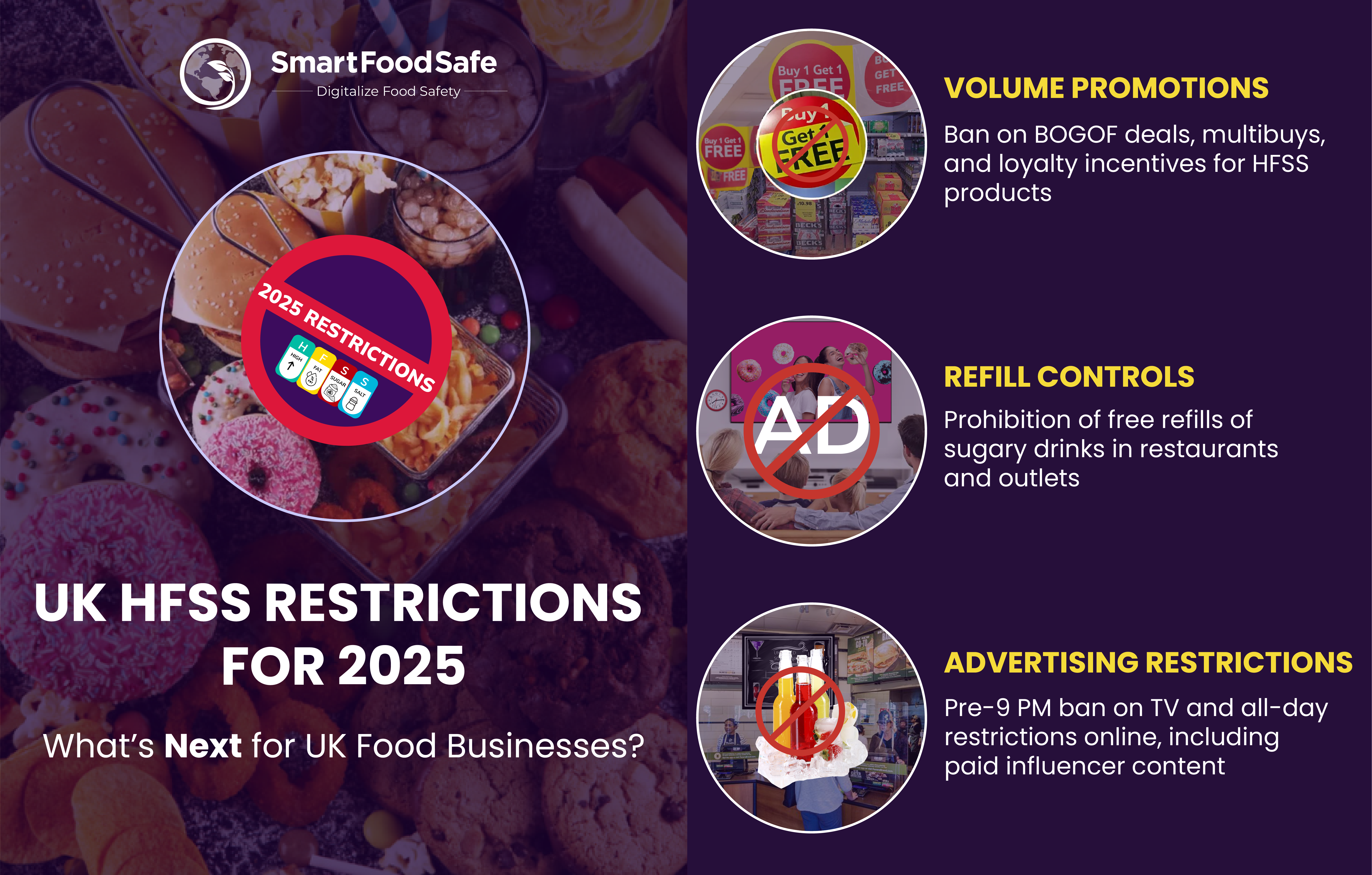
The UK’s HFSS (high fat, sugar, and salt) restrictions have ushered in a new era for food businesses, fundamentally altering how products are marketed, advertised, and promoted. These regulations, designed to combat rising obesity rates and promote healthier eating habits, have already made significant waves. Now, with further updates coming into force by October 2025, food manufacturers and retailers must act decisively to stay compliant while maintaining competitiveness.
The HFSS regulations stem from the UK government’s commitment to addressing public health concerns, particularly childhood obesity. The journey began in October 2022 with the implementation of placement restrictions on HFSS products. These rules banned products from high-visibility spots like aisle ends, store entrances, and checkouts in larger retail stores.
The rationale was simple: limiting exposure to less healthy options would encourage consumers to make more wholesome choices. Data supports this approach; end-of-aisle promotions, for example, were found to increase sugary drink sales by 51.7%. By 2022, the UK government laid the groundwork for a healthier food retail environment.
The initial wave of HFSS restrictions targeted where products could be placed in physical and digital spaces. Supermarkets, websites, and apps had to remove HFSS products from prominent positions like homepages, category landing pages, and payment pages. This created a ripple effect, pushing brands to rethink their strategies.
Fast forward to 2025, and the legislation’s scope is expanding. New restrictions on volume promotions, TV advertising, online marketing, and even free refills on sugary beverages are set to transform the food industry landscape. These measures aim to curb the influence of price-driven and media-driven promotions on unhealthy eating habits.
By October 1, 2025, the HFSS rules will extend to:
Volume Promotions: Offers like “Buy One, Get One Free” (BOGOF), multibuys, and loyalty incentives for HFSS products will be prohibited.
Advertising Restrictions: HFSS product commercials will face a pre-9 PM watershed ban across TV and online platforms. Unlike TV, social media promotions will face all-day restrictions, including paid influencer marketing campaigns.
Refill Controls in Food Service: Free refills for sugary beverages in restaurants and outlets will be banned.
With these points in mind, here’s an overview on what to expect for the times ahead:
The list of food and drink products classified as HFSS has been broadened to include additional categories that significantly contribute to high calorie, sugar, or fat consumption. This expansion ensures that items previously overlooked are now regulated, closing potential loopholes and addressing more sources of unhealthy eating.
Restrictions on advertising HFSS products will extend beyond traditional media platforms. These controls now include digital marketing channels, such as social media and influencer promotions, ensuring comprehensive regulation across modern advertising mediums. This change aims to limit children’s exposure to HFSS product marketing in increasingly digital spaces.
HFSS restrictions on product placement within physical and online retail spaces are becoming more stringent. Retailers will face tighter regulations regarding where HFSS products can be displayed, particularly in high-traffic areas such as checkout counters, store entrances, and end-of-aisle displays. Similarly, online platforms must ensure HFSS products are not prominently featured on homepages or during searches.
The October 2025 updates actively encourage manufacturers to reformulate their products to meet healthier nutritional standards. By aligning with lower HFSS thresholds, businesses can market their products without restriction, incentivizing innovation in healthier food options.
By expanding product categories, introducing stricter controls, and encouraging reformulation, the October 2025 HFSS restrictions set the stage for meaningful progress in public health and nutrition.
The HFSS restrictions impact a wide array of products, from soft drinks and confectionery to ready meals and sweetened dairy products. Brands that fail to comply risk losing shelf space, advertising opportunities, and consumer trust. Moreover, consumers are increasingly health-conscious, meaning non-compliance could harm brand’s reputation. On the other hand, businesses that adapt to the new rules can position themselves as leaders in health-conscious innovation, appealing to a growing demographic of mindful eaters.
Here are key steps to ensure compliance while navigating the HFSS restrictions:
One of the most effective ways to avoid HFSS classification is by reformulating products to reduce saturated fat, sugar, and salt content. Adjusting ingredient profiles not only ensures compliance but also aligns with consumer demand for healthier options. For instance:
⇒ Replace refined sugars with natural sweeteners.
⇒ Use lower-sodium alternatives.
⇒ Incorporate fiber-rich ingredients to offset HFSS scoring.
Developing new, health-focused product lines can help brands diversify their offerings and mitigate the impact of restrictions. Highlighting the health benefits of these products in marketing campaigns can also build consumer loyalty.
Tools like recipe management solutions can simplify compliance processes. These platforms enable:
⇒ Calculation of HFSS scores for recipes.
⇒ Experimentation with ingredient substitutions.
⇒ Generation of accurate nutritional declarations.
With advertising restrictions tightening, brands must adopt creative, compliant marketing strategies:
⇒ Shift focus to promoting non-HFSS products.
⇒ Invest in storytelling to emphasize quality, taste, and health benefits.
⇒ Explore non-restricted promotional channels, such as in-store sampling or collaborations with health-focused influencers.
Retail partnerships will play a critical role in navigating HFSS restrictions. Collaborating on shelf layouts, promotions for non-HFSS products, and customer education initiatives can help mitigate the impact of placement and volume promotion bans.
Empower consumers with information about healthier choices. Use efficient nutritional labels on your food packaging to communicate the nutritional value of your products, demonstrating the steps your brand is taking to support public health goals.
The upcoming HFSS restrictions signal a paradigm shift for the UK’s food and beverage industry. By reformulating recipes, embracing healthier product development, and adopting creative marketing approaches, food businesses can turn regulatory challenges into growth opportunities. The road ahead may be complex, but with the right tools and strategies, navigating the HFSS landscape can position your brand as a leader in the health-conscious era of food retail.
Smart Food Safe’s innovative solutions, Smart Specification and Smart Label is capable of enabling the UK food businesses navigate the HFSS regulations effectively. By facilitating recipe reformulation, enhancing compliance processes, and enabling transparent consumer communication, Smart Food Safe supports brands in meeting regulatory requirements while promoting healthier consumer choices and building long-term trust.

 French
 Spanish
 Portuguese