


 English
▾
English
▾
English
▾
English
▾
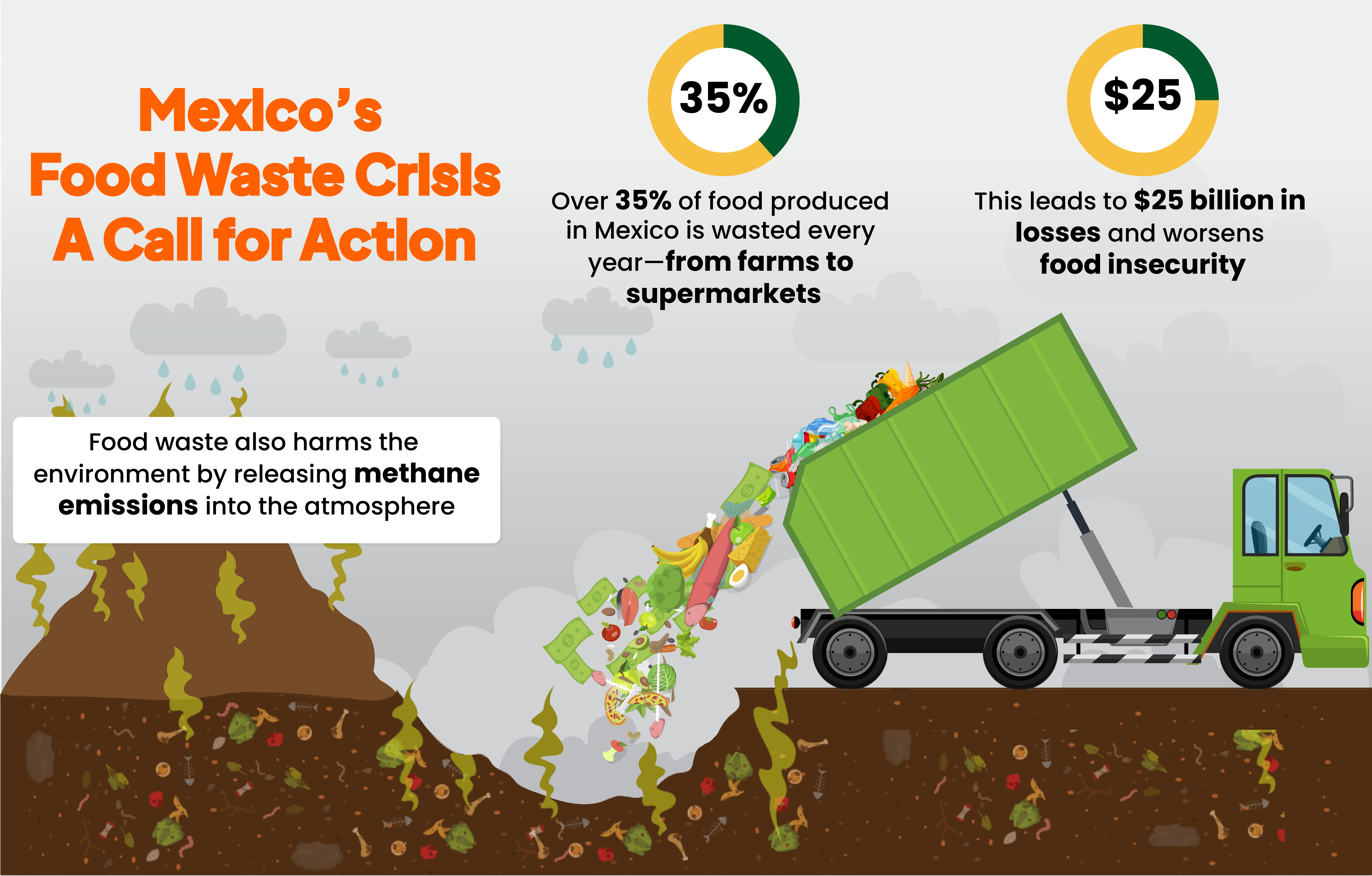
Every year, over 35% of the food produced in Mexico is wasted—an estimated $25 billion worth.
Food waste is a global challenge with dire consequences for the environment, economy, and food security, and Mexico, like many countries, grapples with the dual issues of significant food waste and widespread food insecurity. However, a new toolkit developed by the Harvard Law School Food Law and Policy Clinic (FLPC) and the Global FoodBanking Network (GFN) aims to turn the tide.
This comprehensive resource equips Mexican states with legal and policy strategies to curb food loss and waste through food recovery and donation. Supported by the Walmart Foundation, this toolkit is part of The Global Food Donation Policy Atlas, a global initiative addressing food waste. Here, we explore the toolkit’s potential, its role in shaping policy, and its impact on Mexico’s food system.
The issue of food wastage and loss in Mexico is particularly troubling given that much of the wasted food is nutritious and could feed the 28% of Mexicans who experience moderate or severe food insecurity. Moreover, food waste contributes to environmental issues: when dumped into landfills, decomposing food releases methane, a potent greenhouse gas.
The challenge isn’t just about waste; it’s also about systemic inefficiencies. From farms to supermarkets, food is lost or discarded due to various factors, including improper storage, transportation mishaps, and consumer habits. Addressing this requires a multi-pronged approach that targets every stage of the food supply chain.
Recognizing the urgency of the situation, Mexico’s government passed the General Law on Adequate and Sustainable Food in April 2024. This landmark legislation links food loss and waste to the fundamental right to food, urging states to enact measures to prevent waste and promote food recovery and donation. By April 2025, all Mexican states must align their laws with this mandate.
The new toolkit builds on this momentum, offering practical guidance for implementing effective food donation programs. Some key areas of focus include:
The toolkit’s release comes at a critical time. Mexican lawmakers are addressing food waste with unprecedented urgency, and this resource provides a roadmap for tackling the issue at a systemic level. The toolkit’s strategies draw from global best practices, making them adaptable and proven.
For example, France’s phased approach to food donation laws—starting with supermarkets and later including institutional catering—serves as an inspiration. By gradually expanding requirements, France allowed its food recovery infrastructure to grow alongside legislative changes. Similarly, Mexican states can adopt tailored timelines to ensure effective implementation.
To maximize food recovery, the toolkit recommends making food donation mandatory for businesses generating surplus food. This includes:
When food cannot be donated due to spoilage or other reasons, it should be recycled into animal feed, biofuels, or compost. Aguascalientes’ state law exemplifies this approach, prohibiting food entities from discarding edible waste and requiring them to repurpose unfit food.
Food recovery organizations play a pivotal role in redistributing surplus food, but they often lack resources. To address this, the toolkit suggests:
Nuevo León’s approach—directing budgetary assistance to food banks—highlights the importance of government support.
Education is crucial for changing behaviors around food donation and waste. The toolkit emphasizes:
Tracking food waste helps identify gaps and measure progress. The toolkit recommends:
This data enables governments to refine policies and maximize their impact.
Fear of legal repercussions is a significant barrier to food donation. Many businesses worry about being held liable if someone falls ill after consuming donated food. To alleviate these fears, the toolkit proposes:
States like Tamaulipas and Chihuahua provide strong models, offering clear legal safeguards that encourage donations without exposing donors to undue risk.
Food safety is a critical concern in donation programs. The toolkit aligns with Mexico’s NOM-251 hygiene standards, which establish baseline requirements for safe food handling. It also recommends:
By standardizing practices, the toolkit ensures that donated food is safe and wholesome, protecting recipients and boosting donor confidence.
Mexico’s fight against food waste is a significant step toward achieving sustainability and food security. The toolkit’s strategies, combined with the General Law on Adequate and Sustainable Food, create a robust framework for change. However, implementation will require collaboration among stakeholders, including:
Each state must tailor its approach to local needs while drawing inspiration from successful models worldwide. With coordinated efforts, Mexico can significantly reduce food waste, feed its vulnerable populations, and mitigate environmental harm.
Mexico’s journey highlights the interconnectedness of food waste, hunger, and climate change. Other nations can learn from its example, adapting similar tools to address their unique challenges. The fight against food waste is a shared responsibility, and such solutions offer a blueprint for meaningful action.
For food businesses in Mexico striving to align with the toolkit’s ambitious food safety requirements, Smart Food Safe offers a one-place digital solution. The platform simplifies compliance with Mexico’s NOM-251 hygiene standards, ensuring that every donated food item meets the required safety benchmarks. With Smart Food Safe, you can automate your compliance processes, implement robust food safety controls, and generate real-time reports aligned with the toolkit’s recommendations.
By assisting in mitigating the food safety risks associated with the processes ushered by the toolkit, Smart Food Safe empowers businesses to confidently participate in food recovery efforts without liability concerns. Embrace the future of food safety management with Smart Food Safe and make a meaningful impact today!

 French
 Spanish
 Portuguese