


 English
▾
English
▾
English
▾
English
▾
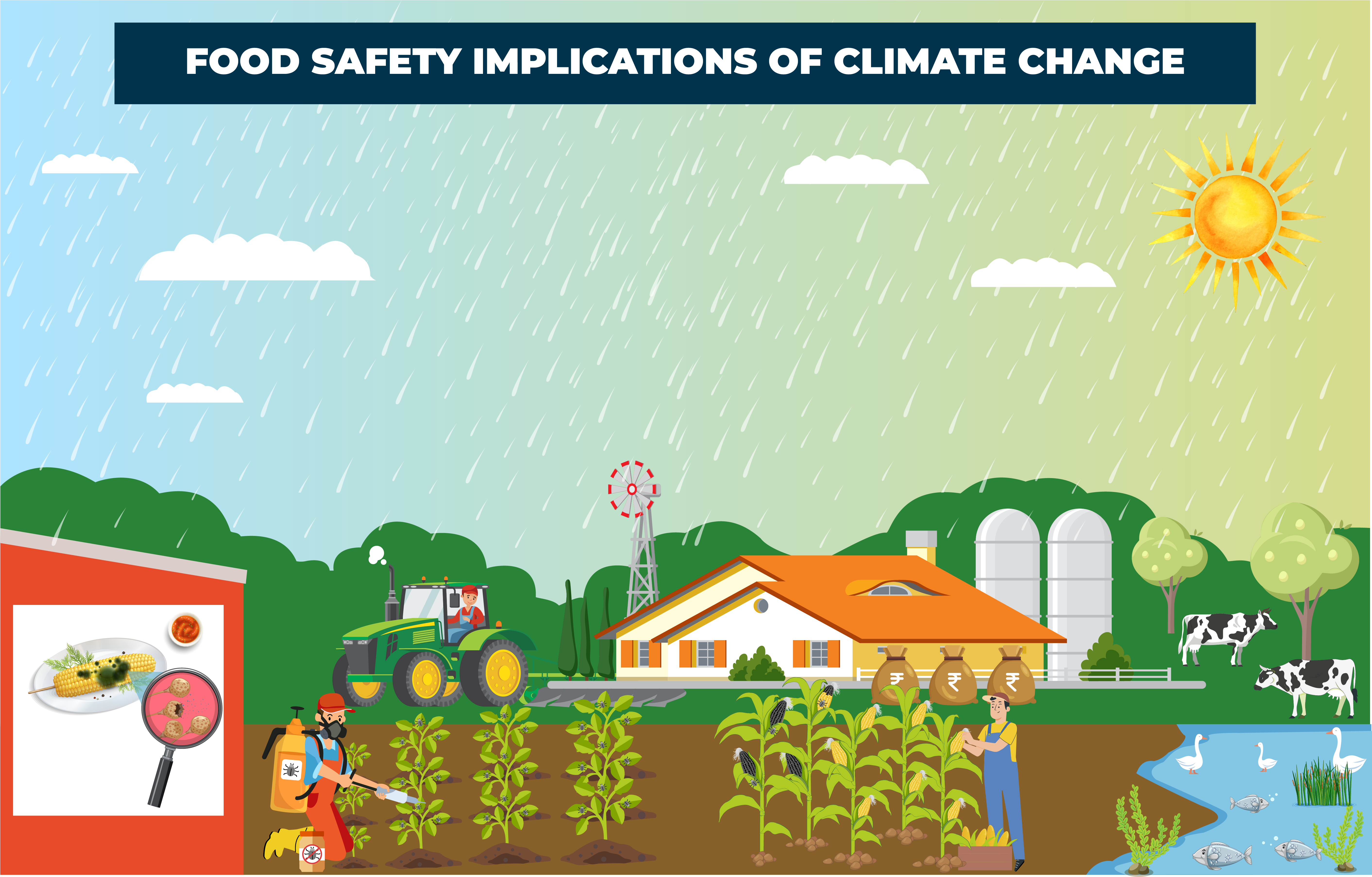
As the world faces the increasing threat of global climate change, its far-reaching consequences are becoming more apparent in various sectors, including food safety. A recent study emphasizes how global climate change contributes to an overall surge in the incidence of foodborne illnesses.
Climate change, characterized by rising temperatures, altered precipitation patterns, and more frequent extreme weather events, is reshaping the global food landscape, posing new challenges to food safety and human health. Recognizing the intricate link between climate change and foodborne infections is critical for sustaining safe food systems and protecting the health and well-being of populations across the globe.
With World Environmental Health Day 2024 (WEHD 2024) observed on 26th September 2024, revolving on the topic of ‘Creating Resilient Communities through Disaster Risk Reduction and Climate Change Mitigation and Adaptation,’ it serves as a valuable opportunity to reflect on food safety implications of climate change, highlighting specific risks, and insights into how food industries should adapt to mitigate these threats.
At its essence, climate change involves the long-term shift in average weather patterns over decades or more, setting it apart from short-term natural weather fluctuations. Global warming, a significant aspect of climate change, specifically describes the sustained increase in Earth’s surface temperature since the pre-industrial era, primarily driven by human activities such as the burning of fossil fuels.
These ongoing processes are transforming the planet, with far-reaching consequences for agriculture, water resources, and food safety, all of which are increasingly vulnerable to this global phenomenon.
Here are the key routes in which climate change brings about detrimental effects on food safety:
Addressing the food safety challenges posed by climate change requires a multifaceted approach that combines scientific research, public health policies, and technological advancements. Below are key actions to mitigate the rising food safety risks associated with global climate change.
⇒ Strengthening Food Safety Regulations
Implementing and enforcing stricter food safety regulations is significant in mitigating the effects of climate change on foodborne pathogens. These regulations should cover the entire food supply chain—from farm to table—ensuring that food is handled, stored, and processed safely. Regular inspections of food production facilities and water quality monitoring are also essential in preventing contamination.
⇒ Enhancing Surveillance and Early Detection
Improved surveillance systems are necessary to detect emerging foodborne pathogen threats. Integrating weather and climate data with food safety surveillance can help predict and prevent outbreaks by identifying high-risk periods and regions. Early detection technologies, such as environmental monitoring, can also be employed to track and trace pathogens more effectively, allowing for faster responses to potential outbreaks.
⇒ Climate-Smart Agriculture
Climate-smart agriculture (CSA) practices are essential for improving food security and safety in the face of climate change. CSA involves adopting sustainable and innovative agricultural practices that increase productivity and resilience while reducing greenhouse gas emissions. These practices include the use of drought-resistant crops, conservation agriculture, and improved water management techniques.
Reducing the use of chemical fertilizers and pesticides and integrating organic farming methods can lower the risk of food contamination. Farmers must also be educated on the importance of hygiene and proper food handling techniques to minimize contamination risks.
⇒ Improving Water Management
Effective water management is important in reducing the risk of foodborne pathogens. Ensuring access to clean water for irrigation, livestock, and aquaculture is vital for preventing the spread of contamination. Technologies that reduce water contamination, such as water filtration systems and wastewater treatment plants, should be widely implemented.
Furthermore, policies aimed at improving sanitation and hygiene in food production areas can reduce the incidence of foodborne illnesses. These measures are particularly vital in low- and middle-income countries, where foodborne diseases are already a significant public health concern.
⇒ Creating Awareness and Education
Educational programs conducted in the food sector can bring about a difference in preventing foodborne illnesses in the context of climate change. Food handlers and farmers must be informed about the risks posed by foodborne pathogens and how climate change exacerbates these risks. Simple measures, such as proper food storage and cooking practices, can significantly reduce the spread of contamination. Food producers should be trained in food safety best practices, including the use of personal protective equipment and the importance of maintaining hygienic working conditions.
⇒ Employing Tech-Assisted Methodologies
One area of focus is minimizing food safety incidents such as food recalls and addressing inefficiencies across the supply chain with state-of-the-art digital tools, to reduce food waste and improve food preservation. This simply means for the food safety problems of today, we must respond with food safety solutions for the future, safeguarding food production systems against climate-related disruptions.
By adopting these approaches, the food industry can better anticipate and manage the risks posed by climate change, ensuring that food remains safe and accessible in the face of ongoing environmental shifts.
Food safety and climate change are inextricably linked, and addressing one without considering the other is no longer an option. The time to act is now.
It was a while ago that Smart Food Safe set out on its journey to ensure global food safety in a smarter way with software solutions for food businesses to cut down their food safety mishaps and adapt to evolving environmental and other conditions that affect the food supply chain.
Smart Food Safe’s Smart Farm, integrated with climate and weather data supports climate-smart agriculture by tracking sustainable farming practices, water management, and reducing chemical usage. By digitizing food safety processes, Smart Docs, Smart Record, and Smart Audit can help in ascertaining comprehensive compliance with strengthened regulations across the entire supply chain, from farm to table, while facilitating real-time monitoring and inspections.
Furthermore, Smart EMP’s enhanced surveillance and verification capabilities for the food manufacturing facilities, allow for early detection of emerging pathogens and potential outbreaks. Smart Food Safe also promotes education and awareness through Smart Training for food handlers and farmers, ensuring adherence to best practices.
With tech-assisted functionalities, this platform can prevent food recalls, minimize waste, and protect food systems from climate-related food safety issues, providing a future-ready solution to evolving food safety challenges.

 French
 Spanish
 Portuguese