


 English
▾
English
▾
English
▾
English
▾
Good Manufacturing Practice (GMP) compliance is the foundation of regulated industries like food and pharmaceuticals. The FDA enforces GMP regulations, commonly referred to as current Good Manufacturing Practice (cGMP), which are outlined in various sections of the Code of Federal Regulations (CFR).
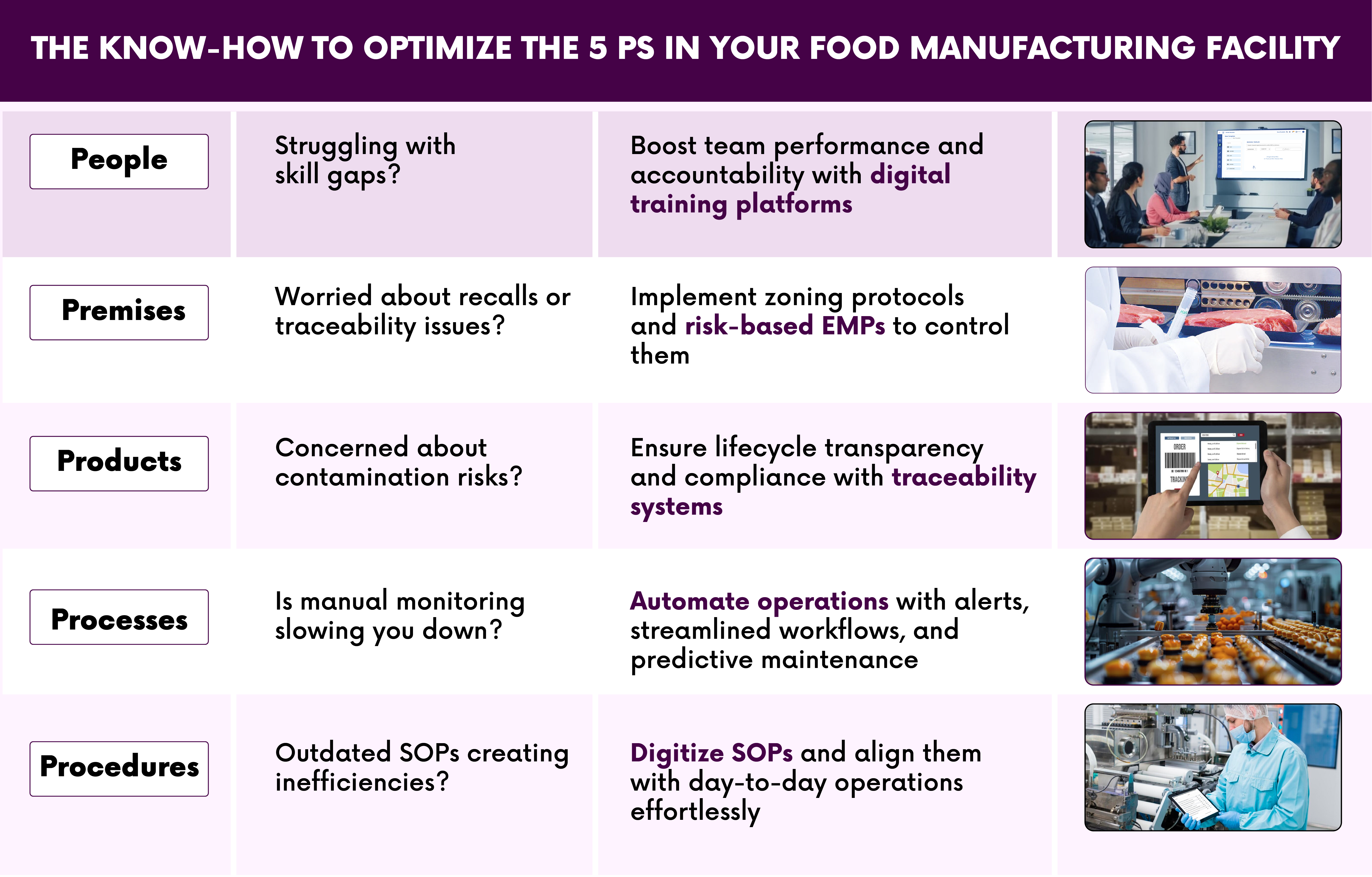
These regulations encompass numerous requirements, but they can be distilled into five critical components, known as the “5 Ps,” namely products, processes, procedures, premises, and people. For companies operating in food industries, understanding and rightly implementing the 5 Ps is imperative to maintain regulatory compliance and ensure product safety and quality.
Below, we delve into each component and explore how food manufacturers can optimize them.
The cornerstone of Good Manufacturing Practice (GMP) is its people. Ensuring your workforce is knowledgeable, skilled, and competent in their roles to rightly follow procedures is paramount. GMP compliance hinges on comprehensive training programs that cover essential principles such as material handling, sanitation, and hygiene.
Training alone, however, is not enough. Regular process and skills verification are vital to confirm that employees understand and consistently apply GMP standards. Without well-trained staff and periodic checks on compliance, efforts to maintain GMP standards risk being undermined.
Premises encompass the facilities and equipment used in manufacturing. GMP regulations emphasize designing, constructing, and maintaining facilities to minimize contamination and quality risks. They should also be designed in such a way that they make way for the ease of movement. The equipments in the premises should be calibrated and validated with proper schedules and procedures for doing the same.
Sanitation goes beyond routine cleaning; it includes maintaining equipment and infrastructure to prevent issues. For instance, food manufacturing facilities must be regularly inspected to address vulnerabilities like water leaks or potential pest entry points. Even seemingly minor issues, such as condensation from an exposed pipe, can jeopardize product safety.
The quality and safety of final products rely heavily on the integrity of raw materials. GMP mandates strict adherence to master formulas, with no deviations, and thorough testing protocols to ensure ingredient quality. Specification and standards should be available for the raw materials used in the production. Moreover, appropriate methods should be followed for every step of manufacturing, packing, sampling, testing, and retaining of the same.
Supplier quality plays a pivotal role, as deficiencies can pose significant risks. Manufacturers must implement processes such as:
GMP compliance requires all critical steps to be identified and defined clearly as processes to be validated, documented, and consistently followed to prevent cross-contamination and ensure quality. Regulatory bodies like the FDA and ISO mandate comprehensive documentation of operations, quality systems, and best practices.
In the regulatory context, “If it’s not documented, it didn’t happen.” It’s equally critical to verify that processes are executed as documented. Techniques like layered process audits reinforce compliance, ensuring documentation is a reflection of actual practices and not just paperwork. Adequate change control procedures should also be established and followed.
Procedures cover the detailed work instructions and Standard Operating Procedures (SOPs) that define specific tasks. SOPs are a fundamental part of GMP, serving as a framework to meet safety and quality standards. They should align with employee training programs to ensure proper implementation. Any deviations must be investigated and resolved properly. Regular evaluation of these procedures is important — ideally annually or in response to:
Procedures must be clearly documented, detailed, and accessible to all employees. They should be revised periodically to reflect changes in regulations, technology, or processes.
The food manufacturing industry operates in a high-stakes environment where prioritizing and getting the best out of the 5 Ps can lay the groundwork for your business to go a long way in ensuring utmost safety, quality, and compliance. Seeking out tech-enabled strategies to level up these components can be substantial to ushering sustained success in your food manufacturing business.
Smart Food Safe is equipped with tailored tech-assisted supply chain management modules that can serve to bring about a critical difference in the efficiency of GMP’s key elements — the 5Ps. Here’s a glimpse of how we do it:
1. People: Empower your workforce with:
2. Premises: Optimize your facility management with:
3. Products: Enhance product safety and quality with:
4. Processes: Ensure consistent and efficient operations using:
5. Procedures: Streamline SOP management and implementation:

 French
 Spanish
 Portuguese