


 English
▾
English
▾
English
▾
English
▾
A food safety system is the broader umbrella. It includes all the rules, practices, controls, and tools used to keep food safe, such as hygiene practices, supplier checks, sanitation, training, testing, inspections, and legal compliance. A Food Safety Management System (FSMS) is the structured, organized way of managing all those controls. In simple terms, the food safety system is the full safety approach, while the FSMS is the management framework that makes that approach repeatable, documented, monitored, and continuously improved. This distinction matters because a company can have food safety activities in place, but without an FSMS, those activities may stay fragmented instead of working as one controlled system.
In short, the system handles the “what” while the management system handles the “how, why, who, and when we improve.” This distinction matters because regulators, customers, and certification bodies now expect the full management approach.
At its core, FSMS is about prevention. It covers everything from farm to fork and ensures consistent safe food production.
Instead of waiting for problems to appear in finished product testing, it builds controls into the process itself. That is why HACCP, a science-based system that identifies hazards and controls risks, is central to modern food safety management.
The principles most often associated with an FSMS come from HACCP. The seven HACCP principles are widely used as the backbone of FSMS design because they create a practical, prevention-focused control system. ISO 22000 reflects this by combining HACCP principles with a full management system approach for organizations across the food chain.
The core principles, drawn largely from ISO 22000, include:
Any organization that grows, processes, packages, stores, transports, distributes, or serves food can benefit from an FSMS. ISO 22000 is designed for any organization regardless of size or position in the food chain, which means it applies to processors, manufacturers, ingredient suppliers, logistics providers, caterers, and even packaging-related operations that affect food safety.
FSMS is especially important for businesses that operate under regulatory oversight or sell into retail and export markets. National food control systems are built to protect consumer health and support safe trade, and food business operators must comply with the laws and regulations in their jurisdiction. That means FSMS is not just for large corporations. Small and medium businesses also need one if they want to stay compliant and competitive.
Food safety requirements vary across countries, but they follow a similar underlying approach. In the United States, the Food Safety Modernization Act (FSMA) focuses on preventive controls. The European Union Regulation (EC) No 852/2004 enforces strict rules, while India operates under FSSAI guidelines.
Despite these regional differences, most regulations are built on a common global foundation shaped by Codex Alimentarius standards developed by the FAO and WHO. Because of this alignment, food businesses, especially exporters, can often meet multiple regulatory requirements through a single, well-structured FSMS.
The primary purpose of a Food Safety Management System is to ensure that food is consistently safe for consumption while preventing contamination and foodborne risks. It also helps businesses maintain safe working environments, protect their brand reputation, and meet regulatory requirements.
A strong FSMS is built on interconnected elements that work together to control risks, maintain compliance, and ensure safe food production.
Effective communication ensures that food safety information flows between suppliers, internal teams, and customers. Knowing where materials come from and where products go helps identify risks early and maintain transparency throughout the supply chain.
FSMS is not a one-time setup but a structured system integrated into daily operations. It relies on clear processes, defined responsibilities, performance monitoring, and continuous improvement to stay effective over time.
PRPs form the foundation of food safety by maintaining a clean and controlled environment. These include:
This element focuses on identifying potential hazards and controlling them at critical points in the process. It ensures that risks are prevented, eliminated, or reduced to safe levels through monitoring, corrective actions, and verification.
Accurate records and traceability systems help track products, monitor processes, and demonstrate compliance during audits. They also support faster response during recalls or investigations.
Implementing an FSMS requires a structured and step-by-step approach, starting with strong leadership and ending with continuous improvement.
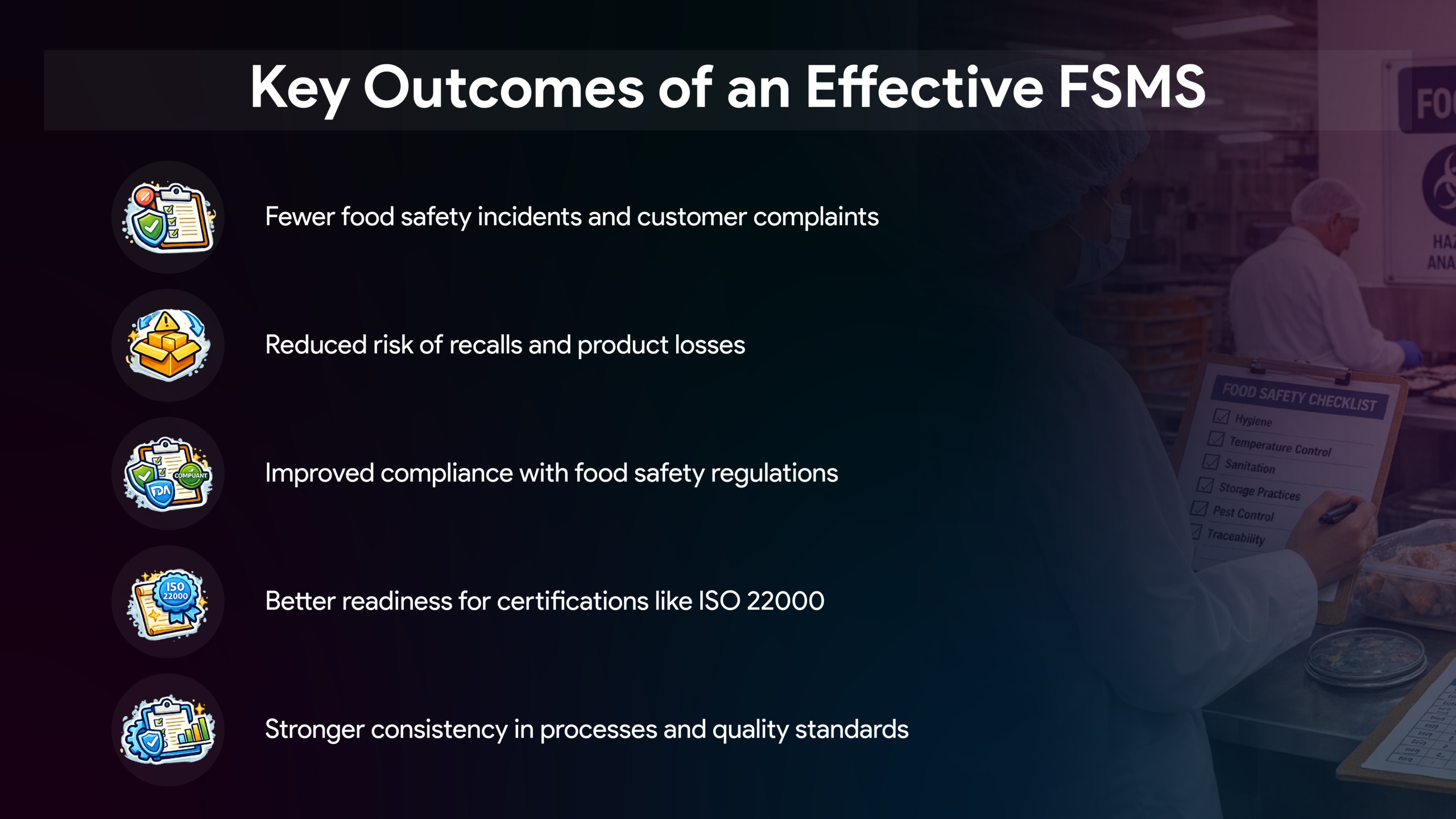
A well-implemented FSMS goes beyond compliance by improving operations, visibility, and trust.
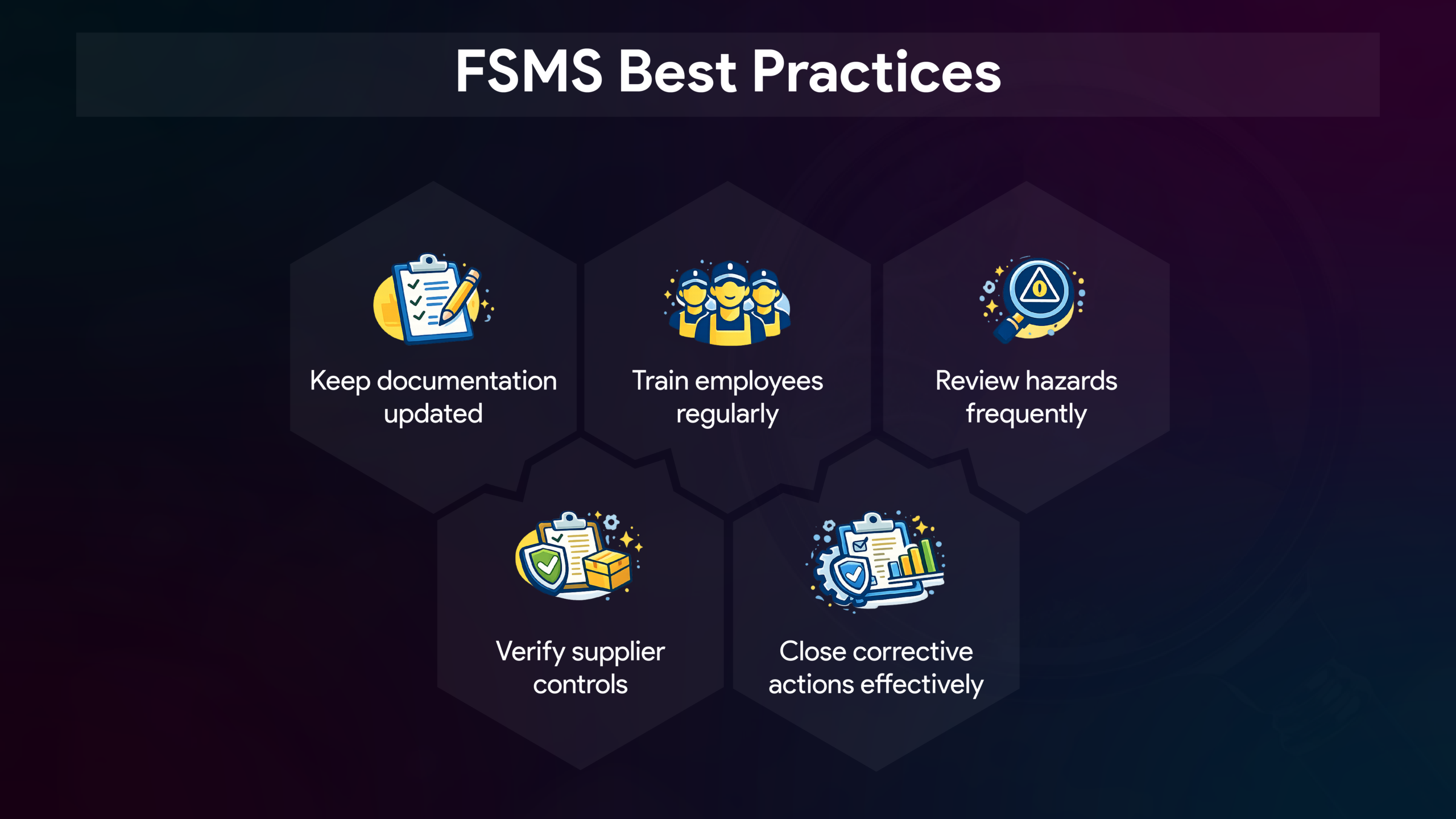
A strong real-world example is the U.S. FDA’s Preventive Controls for Human Food rule under FSMA. Under this rule, covered food facilities must have a written food safety plan that includes a hazard analysis and risk-based preventive controls.
This is a clear FSMS-style model in action because it requires the business to identify hazards, define controls, monitor them, and maintain records rather than relying only on end-product testing.
Even the best FSMS will fail if people do not adopt it. Change management matters because food safety systems affect daily habits, reporting behavior, documentation, and accountability. Teams need to understand not just what to do, but why it matters. FDA’s food safety culture work makes this point clearly.
Organizational readiness also means checking whether the business has enough training, time, technology, and leadership support to sustain the system.
Digital transformation is changing FSMS from paper-heavy, reactive systems into faster, more traceable, and more connected workflows. FDA is working toward a safer, more digital, traceable food system through its New Era of Smarter Food Safety initiative.
In real operations, digital FSMS tools can support automated monitoring, instant alerts, audit trails, faster corrective action tracking, and better traceability during investigations.
Selecting the perfect FSMS software or consultant is crucial. Look for solutions that scale with your business, support your target certification (ISO 22000 or GFSI), offer easy mobile access, and include built-in training resources.
If you are ready to build or upgrade your Food Safety Management System with a modern, user-friendly solution, consider Smart Food Safe.
Smart Food Safe is a modern, digital-first platform designed specifically for food safety and quality teams. It helps organizations simplify compliance, streamline workflows, and gain real-time visibility into their food safety operations.
A Food Safety Management System is not just a compliance requirement. It is the framework that helps food businesses protect consumers, meet legal obligations, improve consistency, and grow with confidence. Whether you are following national regulations, working toward ISO 22000, or modernizing with digital tools, the goal is the same: safe food, every time.

 French
 Spanish
 Portuguese