


 English
▾
English
▾
English
▾
English
▾

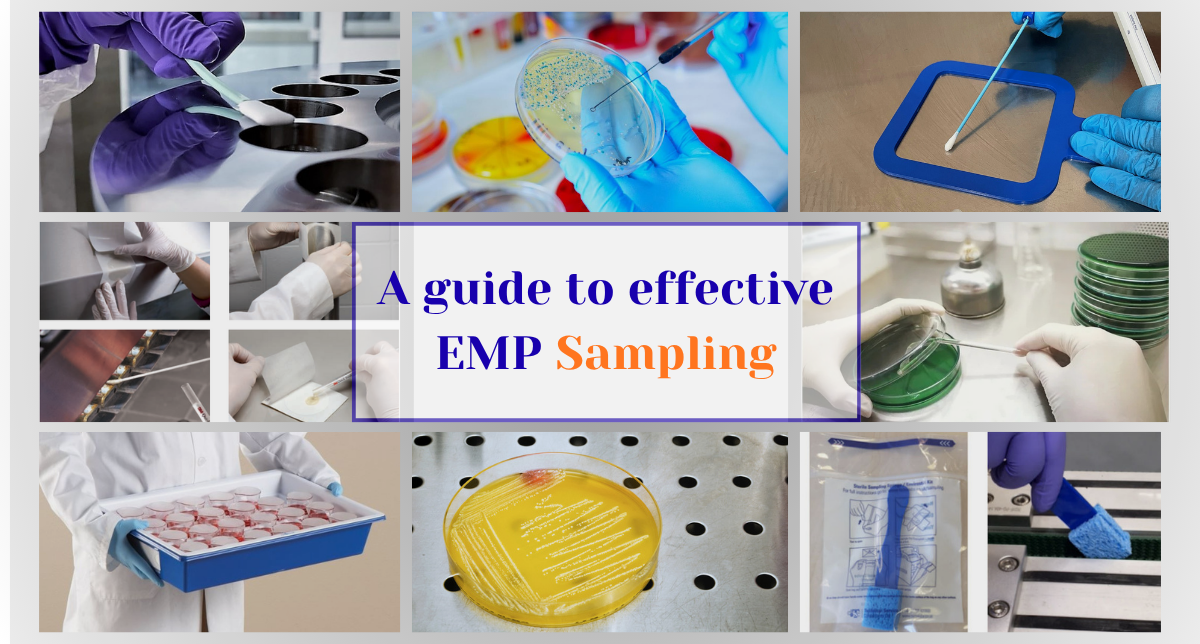
You swab every week, but are your samples truly revealing the real picture of your production environment’s risk?
If you’re a food safety professional managing a food safety program, this question might hit close to home. Environmental sampling is one of the most critical tools in your Environmental Monitoring Program (EMP), but even the best programs can produce misleading results if sampling isn’t done right. From choosing the right neutralizers and sampling tool to following correct methods and handling procedures, every step matters for FSMA compliance and proactive pathogen control.
Let’s break down the best practices to make your environmental sampling both accurate, reliable, and a truly strategic asset in your food processing facility.
The key components of sampling in Environmental Monitoring Programs (EMP):
When you collect a sample, you’re trying to capture the microbial reality of a surface. However, residual sanitizers like chlorine, iodine, or quaternary ammonium compounds (Quats) can continue to kill or inhibit bacteria after sampling, leading to dangerous false negatives. This is a critical flaw that undermines the entire food safety process.
Neutralizers are the essential components included in your swabs or sponges that immediately deactivate these residual sanitizers. Choosing the correct neutralizer is paramount and depends on several factors:
| Factor | Consideration |
|---|---|
| Sanitizer Type | The specific chemicals used in your facility (e.g., Quats, peracetic acid, chlorine). |
| Testing Goal | Is your test qualitative (presence/absence, often for pathogens like Listeria) or quantitative (exact count, often for indicator organisms)? |
| Lab Compatibility | Ensuring the neutralizer doesn't interfere with the laboratory's specific culture or molecular methods. |
| Neutralizer | Primary Target Sanitizers | Key Application Notes |
|---|---|---|
| Dey/Engley (D/E) Broth | Broad-spectrum, highly effective against Quats, chlorine, and phenolics. | Excellent for general surface testing and disinfectant efficacy studies. |
| Letheen Broth | Effective against Quats and some halogens (iodine, chlorine). | Often used for cosmetic and pharmaceutical testing, also applicable in food. |
| Neutralizing Buffer | Often a proprietary blend, validated for a wide range of common food-industry sanitizers. | Versatile for testing for Listeria, Salmonella, E. coli, and Total Plate Count. |
| Buffered Peptone Water (BPW) | Minimal neutralizing ability. | Primarily an enrichment broth, not a neutralizer. Should not be used on recently sanitized surfaces. |
Pro Tip for Food Safety Professionals: Always demand validation data from your supplier proving the neutralizer's efficacy against the specific concentration of sanitizers used in your facility.
The choice between a swab and a sponge is not arbitrary; it must align with the surface type, area size, and your testing objective within your EMP zones.
| Device | Sponges | Swabs |
|---|---|---|
| Ideal Application | Large, flat, non-food contact surfaces (Zone 2, 3, 4) | Small, hard-to-reach areas, irregular surfaces (Zone 1, 2) |
| Surface Area (Minimum) | ≥100 cm², ideally ≥1,000 cm² (e.g., floors, walls, large equipment frames) | ≤100 cm² (e.g., small valves, gaskets, seams, specific points on food contact surfaces) |
| Testing Type | Qualitative (Pathogen detection, e.g., Listeria) | Quantitative (Indicator organisms, CFU/cm²) |
| Key Advantage | High sample volume increases the probability of capturing low levels of contamination | Precision and suitability for small, defined areas |
Important Note: Always use sterile, lab-grade devices. Household sponges or non-validated swabs can contain biocides or inhibitors that will compromise your results. For added safety, consider devices with features like color-coding or metal detectability.
Even with the perfect device and neutralizer, poor technique will invalidate your results. The goal is to maximize microbial recovery while maintaining aseptic conditions.
The larger the surface area sampled, the greater the chance of detecting contaminants. Each swab stroke should firmly contact the surface to pick up organic matter where microbes may reside. Target real contact points like cracks, corners, and joints to capture a true picture of environmental hygiene.

Clean technique and the right moisture balance are crucial for reliable sampling. Aseptic handling prevents contamination, while proper moisture ensures better microbial recovery from surfaces.
The journey from the plant floor to the laboratory is a critical control point. Mishandling here can destroy the integrity of your environmental sampling efforts.
| Critical Transport Control Points | Best Practice for Food Safety |
|---|---|
| Temperature Control | Keep samples refrigerated (2-8°C), but never freeze them as freezing can damage or destroy target microbes, resulting in false negatives. Conversely, exposure to higher temperatures can promote microbial growth, leading to inaccurate or misleading results. |
| Time to Lab | Deliver to the laboratory as quickly as possible, ideally within 24 hours. ISO 18593:2018 provides specific guidance on holding times. |
| Container & Tracking | Use clean, sanitized, and clearly labeled containers. Use ice packs to maintain temperature and verify the cooler temperature upon receipt at the lab. |
| Post-Sampling Sanitation | After collecting samples, immediately re-sanitize the sampled area. The neutralizer or enrichment media left behind could otherwise become a source of contamination. |
Environmental sampling is a strategic tool that reflects the actual microbial state of your facility and is much more than a routine task. When done carefully, it helps food safety experts see hidden dangers and stop contamination before it becomes an issue.
By carefully selecting the right neutralizers for your sanitizers, choosing appropriate devices for the surface and testing type, following proper sampling techniques, and ensuring safe transport and handling, you can generate data that truly represents the microbial reality of your production environment.
Smart EMP bridges the gap between best practices and practical implementation. It offers a digital platform to manage your sampling schedules, log neutralizers and devices, standardize sampling methods, track sample transport, and maintain audit-ready records. With Smart EMP, your environmental monitoring program becomes smarter, more efficient, and more reliable.
Confidence in your data is the ultimate goal of environmental sampling. Your team can take preventative action, improve your food safety program, and safeguard each product that leaves your facility with the help of accurate, trustworthy samples.
As a result, environmental sampling is an essential component of a strong food safety culture. It will pay off in prevention, compliance, and peace of mind if you invest in it prudently.

 French
 Spanish
 Portuguese