


 English
▾
English
▾
English
▾
English
▾
In the vibrant and culturally diverse landscape of the Middle East, food safety plays a critical role in ensuring the quality and integrity of the wide array of cuisines available. This region is a melting pot of expatriates and tourists, making it a unique hub where global flavors and traditional local dishes converge. However, with this diversity comes the challenge of ensuring stringent food safety standards across various culinary styles. For food businesses in the Middle East, understanding and implementing targeted food safety protocols is essential to maintain consumer trust and uphold public health standards.
The Middle East is renowned for its rich culinary heritage, with influences from Arabic, Levantine, Persian, and Mediterranean traditions. Alongside these are global cuisines introduced by expatriates from Asia, Europe, and Africa. Each cuisine has unique preparation methods, ingredients, and storage requirements, all of which pose distinct food safety challenges. For example, raw seafood used in Japanese cuisine, or the preservation techniques employed in Mediterranean dishes, require specific handling and monitoring protocols.
This diversity of culinary traditions is not only a draw for tourists but also contributes to the region’s dynamic food and beverage industry. Dubai, for instance, has emerged as a key culinary destination, attracting global chefs and food innovators. This trend emphasizes the need for food safety practices that can adapt to the varying requirements of different culinary styles while meeting international standards.
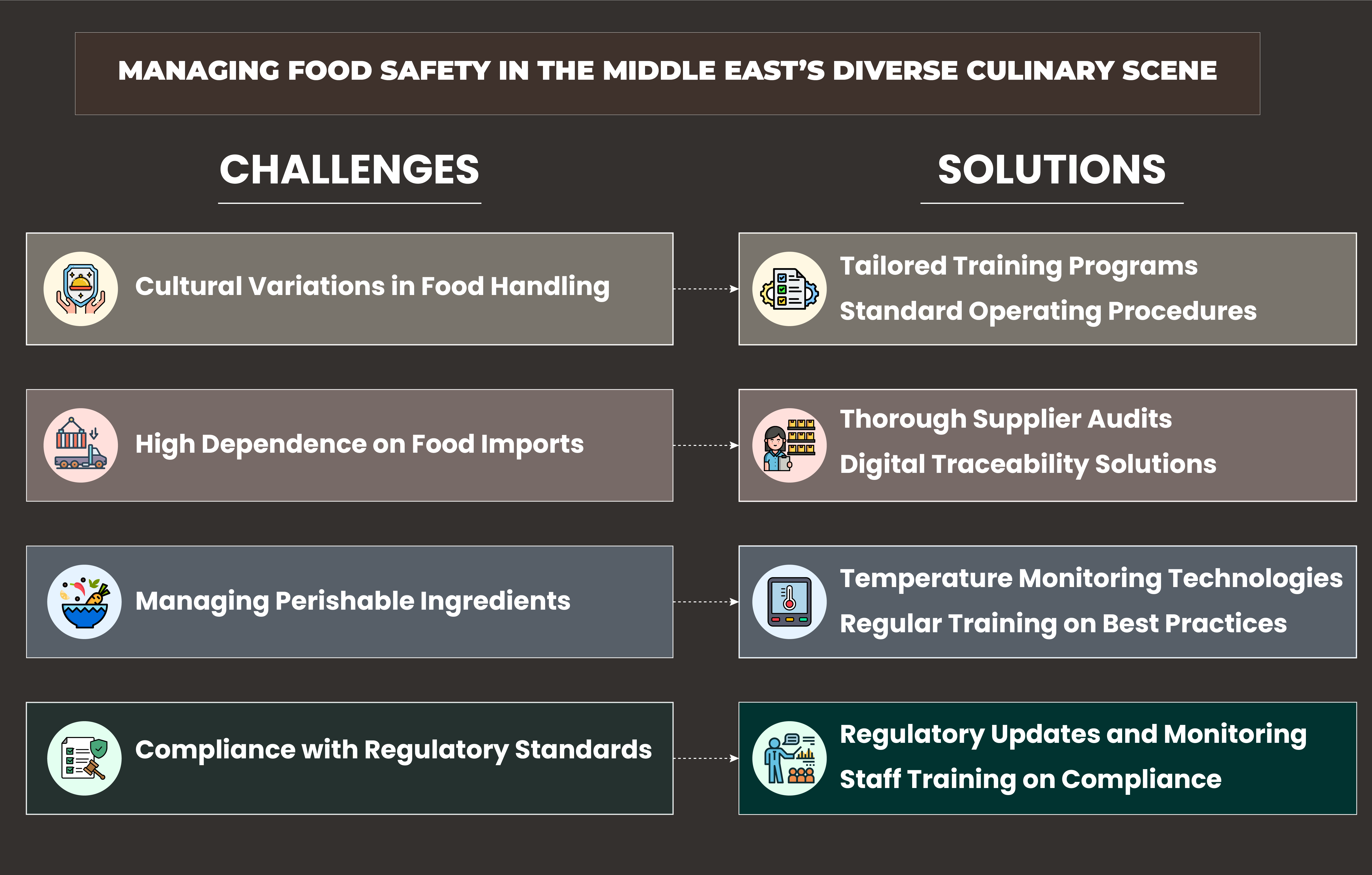
Given below are the key food safety challenges faced in the Middle East region attributed to its multi-cuisine culture:
• Cultural Variations in Food Handling
Different cultures have varying food preparation and consumption habits, which can influence food safety risks. For instance, traditional Middle Eastern dishes like raw kibbeh or sushi from Japanese cuisine may require different approaches to handling raw ingredients. Training staff to understand these nuances is critical for preventing cross-contamination and ensuring safe food handling.
• High Dependence on Food Imports
The Middle East is a net importer of food, relying heavily on imports to meet domestic consumption needs. This dependence makes the region vulnerable to global market fluctuations, geopolitical tensions, and other disruptions stemming from conflicts. This reliance increases the risk of food shortages and affects the stability of food prices, impacting access to affordable and safe food for many populations.
• Managing Perishable Ingredients
The Middle Eastern climate can be harsh, with extreme heat and humidity posing risks to food storage and transportation. Ensuring that perishable ingredients are stored at the correct temperatures is vital to preventing spoilage and bacterial growth. For food businesses, investing in high-quality refrigeration and transportation systems is crucial for maintaining the integrity of imported and locally sourced ingredients.
• Compliance with Local and International Standards
The Middle East has made significant strides in food safety regulations, with countries like the UAE implementing stringent food safety standards aligned with international norms. Food businesses must stay updated with local regulations such as the UAE Food Code, which emphasizes hygiene, traceability, and hazard analysis critical control points (HACCP). This is especially important for businesses serving a wide range of cuisines, as compliance ensures the safety of diverse food products.
To thrive in the Middle Eastern market, food businesses need to adopt targeted strategies that cater to the diverse needs of the region’s culinary scene:
Tourism is a major economic driver in the Middle East, and safe dining experiences are key to maintaining the region’s reputation as a top culinary destination. Food businesses need to ensure that tourists from diverse backgrounds can trust the safety and quality of the food they consume. This involves not only following regulations but also being transparent about food sourcing, preparation methods, and allergen information.
As dining preferences shift towards healthier options, businesses are incorporating more organic and locally sourced ingredients. This shift aligns with the expectations of health-conscious travelers, but it also requires adherence to organic certification standards and transparent sourcing practices. For food businesses, maintaining open communication about their food safety practices can build trust with both local customers and international visitors.
As the Middle East continues to attract global attention for its culinary diversity, food safety remains a crucial area of focus. Food businesses must invest in training, technology, and sustainable practices to ensure the safety of a wide range of dishes. With the right approach, they can not only meet regulatory requirements but also enhance customer confidence and satisfaction.
The Middle East’s unique blend of cultures and cuisines offers both opportunities and challenges for food businesses. By adopting targeted food safety protocols that cater to the specific needs of different cuisines, businesses can provide a safe and enjoyable dining experience for all. This approach will be instrumental in maintaining the region’s status as a global culinary destination and supporting its vibrant hospitality industry.
Smart Food Safe is committed to providing smart food safety management solutions that enable the food businesses to level up their food safety game such that to not only meet current needs but also anticipate future demands. With features that improve process efficiency, support regulatory compliance, and enhance supply chain traceability, Smart Food Safe empowers businesses in the region to overcome their unique food safety bottlenecks, ensuring the safety and security of their food supply chains. Here’s how we strive to make a difference.
Enhancing Compliance in Diverse Regulatory Environments – The fragmented regulatory frameworks across the Middle East pose a challenge for businesses aiming to maintain consistent food safety standards. Smart Food Safe’s cloud-based solutions are customizable, enabling companies to align with the various local, national, and international regulatory requirements. This flexibility ensures that businesses across different countries, from the UAE to Saudi Arabia, can meet stringent food safety regulations and remain audit-ready.
Boosting Supply Chain Resilience – Given the region’s high dependence on food imports and the vulnerabilities in the supply chain, Smart Food Safe’s digital record-keeping and document management tools are pivotal. These features help businesses manage critical information related to product specifications, food handling procedures, and traceability, reducing the risk of contamination or foodborne outbreaks. Smart Food Safe’s tools also bring real-time monitoring of food safety risks throughout the supply chain, augmenting responsiveness and decision-making.
Supporting Technological Advancements in Food Production – As Middle Eastern countries increasingly invest in agricultural technologies such as vertical farming and hydroponics, Smart Food Safe offers a digital farm management solution that can smoothly integrate with these innovations. It facilitates accurate documentation of new agricultural practices, ensuring that food safety and quality are maintained in line with modern production techniques.
Building Transparency and Trust – Consumer trust is critical in regions where food safety challenges are prominent. By offering digital transparency through real-time data, Smart Food Safe allows businesses to showcase their commitment to high food safety standards. This level of transparency helps in building consumer confidence, particularly in markets where public health oversight may be inconsistent.

 French
 Spanish
 Portuguese