


 English
▾
English
▾
English
▾
English
▾

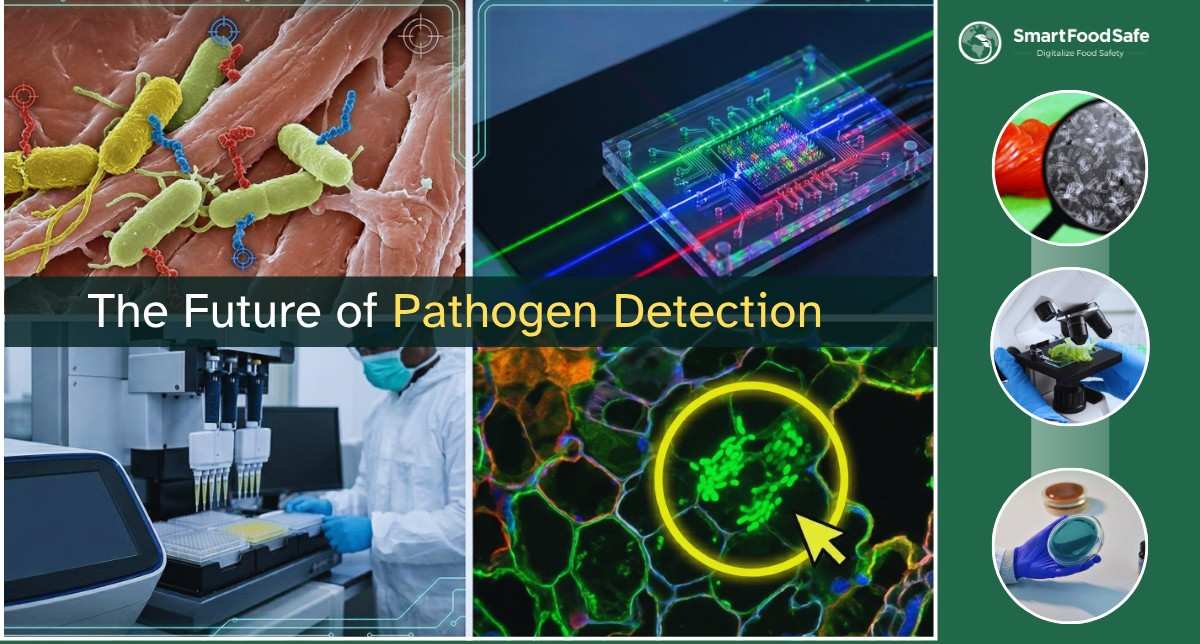
Are you making food safety decisions based on the present or the past?
In an industry where production moves fast and risks evolve even faster, timing isn’t just important, it’s everything. Because the moment you detect a problem often determines whether you prevent it… or deal with the consequences later.
Batch testing is the process of collecting samples from a production batch and sending them to a lab for analysis, with results typically available hours or days later.
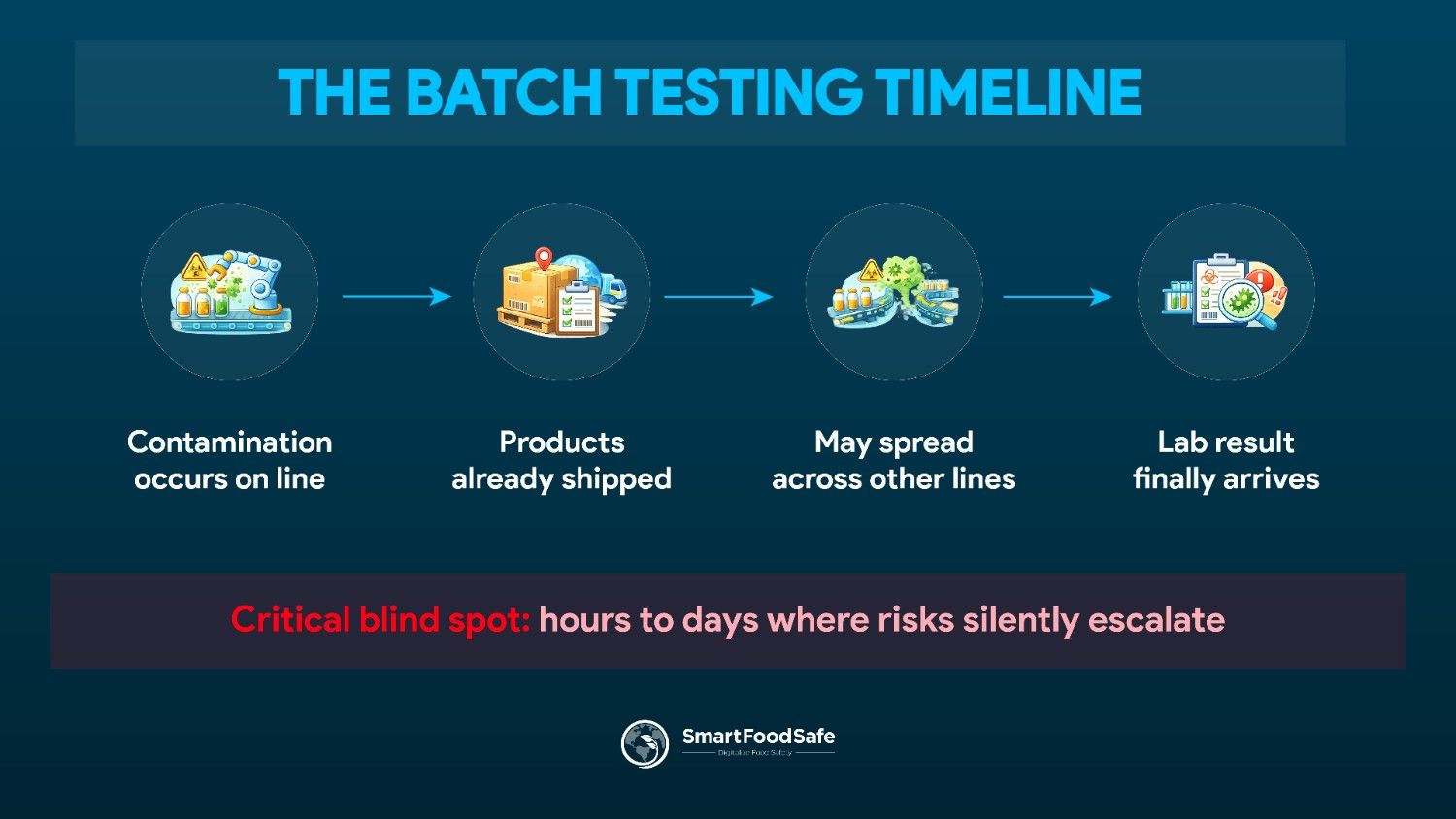
The issue is not that it does not work but it works too late.
By the time results come back:
Traditional microbiological methods also tend to:
In a fast-moving supply chain, this creates a critical blind spot between when contamination occurs and when it is confirmed.
That blind spot is where food safety risks escalate.

The biggest shift is not just speed but intelligence.
This transformation is powered by several complementary technologies working together.
Machine learning significantly enhances biosensors by improving accuracy, shortening detection times, and automating result interpretation.
These sensors offer high sensitivity, low cost, and scalability, though they still need further validation improvements for widespread industrial use.
Techniques such as Surface-Enhanced Raman Spectroscopy (SERS) and microfluidic fluorescence imaging enable ultra-fast and highly precise pathogen identification.
Integrating multiple data sources (sensors, imaging, and environmental data) dramatically improves detection reliability in messy, real-world food production environments.
Advanced approaches now include next-generation sequencing, metagenomics, CRISPR-based diagnostics, and predictive analytics to forecast risks before they materialize.
AI-powered systems deliver clear, actionable advantages:
Despite the benefits, adoption comes with challenges:
Frameworks like the Food Safety Modernization Act (FSMA) continue to emphasize preventive controls, robust environmental monitoring, and thorough documentation — areas where AI can help when properly implemented.

As AI-powered pathogen detection becomes faster and more data-rich, food safety teams will need more than just alerts. They will need systems that can capture findings, trigger actions, track outcomes, and keep every step audit-ready, without slowing operations down.
This is the exact direction Smart Food Safe has been developing.
We are moving beyond simple digitization of checklists toward truly connected, responsive platforms. Our focus includes rethinking environmental monitoring should work in a world of continuous data. Moving away from static checklists toward connected, responsive workflows that can handle higher data frequency, faster decision-making, and stronger traceability requirements.
With Smart Food Safe, teams can:
Because as detection evolves, the systems supporting it need to evolve too.
So the real question is not whether AI will transform food safety.
It is whether your systems are ready to keep up.

 French
 Spanish
 Portuguese