


 English
▾
English
▾
English
▾
English
▾
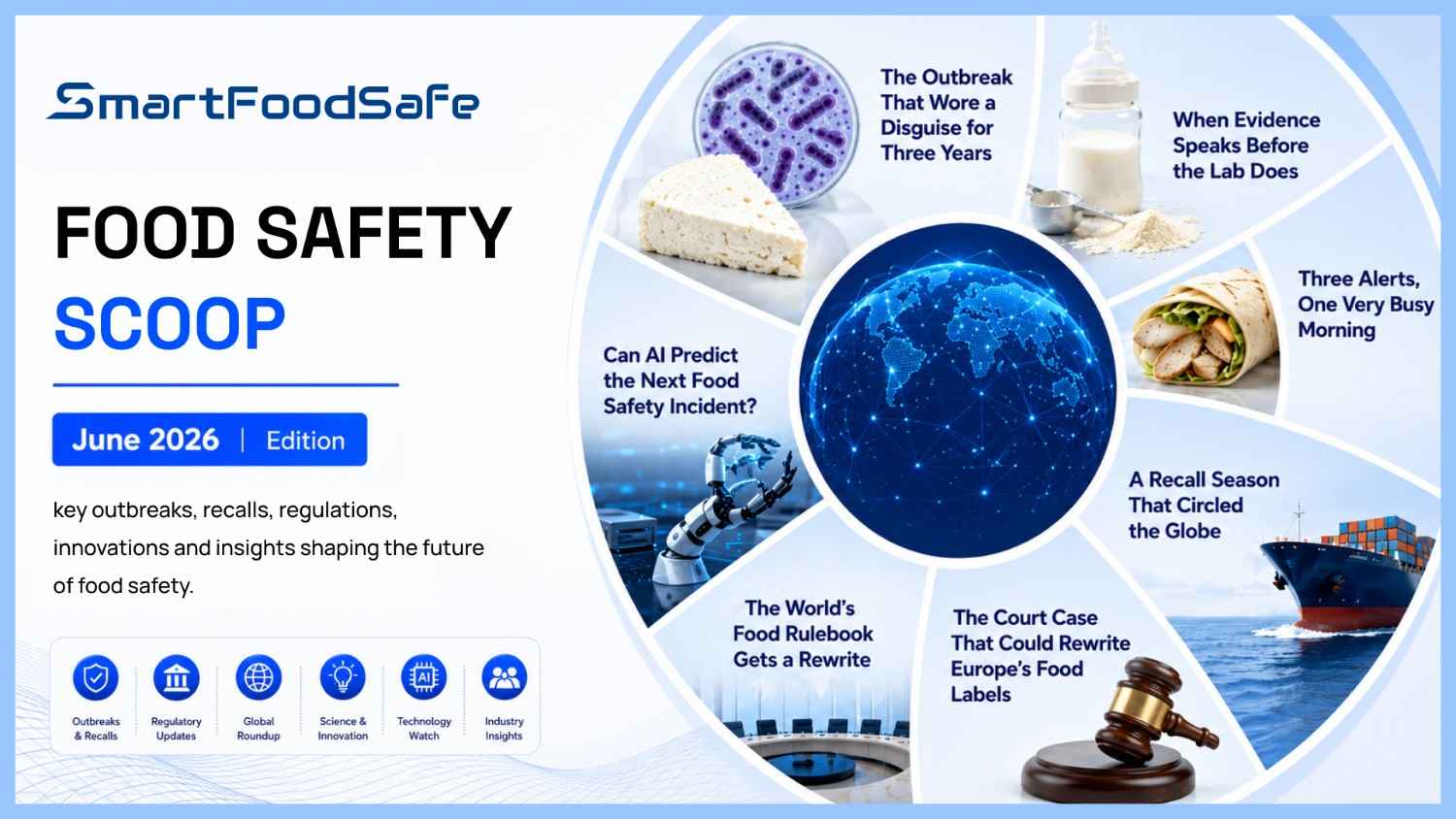
There is an enduring paradox at the heart of global food safety: the more interconnected our food supply chains become, the more diligently regulators and industry must work to stay ahead of the risks posed by contamination, operational lapses, and emerging hazards.
June 2026 highlighted both the challenges and the progress shaping the food industry. From World Food Safety Day on 7 June to major recalls, foodborne illness outbreaks, regulatory updates, emerging technologies, and certification developments, the month underscored the industry's continued commitment to strengthening food safety systems. This edition of Food Safety Scoop brings together the most important developments from around the world and what they mean for food manufacturers, regulators, and food safety professionals.
June's recall landscape highlighted two recurring threats to food safety: microbial contamination and undeclared allergens. Together, they accounted for some of the month's most significant regulatory actions, affecting products across multiple food categories and international markets.

The month's outbreaks highlighted the evolving nature of foodborne disease investigations, where rapid epidemiological analysis and supply chain traceback are enabling regulators to act before laboratory confirmation alone can provide all the answers.
June saw continued regulatory activity across global markets, with authorities introducing new measures, updating guidance, and refining compliance requirements for the food industry.

Artificial intelligence, that ubiquitous phrase of our present age, found rather concrete expression in food safety circles this June.
The certification fraternity, not always given to public drama, nonetheless found itself embroiled in a spot of quiet debate this June.
Academia, ever the patient chronicler of what industry and regulators must confront in real time, offered its own contributions.
7 June, as it happens every year, occasioned rather more than the customary ceremonial gestures.
The month's technical calendar, though modest in its theatrics, was not without substance.
If June 2026 offered one enduring lesson, it is that food safety is less a destination than a discipline of perpetual vigilance. Scientific innovation may furnish us with ever more sophisticated tools, regulators may refine their frameworks, and artificial intelligence may sharpen our ability to anticipate risk, yet the essence of food safety remains unchanged: the willingness to act decisively before uncertainty hardens into crisis.
The month's recalls, outbreak investigations, regulatory developments, and technological advances remind us that progress is seldom forged through singular breakthroughs. More often, it is the cumulative effect of countless measured interventions, each inspection completed, each hazard identified, each standard strengthened, and each lesson learned, that gradually fortifies the integrity of the global food supply.
In an industry where complacency is the greatest adversary, June served as a quiet but compelling reminder that vigilance, collaboration, and continuous improvement remain the surest safeguards of public health.
Food Safety Scoop – May 2026 Edition: Outbreaks, Recalls, and Regulatory Updates — catch up on last month's roundup, including the moringa Salmonella outbreak, the infant botulism investigation findings, and the EU's incoming PFAS packaging ban.

 French
 Spanish
 Portuguese