


 English
▾
English
▾
English
▾
English
▾
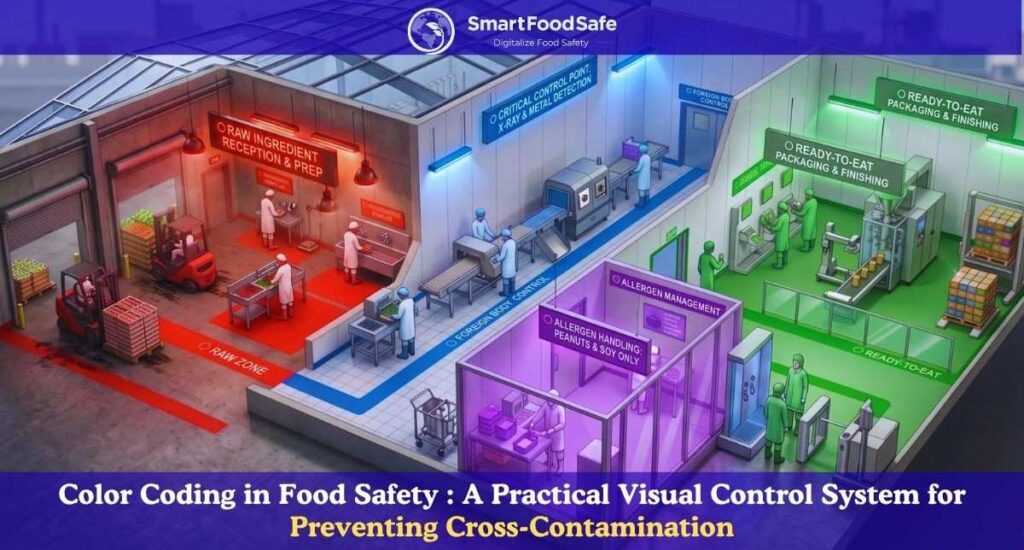
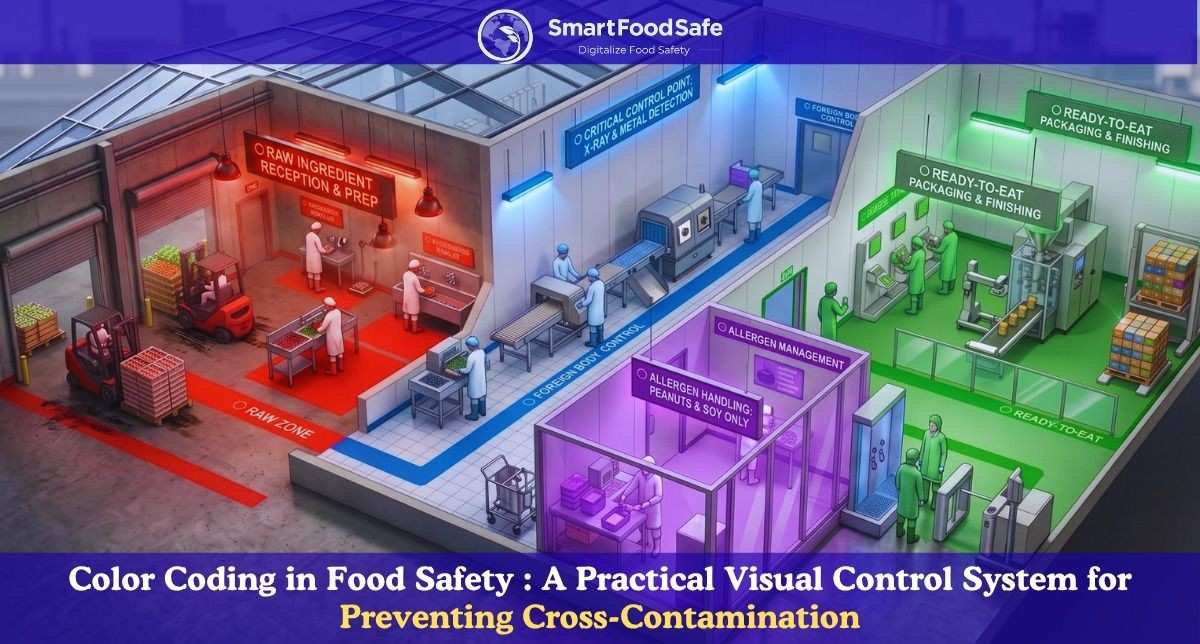
In food production, safety is often decided by the smallest details. A tool placed in the wrong area. A tray used in the wrong zone. A glove, bin, or brush that looks harmless but creates a risk no one notices until it is too late.
That is why color coding matters.
At first glance, it may seem like a simple housekeeping system. In reality, it is a visual control method that helps people make safer decisions faster. When a facility uses color coding properly, employees do not have to guess where a tool belongs or whether an item is meant for raw, ready-to-eat, allergen, or sanitation use. The color tells them immediately.
This matters because food safety is built on prevention. FDA’s Food Code describes food safety as a system of overlapping safeguards, and FDA’s HACCP guidance defines food safety as the control of biological, chemical, and physical hazards through a systematic preventive approach.
A well-designed color coding program does more than keep a plant looking organized. It helps reduce cross-contamination, supports segregation, and reinforces daily discipline on the production floor.
FDA’s guidance on allergen cross-contact recommends separation in time and space, dedicated facilities and equipment where possible, traffic-flow controls, visual identifiers, and controlled movement between allergen and non-allergen zones. The same guidance also notes that color codes should be clear and should not conflict with other color systems already used in the facility.
In practical terms, this means a color coding system can help employees understand:
There is no universal color standard for every food plant, so the exact mapping should always fit the operation. Still, many facilities use a model like this:
The real value is not the color itself. The value is consistency. A color only works when everyone understands what it means and follows the same rule every time.
This is especially important in allergen control. FDA guidance says allergen cross-contact can be minimized through dedicated facilities, equipment, and traffic patterns, including unidirectional movement and visual identifiers such as tags, labels, and even color-based employee identification in some cases.
Color coding becomes powerful when it is tied to the bigger food safety system.
FDA’s CGMPs address sanitation, plant design, equipment, and process controls as key parts of safe food production. FDA’s HACCP guidance also emphasizes a preventive system based on hazard analysis, monitoring, corrective actions, verification, and records. Color coding helps those systems work in the real world by making responsibilities visible on the floor.
For example:
These are small choices, but repeated daily, they shape behavior.
The most common failure is inconsistency.
A facility may introduce a color system during training, but over time the meaning gets blurred. One team uses one shade for sanitation. Another uses the same shade for maintenance. A supplier sends in tools that do not match the plant standard. New employees are not trained properly. Then the system stops being a system.
A good color coding program is usually simple, visible, and documented:
This is where color coding supports HACCP in a practical way. HACCP is not just a form or a flowchart. It is a management system for controlling hazards across the process. Color coding makes those controls easier to understand and follow.
Auditors and inspectors often look for the same thing: consistency.
If the plant has a defined color map, clear zoning, dedicated tools, proper storage, and trained staff who can explain the system, the operation is much easier to trust. FDA’s Food Code and CGMP guidance both point toward safe facilities, sanitation, and strong process control. A visible color coding system supports all of that by reducing ambiguity.
That is especially relevant today because FDA continues to actively update food-allergy and cross-contact guidance. FDA’s food allergies page, updated in March 2026, reinforces the agency’s focus on ingredient declaration and protection for consumers with allergies.
Color coding is not a branding exercise for the production floor. It is a control system.
When the colors are clearly defined, consistently applied, and properly understood, they can help prevent cross-contamination, strengthen segregation, support allergen control, and improve audit readiness. In a food facility, that kind of visual discipline is not optional. It is part of how safety becomes real.

 French
 Spanish
 Portuguese