


 English
▾
English
▾
English
▾
English
▾
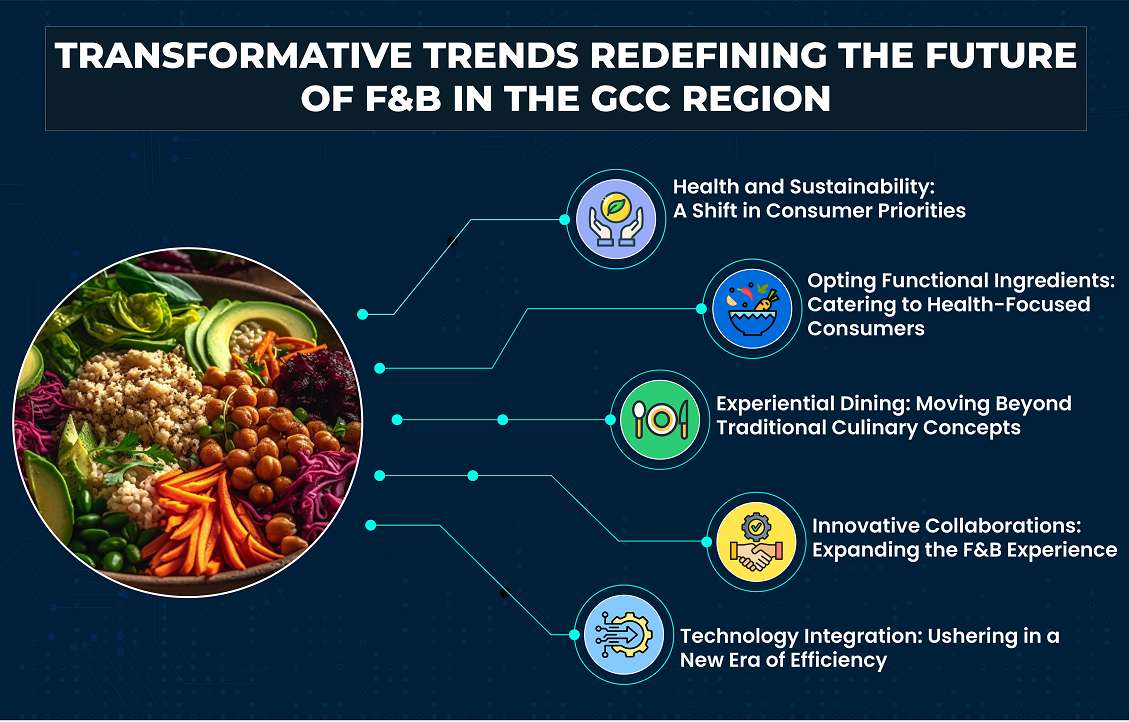
In an age driven by the pursuit of new experiences and culinary satisfaction, the diverse countries of the Gulf Cooperation Council (GCC) region are rising as standout destinations in the global Food & Beverage (F&B) landscape, experiencing impressive growth. This expansion is accompanied by emerging trends that are reshaping traditional F&B practices, pushing the industry to adapt swiftly to shifting demands. Let’s dive into the key trends transforming the future of F&B in the region and explore how businesses can gear up to thrive in this rapidly evolving market.
Consumers in the GCC region are increasingly prioritizing health and sustainability in their dining choices. A surge in demand for plant-based and alternative protein products is driving change across the industry. This shift reflects a growing interest in healthier, eco-friendly diets, with many diners seeking options that align with their values around environmental responsibility and wellness.
To keep pace with this trend, F&B businesses in the GCC are integrating a holistic approach to sustainability, implementing practices that encompass every aspect of their operations. This includes sourcing ingredients locally, minimizing food waste, and using eco-friendly packaging solutions.
In response to this shift, industry recognition has also evolved to reward businesses with strong sustainability practices. Such accolades motivate more establishments to prioritize green initiatives, create a culture of sustainability within the F&B industry, and build a reputation for ethical responsibility, appealing to the growing base of conscious consumers.
In addition to the rise of plant-based options, there is a growing demand for food products that offer health benefits beyond basic nutrition. Functional ingredients such as probiotics, adaptogens, and collagen are increasingly being incorporated into food and beverage offerings. These ingredients are popular among health-conscious consumers who seek not only great taste but also additional wellness benefits.
F&B businesses in the GCC region are adapting by introducing menus that feature these health-enhancing ingredients. This trend aligns with the broader shift towards preventative health measures and holistic well-being, making it an attractive option for restaurants looking to cater to a discerning clientele. By staying attuned to this demand, businesses can differentiate themselves and attract customers who prioritize wellness in their dining choices.
Experiential dining has become a keystone of the F&B industry in the GCC region. As consumers increasingly seek immersive and memorable experiences, restaurants are innovating to provide more than just good food. This trend has led to the rise of themed restaurants, interactive chef-led events, and multi-sensory dining experiences that engage all the senses.
These experiences go beyond traditional dining, creating a narrative that leaves a lasting impact on guests. Whether through visually stunning dish presentations, theatrical cooking displays, or pop-up culinary concepts, the emphasis is on providing a dining journey that stands out in a competitive market. For F&B businesses, this means an opportunity to differentiate their offerings and create deeper connections with customers through unique and engaging dining experiences.
One of the most exciting developments in the F&B industry is the trend of collaborations between food brands and other industries, such as fashion, retail, and art. These partnerships allow restaurants to create one-of-a-kind dining environments that combine culinary expertise with aesthetics and storytelling, offering guests a seamless blend of food and culture.
These collaborations can take the form of pop-up stores, branded events, or limited-edition product lines that resonate with customers on multiple levels. By blending different elements of design and brand identity, F&B establishments can attract a broader audience and elevate the overall customer experience. As this trend gains momentum, businesses that leverage cross-industry partnerships can create new revenue streams and enhance their brand image.
Technology is transforming the F&B industry, streamlining operations, and enhancing customer interactions. The adoption of digital solutions such as mobile ordering, delivery apps, and AI-driven menu recommendations is becoming pivotal for success in today’s competitive market. These technologies allow restaurants to not only deliver more personalized and convenient experiences but also introduce elevated food safety and quality management to ensure safe food for consumers.
Smart solutions for food supply chain management and automated systems are also gaining traction, offering F&B operators a way to improve efficiency and maintain consistency in food preparation. This not only helps reduce operating costs but also ensures a higher level of quality control. The use of technology extends to customer engagement as well, with digital loyalty programs and online reviews becoming critical tools for building a loyal customer base.
With the right strategies and tools in place, GCC food businesses can rightly move through the changing scenario of the F&B industry, offering consumers innovative, sustainable, and health-focused dining experiences. The future of the GCC’s food and beverage sector is bright, and Smart Food Safe is here to help you seize the opportunities that lie ahead.
As the F&B industry in the GCC region strives to keep up with the trends, business players in the field who take in state-of-the-art solutions to keep their food and beverage value chains running will find the process easy. Smart Food Safe looks forward to being a tech enabler that helps F&B operators stay ahead of the curve and efficiently deal with ongoing dynamic trends. Here’s how Smart Food Safe can serve as a valuable partner:
By partnering with Smart Food Safe, F&B businesses in the GCC region can effectively switch to the latest industry trends while maintaining operational excellence, assuring that your business is well-positioned for future growth and success.

 French
 Spanish
 Portuguese