


 English
▾
English
▾
English
▾
English
▾
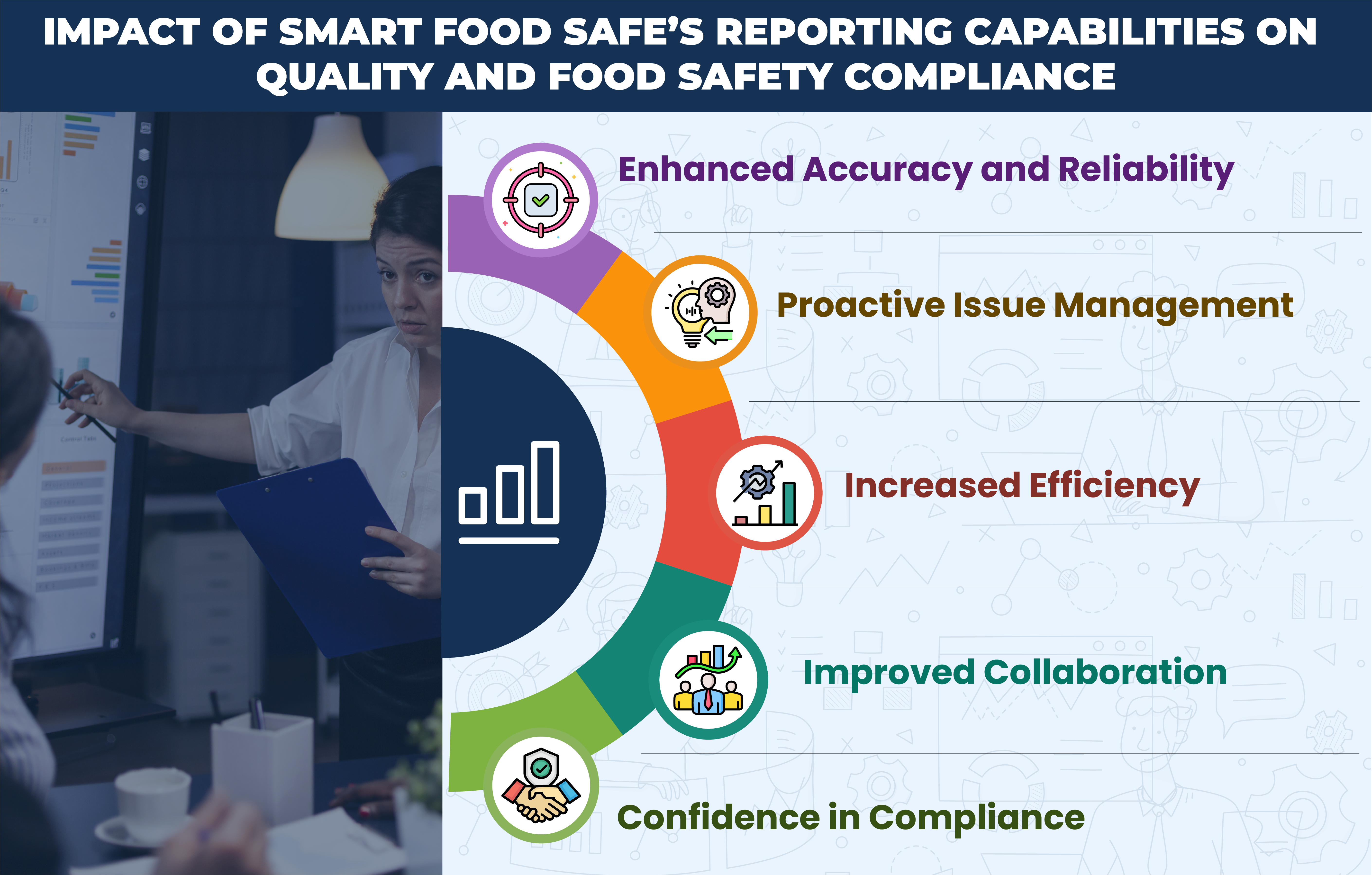
In the fast-paced and highly regulated world of food safety, the importance of accurate and efficient reporting cannot be overstated. Reporting serves as the backbone of compliance, enabling organizations to track, document, and communicate their adherence to industry standards and regulations. Yet, traditional reporting methods often fall short in the face of evolving challenges.
This is where Smart Food Safe come into the picture as a groundbreaking solution designed to revolutionize reporting in quality and food safety management. This article explores the critical role of reporting in food safety, the limitations of conventional methods, and how Smart Food Safe is reshaping the landscape to elevate compliance standards.
Reporting involving the systematic collection, analysis, and presentation of data, plays a pivotal role across various industries, providing insights into business performance, supporting decision-making, and ensuring compliance with regulations. Reporting is more than a mere administrative task; it is a fundamental component of quality and food safety management. Here’s why reporting is so important:
⇒ Regulatory Compliance: Compliance with food safety regulations is non-negotiable. Authorities like the FDA, USDA, and EFSA have stringent requirements that organizations must meet to ensure public health and safety. Detailed reports provide evidence that these standards are being met, reducing the risk of regulatory breaches and associated penalties.
⇒ Quality Assurance: Consistent and accurate reporting helps maintain high-quality standards. By documenting procedures, testing results, and corrective actions, organizations can ensure that quality control measures are effective and continuously improved.
⇒ Risk Management: Successful reporting identifies potential risks before they escalate into serious issues. Regular reports highlight trends and anomalies, allowing organizations to proactively address weaknesses in their food safety management systems.
⇒ Transparency and Accountability: Comprehensive reporting offers a clear record of safety practices, quality assessments, and corrective actions, ensuring that all stakeholders are informed and aligned. Transparent reporting builds trust with stakeholders, including customers, regulators, and internal teams. It demonstrates an organization’s commitment to food safety and quality, fostering confidence in its practices.
⇒ Facilitating Decision-Making: Data-driven decision-making is essential in maintaining high standards of food safety and quality. Reports generated from monitoring and quality control activities provide valuable insights that guide operational adjustments, driving strategic decisions that enhance overall food safety and quality management.
⇒ Supporting Continuous Improvement: Ongoing monitoring through regular reporting allows businesses to track key metrics, such as contamination rates and temperature controls, over time. By comparing current data against historical records and industry benchmarks, companies can identify strengths, uncover areas for improvement, and implement best practices.
⇒ Demonstrating Audit Readiness: Well-documented reports provide auditors with the necessary information to assess compliance and verify that safety practices are being followed. Effective reporting reduces the risk of non-conformances during audits and helps minimize potential penalties.
⇒ Traceability: In the event of a food safety incident, traceability is key to identifying the source and mitigating risks. Comprehensive reporting allows organizations to track the movement of products through the supply chain, making it easier to isolate and address potential issues.
Despite its significance, traditional reporting methods often present several challenges:
Explore Smart Food Safe’s advanced reporting solutions to empower your food business with tech-enabled functionalities to optimize food safety and quality reporting, and stay ahead in the competitive paradigm. Smart Food Safe addresses the limitations of traditional reporting by providing a robust, technology-driven solution designed to elevate compliance and streamline quality management processes. Here’s how Smart Food Safe reimagines reporting:
One of the key features of Smart Food Safe’s reporting is its ability to automate data collection and entry, eliminating the need for manual or paper-based data entry, reducing the risk of errors, and ensuring that all relevant information is available and up-to-date, evading the issues associated with data silos. This automation not only saves time but also enhances the reliability of the data, which is substantial for maintaining compliance.
Understanding that different organizations have unique reporting requirements, Smart Food Safe offers customizable reporting templates. These templates can be tailored to meet specific regulatory requirements, internal standards, and industry best practices. Customizable templates ensure that reports are aligned with the specific needs of each organization, making compliance management more efficient and effective.
Smart Food Safe provides real-time reporting capabilities, allowing quality and food safety professionals to access the most current data available. The platform provides real-time insights, allowing businesses to monitor safety metrics continuously and respond quickly to any emerging issues. Real-time reporting facilitates prompt identification of issues and trends, enabling organizations to take immediate corrective actions.
Smart Food Safe includes features for tracking compliance and generating alerts for potential issues depicted from reporting. Compliance tracking helps organizations stay on top of regulatory requirements and industry standards, while alerts provide timely notifications of any deviations or non-conformities.
The user-friendly interface of Smart Food Safe’s reporting makes it easy for quality and food safety professionals to navigate and utilize the reporting features. With intuitive design and straightforward functionality, users can quickly generate and review reports, analyze data, and take action based on insights. The ease of use contributes to more clear reporting processes and better overall user satisfaction.
As organizations grow and evolve, their reporting needs may change. Smart Food Safe offers scalability and adaptability to accommodate these changes. Whether an organization expands its operations, introduces new products, or faces changing regulatory requirements, Smart Food Safe can be adjusted to meet evolving needs, ensuring continued compliance and quality management.
Reporting in quality and food safety management is a critical function that directly impacts compliance and overall effectiveness. By leveraging the reporting capabilities of Smart Food Safe, organizations can achieve superior compliance, revamp their quality management processes, and ultimately ensure the highest standards of food safety. As the food industry continues to evolve, embracing innovative reporting solutions like Smart Food Safe will be the way forward for being a market leader.

 French
 Spanish
 Portuguese