


 English
▾
English
▾
English
▾
English
▾

The margin for error in any industry is razor-thin as even a single quality hiccup could lead to chaotic setbacks, costing time, money, and reputation. A strong quality event management (QEM) system can aid in neutralizing such quality events and your ticket to minimizing risks, maximizing productivity, and achieving excellence in enterprise operations.
Quality events are deviations from established standards or procedures that can occur at any stage of product development, manufacturing, or distribution. They act as red flags for potential quality issues, warranting close examination and often requiring remediation to avoid enforcement actions.
Different types of quality events exist that either threaten the safety or efficacy of a product or jeopardize the intended outcomes of a quality or manufacturing process.
Quality events can arise from various issues, including human error, inadequate procedures, equipment malfunctions, and supply chain disruptions. These events can impact materials, products, processes, personnel, or the quality management system (QMS) itself. The key types of quality events are:
Deviation: Occurs when there is a failure to follow a written procedure. Procedures for production and process controls must be drafted, reviewed, and approved by the relevant units and the quality control team.
Out-of-Specification (OOS): This happens when a product, process, service, or activity fails to meet pre-determined parameters. This includes failures in ongoing analyses, laboratory tests, finished products, devices, labels, or packages.
Non-Conformance: Refers to the failure to meet specified requirements. Defective materials or products that do not meet specifications are considered non-conforming and require appropriate actions, such as concession or rework, to avoid disposal.
Customer Complaint: Involves any communication alleging deficiencies related to a product’s identity, quality, durability, reliability, safety, or performance after distribution. These complaints are critical as they directly impact customer satisfaction.
Corrective Action/Preventive Action (CAPA): Necessary for addressing high-risk quality issues. CAPA identifies and mitigates root causes, preventing recurrence and future issues.
Reviews: Post-event reviews are crucial for assessing how the event was handled. These reviews target specific areas of the QMS and evaluate interrelations, ensuring that closed-loop quality has been achieved and operations are not disrupted.
Quality event management (QEM) involves developing and implementing structured workflows to identify, contain, investigate, resolve, and prevent multiple types of quality events. It requires coordinating various quality subsystems, processes, and personnel to ensure adequate management and resolution of these events.
The significance of QEM is attributed to two areas, namely, product quality and safety as well as regulatory compliance.
Impact on Product Quality and Safety
Regulatory Requirements and Compliance
The diverse components of a QEM are integral to harmonizing an enterprise quality management system (QMS), allowing for an end-to-end view of quality events and boosting visibility into the state of the organization’s quality health.
Boost your food business’s hygiene standards with Smart Food Safe’s tech-driven solutions—streamline 4C processes to yield optimal results, and ensure compliance effortlessly.

Boost your food business’s hygiene standards with Smart Food Safe’s tech-driven solutions—streamline 4C processes to yield optimal results, and ensure compliance effortlessly.
A QEM must comprise operations capable of managing the various quality event processes successfully. These include:
1. Event Detection & Evaluation
2.Investigation & Root Cause Analysis (RCA)
3. Execution of Corrective & Preventive Actions
4. Documentation & Reporting
Understanding the anatomy of implementing a QEM system, and capturing quality events properly is of utmost importance. FDA CFR 21 Sec. 820.100 mandates the establishment of corrective and preventive action as a quality system regulation, which evidently comes as a requisite for implementing a QEM system. Let’s have a look at the major steps necessary to set up a QEM system:
System Selection: Choose a QEM system that aligns with the organization’s requirements, ensuring it has features like event tracking, root cause analysis, corrective and preventive actions (CAPA), and reporting capabilities.
Configuration & Customization: Configure the QEM system to match the organization’s workflows and processes. Customize forms, fields, and workflows to capture the necessary data.
Integration: Integrate the QEM system with existing enterprise systems such as ERP, LIMS, and CRM to ensure seamless data flow and avoid duplication of efforts.
Training: Provide comprehensive training to all users to ensure they understand how to use the system effectively. This includes training on how to report events, perform investigations, and document actions taken.
Go Live: Roll out the QEM system across the organization in phases, if necessary, to ensure a smooth transition and allow for adjustments based on feedback.
Implementing a system is one thing, and constantly working to maintain and refine the processes is another. According to Mark Graban’s words, “Every action is an opportunity to improve,” demonstrating that each of these aforementioned stages could be augmented by well-suited optimization techniques to usher in continuous excellence in QEM.
Digital QMS offers a transformative approach to establishing a competent QEM system. Incorporating automation, analytics, and user-friendly interfaces in QEM empowers teams to proactively manage quality events, mitigate risks, and drive operational efficiency.
Automating QEM Processes: This involves using technology to streamline the process of tracking and managing quality events, such as defects or non-conformities. Automation helps reduce manual effort, increase accuracy, and ensure timely responses by setting up automated alerts, workflows, and documentation processes.
Ongoing Improvement and Feedback Loops: This emphasizes the importance of regularly reviewing and refining quality management practices. By implementing feedback loops, you can gather insights from quality events and use them to make iterative improvements.
Metrics and KPIs for Assessing QEM: Measuring the effectiveness of the QEM system with indicators, such as the number of events reported, resolution time, and recurrence rate, help in assessing performance, identifying trends, and making data-driven decisions to enhance quality management processes.
This integrated ecosystem enables insight-driven decisions, reduces cycle times, and improves end-to-end quality processes. In this way, embracing a digital QMS paves the way for more responsive, transparent, and impactful QEM, ensuring sustained organizational success in a competitive landscape.
Smart Food Safe’s quality management solution, Qualsmart.ai, stands out as the ultimate QEM tool due to its comprehensive, integrated approach to quality management. By addressing the multifaceted challenges associated with quality events, Smart Food Safe provides a robust platform that streamlines the entire process from detection and reporting to corrective and preventive actions (CAPA).
By leveraging automation functionalities, digital documentation and record-keeping, and real-time analytics, Smart Food Safe ensures early detection and prompt corrective actions within the QEM, reducing the risk of quality lapses and ensuring consistent product quality.
Moreover, Smart Food Safe’s digital QMS seamlessly integrates with existing enterprise systems, facilitating smooth data flow and eliminating redundancies. The user-friendly interface and training modules ensure that all personnel are adept at using the system, fostering a culture of continuous improvement. By automating routine processes and utilizing intuitive reporting and dashboards, Smart Food Safe empowers organizations to make data-driven decisions, enhancing overall operational efficiency.
Embrace Smart Food Safe’s digital QEM system to transform your quality management processes, achieve operational success, and secure a competitive edge in the industry.
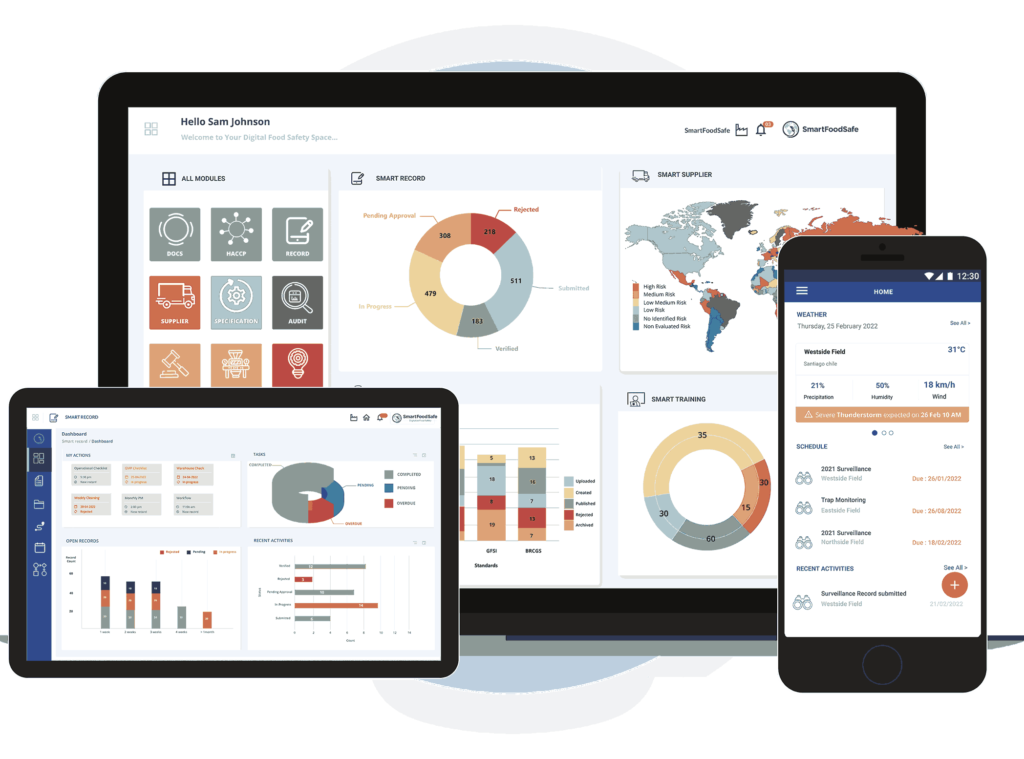
Stay out of the radar of adverse quality events by upgrading your quality processes with Smart Food Safe’s digital QEM solutions
The margin for error in any industry is razor-thin as even a single quality hiccup could lead to chaotic setbacks, costing time, money, and reputation. A strong quality event management (QEM) system can aid in neutralizing such quality events and your ticket to minimizing risks, maximizing productivity, and achieving excellence in enterprise operations.
Quality events are deviations from established standards or procedures that can occur at any stage of product development, manufacturing, or distribution. They act as red flags for potential quality issues, warranting close examination and often requiring remediation to avoid enforcement actions.
Different types of quality events exist that either threaten the safety or efficacy of a product or jeopardize the intended outcomes of a quality or manufacturing process.
Quality events can arise from various issues, including human error, inadequate procedures, equipment malfunctions, and supply chain disruptions. These events can impact materials, products, processes, personnel, or the quality management system (QMS) itself. The key types of quality events are:
Deviation: Occurs when there is a failure to follow a written procedure. Procedures for production and process controls must be drafted, reviewed, and approved by the relevant units and the quality control team.
Out-of-Specification (OOS): This happens when a product, process, service, or activity fails to meet pre-determined parameters. This includes failures in ongoing analyses, laboratory tests, finished products, devices, labels, or packages.
Non-Conformance: Refers to the failure to meet specified requirements. Defective materials or products that do not meet specifications are considered non-conforming and require appropriate actions, such as concession or rework, to avoid disposal.
Customer Complaint: Involves any communication alleging deficiencies related to a product’s identity, quality, durability, reliability, safety, or performance after distribution. These complaints are critical as they directly impact customer satisfaction.
Corrective Action/Preventive Action (CAPA): Necessary for addressing high-risk quality issues. CAPA identifies and mitigates root causes, preventing recurrence and future issues.
Reviews: Post-event reviews are crucial for assessing how the event was handled. These reviews target specific areas of the QMS and evaluate interrelations, ensuring that closed-loop quality has been achieved and operations are not disrupted.
Quality event management (QEM) involves developing and implementing structured workflows to identify, contain, investigate, resolve, and prevent multiple types of quality events. It requires coordinating various quality subsystems, processes, and personnel to ensure adequate management and resolution of these events.
The significance of QEM is attributed to two areas, namely, product quality and safety as well as regulatory compliance.
Impact on Product Quality and Safety
Regulatory Requirements and Compliance
The diverse components of a QEM are integral to harmonizing an enterprise quality management system (QMS), allowing for an end-to-end view of quality events and boosting visibility into the state of the organization’s quality health.
Boost your food business’s hygiene standards with Smart Food Safe’s tech-driven solutions—streamline 4C processes to yield optimal results, and ensure compliance effortlessly.
A QEM must comprise operations capable of managing the various quality event processes successfully. These include:
1. Event Detection & Evaluation
2.Investigation & Root Cause Analysis (RCA)
3. Execution of Corrective & Preventive Actions
4. Documentation & Reporting
Understanding the anatomy of implementing a QEM system, and capturing quality events properly is of utmost importance. FDA CFR 21 Sec. 820.100 mandates the establishment of corrective and preventive action as a quality system regulation, which evidently comes as a requisite for implementing a QEM system. Let’s have a look at the major steps necessary to set up a QEM system:
System Selection: Choose a QEM system that aligns with the organization’s requirements, ensuring it has features like event tracking, root cause analysis, corrective and preventive actions (CAPA), and reporting capabilities.
Configuration & Customization: Configure the QEM system to match the organization’s workflows and processes. Customize forms, fields, and workflows to capture the necessary data.
Integration: Integrate the QEM system with existing enterprise systems such as ERP, LIMS, and CRM to ensure seamless data flow and avoid duplication of efforts.
Training: Provide comprehensive training to all users to ensure they understand how to use the system effectively. This includes training on how to report events, perform investigations, and document actions taken.
Go Live: Roll out the QEM system across the organization in phases, if necessary, to ensure a smooth transition and allow for adjustments based on feedback.
Implementing a system is one thing, and constantly working to maintain and refine the processes is another. According to Mark Graban’s words, “Every action is an opportunity to improve,” demonstrating that each of these aforementioned stages could be augmented by well-suited optimization techniques to usher in continuous excellence in QEM.
Digital QMS offers a transformative approach to establishing a competent QEM system. Incorporating automation, analytics, and user-friendly interfaces in QEM empowers teams to proactively manage quality events, mitigate risks, and drive operational efficiency.
Automating QEM Processes: This involves using technology to streamline the process of tracking and managing quality events, such as defects or non-conformities. Automation helps reduce manual effort, increase accuracy, and ensure timely responses by setting up automated alerts, workflows, and documentation processes.
Ongoing Improvement and Feedback Loops: This emphasizes the importance of regularly reviewing and refining quality management practices. By implementing feedback loops, you can gather insights from quality events and use them to make iterative improvements.
Metrics and KPIs for Assessing QEM: Measuring the effectiveness of the QEM system with indicators, such as the number of events reported, resolution time, and recurrence rate, help in assessing performance, identifying trends, and making data-driven decisions to enhance quality management processes.
This integrated ecosystem enables insight-driven decisions, reduces cycle times, and improves end-to-end quality processes. In this way, embracing a digital QMS paves the way for more responsive, transparent, and impactful QEM, ensuring sustained organizational success in a competitive landscape.
Smart Food Safe’s quality management solution, Qualsmart.ai, stands out as the ultimate QEM tool due to its comprehensive, integrated approach to quality management. By addressing the multifaceted challenges associated with quality events, Smart Food Safe provides a robust platform that streamlines the entire process from detection and reporting to corrective and preventive actions (CAPA).
By leveraging automation functionalities, digital documentation and record-keeping, and real-time analytics, Smart Food Safe ensures early detection and prompt corrective actions within the QEM, reducing the risk of quality lapses and ensuring consistent product quality.
Moreover, Smart Food Safe’s digital QMS seamlessly integrates with existing enterprise systems, facilitating smooth data flow and eliminating redundancies. The user-friendly interface and training modules ensure that all personnel are adept at using the system, fostering a culture of continuous improvement. By automating routine processes and utilizing intuitive reporting and dashboards, Smart Food Safe empowers organizations to make data-driven decisions, enhancing overall operational efficiency.
Embrace Smart Food Safe’s digital QEM system to transform your quality management processes, achieve operational success, and secure a competitive edge in the industry.
Stay out of the radar of adverse quality events by upgrading your quality processes with Smart Food Safe’s digital QEM solutions
We Value your Privacy
We use cookies to enhance your browsing experience, serve personalized ads or content, and analyze our traffic. By clicking "Accept All", you consent to our use of cookies. Cookie Policy
Manage your cookie preferences below:
Essential cookies enable basic functions and are necessary for the proper function of the website.
 French
 Spanish
 Portuguese