There is profound irony in human civilization. We have built vast food safety systems, global supply chains, advanced laboratories, and complex regulations, yet much of the world’s food system still depends on a pollinator delicate enough to disappear into the palm of a hand.
The bee — nature’s most diligent worker and humanity’s most indispensable ally.
For centuries, bees have sustained biodiversity and agricultural abundance, requiring little more than thriving habitats and healthy ecosystems in return. Without pollinators, food systems would weaken silently through declining yields, shrinking biodiversity, and rising pressure on global food security.
Therefore, the decline of pollinators is not merely an environmental issue, but a growing threat to sustainable food systems. Bees are far beyond honey-makers; they are among the most essential contributors to global agriculture and food security. As they travel from flower to flower collecting nectar and pollen, they transfer pollen between plants, enabling fertilization and the fruit production that feeds us. Without this process, entire crop categories struggle to survive and reproduce. According to the Food and Agriculture Organization (FAO), pollinators support 35% of global crop production, contribute to 87 major food crops, and nearly 75% of crop plants depend on them at least partly, with pollination services valued at US$235–577 billion annually. The United Nations also confirms that over 75% of global food crops depend on pollinators, highlighting their critical role in food security, biodiversity, and sustainable agriculture. In early 2025, beekeepers reported an alarming situation while preparing hives for California’s almond pollination season. Many hives contained stored honey but very few bees, a pattern linked to Colony Collapse Disorder (CCD). ~62% Bees are essential for pollinating many foods like almonds, apples, berries, and vegetables. When bee colonies collapse: USDA researchers identify Varroa destructor mites as a key driver, as they are developing resistance to amitraz, a common treatment. These mites weaken bees and spread viruses like Deformed Wing Virus, leaving them unable to fly or forage. In simple terms, when bees cannot fly, they cannot feed or pollinate, which leads directly to reduced crop production and food insecurity. The loss of bees would not only reduce food production but also damage global nutrition security. According to the FAO, bee-pollinated crops are a major source of vitamins, minerals, and antioxidants that support a balanced diet. Without them, diets would shift heavily toward staple crops like rice, maize, and potatoes, which can survive without pollination but offer limited nutritional diversity. This would increase the risk of micronutrient deficiencies and “hidden hunger,” especially in vulnerable populations. The USDA notes that one in three bites of food depends on pollination, largely provided by bees. If this service declines, food systems would remain, but become far less nutritious and more uniform. In simple terms, the issue is not just food availability, but the loss of food quality and dietary balance worldwide. The global response to pollinator decline is rapidly evolving, with governments, researchers, and conservation groups accelerating efforts to protect bee populations and strengthen food security. In 2026, USDA-ARS researchers developed a targeted approach to combat amitraz-resistant Varroa mites, one of the biggest threats to honey bee survival. The method improves treatment effectiveness and could help reduce large-scale colony losses. USDA-ARS Research News, Feb 19, 2026 · By December 2026, all 27 EU member states are required to implement the EU Pollinator Monitoring Scheme (EU-PoMS), the first legally binding continent-wide system for monitoring wild pollinators. The initiative aims to reverse pollinator decline across Europe by 2030 through standardized, non-lethal tracking methods. European Commission Pollinators page · A landmark 2026 biotechnology review highlighted the growing role of: Researchers believe these technologies could transform large-scale pollinator protection and accelerate the development of disease-resistant bee populations. Ricigliano, Fine, Nicklisch et al., Trends in Biotechnology, Jan 2026 At Kew’s Wakehurst research estate in the UK, scientists are using AI cameras, acoustic sensors, and deep learning tools to monitor bee activity and pollinator health across natural landscapes without harming insects. Sussex Express / Kew Wakehurst, May 2026 · Research highlighted by the United Nations University explored the microbiomes of stingless bees, recognizing their growing importance in biodiversity, sustainable agriculture, and tropical food systems, while also exploring potential medical applications linked to antimicrobial resistance research. United Nations University (UNU-BIOLAC), World Bee Day 2026, May 20, 2026 A sustainable future is built through small actions repeated at scale. The story of the bee is ultimately the story of us. Their decline reflects how we farm, produce food, and care for the natural systems that sustain life. When bee populations fall, the impact reaches far beyond the environment. Farmers face weaker harvests and rising costs. Food supply chains become more vulnerable, crop diversity declines, and economies dependent on agriculture experience growing pressure. Over time, pollinator loss threatens food security, nutrition, livelihoods, and the resilience of global food systems. Yet there is still reason for hope. Across the world, scientists, farmers, policymakers, and communities are working together to protect pollinators through better farming practices, conservation efforts, technology, and awareness. The solutions exist, and every action taken today helps build a healthier and more sustainable food future for tomorrow.
Why Pollinators Are Essential to the Future of Global Food Systems
The 2025 Bee Crisis: What Happened and Why It Matters
Key Facts (2025)
of commercial bee colonies were lost between June 2024 and March 2025
1.6M+
hives lost — equivalent to over 1.6 million colonies
$600M
estimated total losses according to USDA
$428M
damage in California almond pollination alone
Sources:
Project Apis m. (Bee Loss Survey)
USDA Pollinator & Colony ReportsWhy It Matters
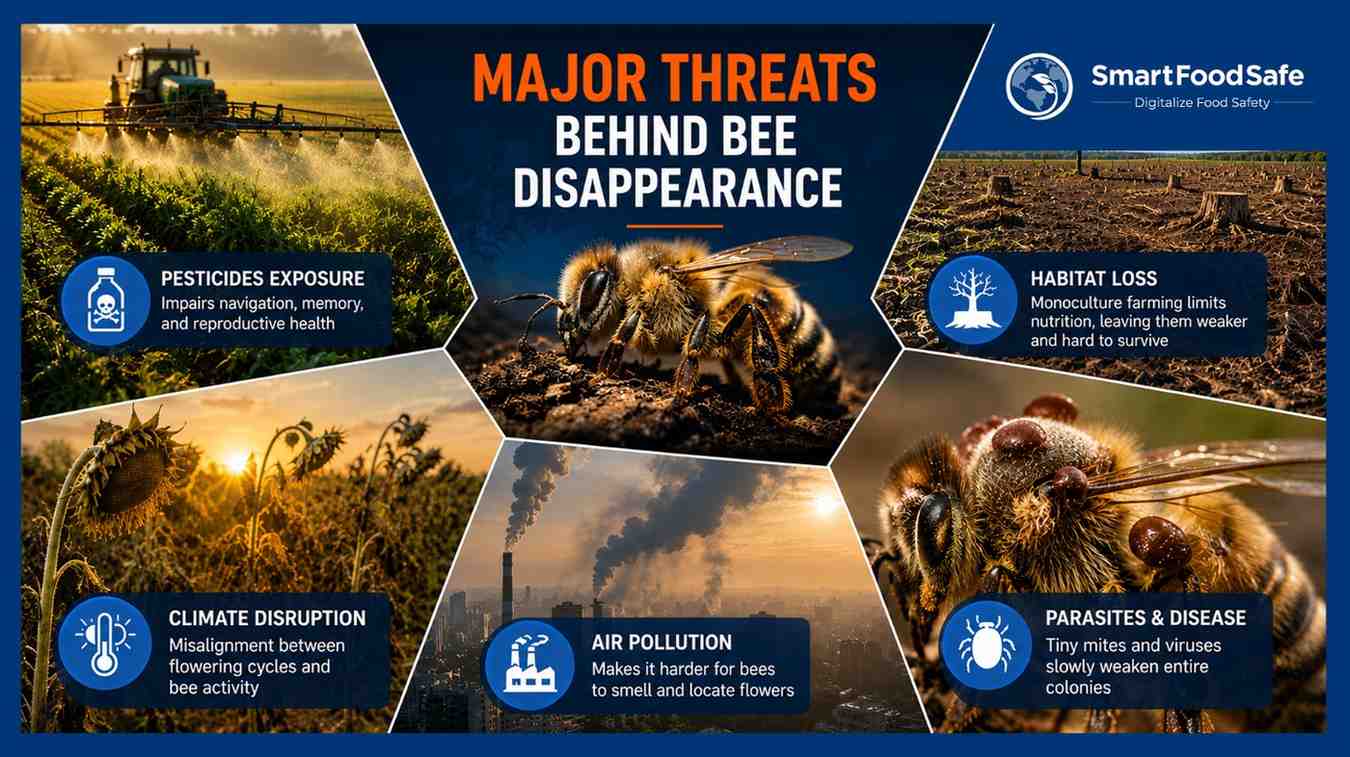
Key Threats Identified by FAO, USDA and Independent Research
A World Without Bees: The Hidden Nutritional Crisis in Food Security
The Path Forward: Global Actions Responding to the Bee Crisis (2026)
1. New Scientific Breakthroughs Against Varroa Mites
Journal of Apicultural Research, Feb 16, 20262. Europe Launches Its Biggest Pollinator Protection Law
CETAF Delegated Act, Dec 2025 ·
EPIC Project 2025–2026 ·
Biodiversity and Conservation, March 20263. AI, Biotechnology, and Smart Bee Conservation
4. AI and Bioacoustics Track Pollinators in Real Time
Legal and General / Kew partnership ·
Nature Unlocked at Wakehurst, Kew5. World Bee Day 2026 Expands Focus On Stingless Bee Microbiomes
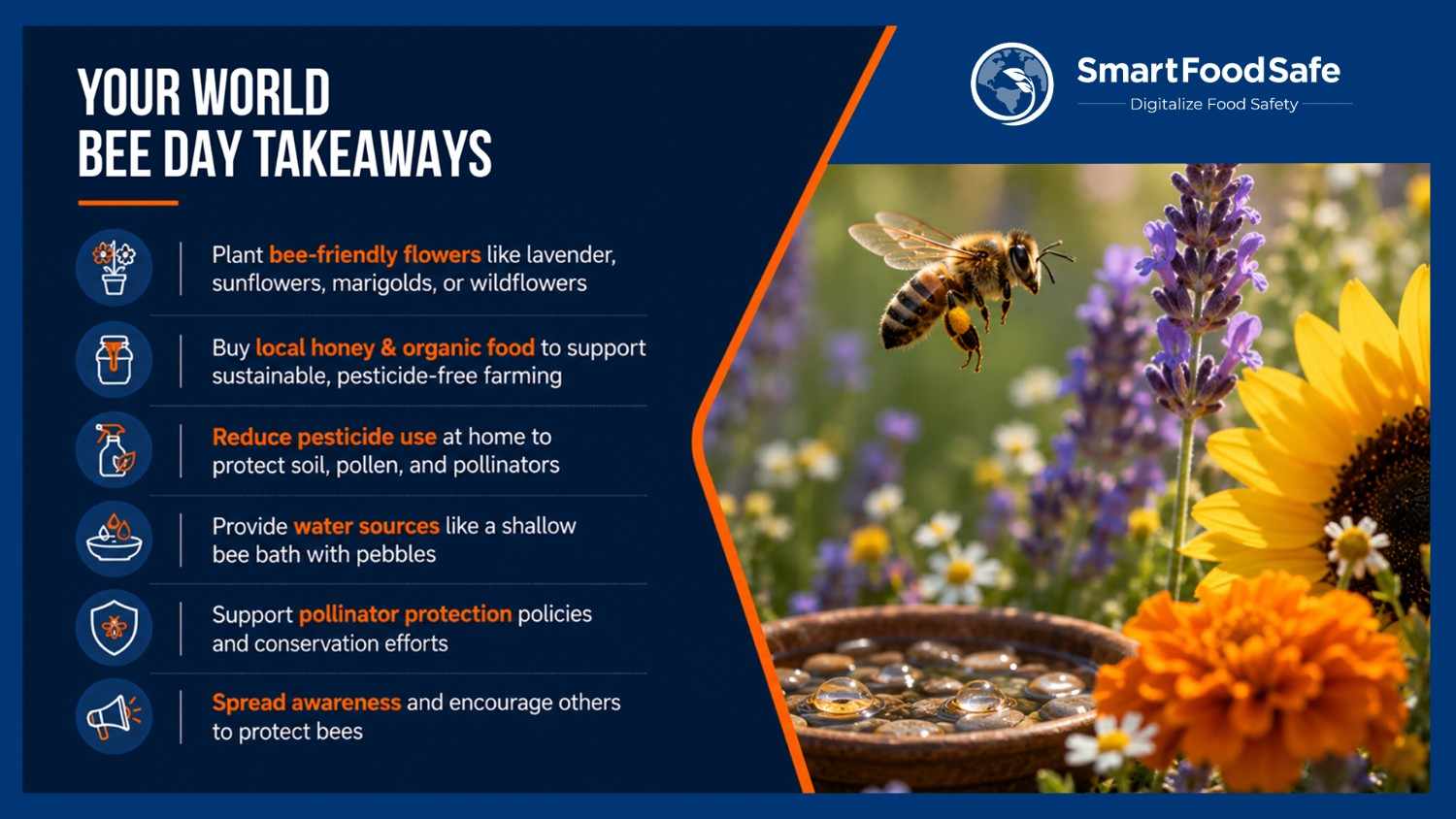
How You Can Contribute to Protecting Bees and Food Security