


HACCP Software
What is HACCP Software ?
HACCP is a systematic, preventive approach to food safety that identifies, evaluates, and controls potential hazards in the food production process. Recognized internationally, it ensures food safety from farm to table and is applicable to all food businesses, from small restaurants to large manufacturers.
Implementing HACCP reduces the risk of foodborne illnesses and ensures food safety. However, manual implementation is often complex and time-consuming.
HACCP Software to Simplify HACCP Compliance
Digital HACCP tools assist businesses in adhering to HACCP principles and food safety regulations, which are essential for businesses of all sizes. These tools streamline the identification and prevention of potential hazards throughout food production.
History of HACCP Software
Initially deployed in the space program, HACCP has been adapted to various industries, including aerospace, automotive, electronics, and food and beverage. Traditional HACCP systems involved cumbersome paper records and disparate data collection, leading to inefficiencies. Modern HACCP software addresses these issues by providing a more streamlined and proactive approach to managing food safety.
How HACCP Software Works
HACCP software offers features that enhance the implementation and management of HACCP plans:
- HACCP Plan Creation and Management: Customize HACCP plans to fit specific needs and operations.
- Monitoring and Recording: Track critical control points in the food production process.
- Corrective Action Management: Facilitate corrective actions when critical control points fall outside acceptable limits.
- Reporting and Documentation: Generate compliance reports and maintain necessary documentation.
- Audit Trails: Maintain records of all user activities and changes for audit purposes.
- Integrations: Connect with other food safety systems like temperature monitoring and supplier management.
Who Benefits from HACCP Software?
- Food and Beverage Manufacturers – Enhance safety, comply with regulations, and optimize critical control points.
- Retail Food Establishments – Ensure food safety during preparation, storage, and serving.
- Food Distributors – Maintain safety and compliance during transportation.
- Food Service Providers – Implement HACCP across various operations, including restaurants and catering.
- Food Laboratories – Automate data collection and analysis for compliance.
- Government Agencies – Improve oversight and enforcement of food safety regulations.
- HACCP Consultants – Aid clients in maintaining effective food safety programs.
Advantages of Utilizing HACCP Software
- Enhanced Food Safety
Automates tasks to ensure consistency and reduce human error
- Streamlined Compliance
Simplifies recordkeeping, task management, and reporting
- Improved Efficiency and Productivity
Facilitates data sharing and real-time updates, improving team collaboration
- Data-Driven Insights
Provides actionable data to optimize HACCP plans and reduce waste
- Cost Savings
Reduces food waste and administrative burden, improving the bottom line
- Enhanced Traceability
Tracks data throughout production, enabling swift corrective actions
- Improved Communication and Collaboration
Centralizes information sharing among team members and regulatory authorities
- Reduced Risk of Foodborne Illnesses
Proactively addresses hazards, protecting consumers and brand reputation
Choosing the Right HACCP Software
When selecting HACCP software, it is essential to ensure that the software meets your specific HACCP requirements to maintain compliance with food safety standards. Balancing the features and functionalities with your budget is crucial to finding a cost-effective solution that provides value without overspending. Look for user-friendly interfaces to minimize training time, making it easier for your team to adopt and use the system effectively. Additionally, choose software that can grow with your business to accommodate future expansions, ensuring long-term scalability. Compatibility with your existing systems is another critical factor, as seamless integration will streamline your workflows and enhance overall efficiency.
Data security is paramount, so select software with robust security features to protect sensitive food safety information from unauthorized access. Look for providers that offer comprehensive training and ongoing support to ensure successful implementation and continued assistance when needed. Comprehensive reporting and analytics tools are essential for tracking food safety performance and identifying areas for improvement. Opt for software that can be accessed from any device, providing mobile accessibility for real-time monitoring and corrective actions. Finally, ensure that the software can function without internet access, maintaining operational continuity in remote locations or areas with unreliable connectivity.
Implementing the right HACCP software can significantly enhance food safety operations, streamline compliance, and improve overall efficiency and productivity.
Dispense Your Age-Old Paper-Based HACCP System With Smart HACCP
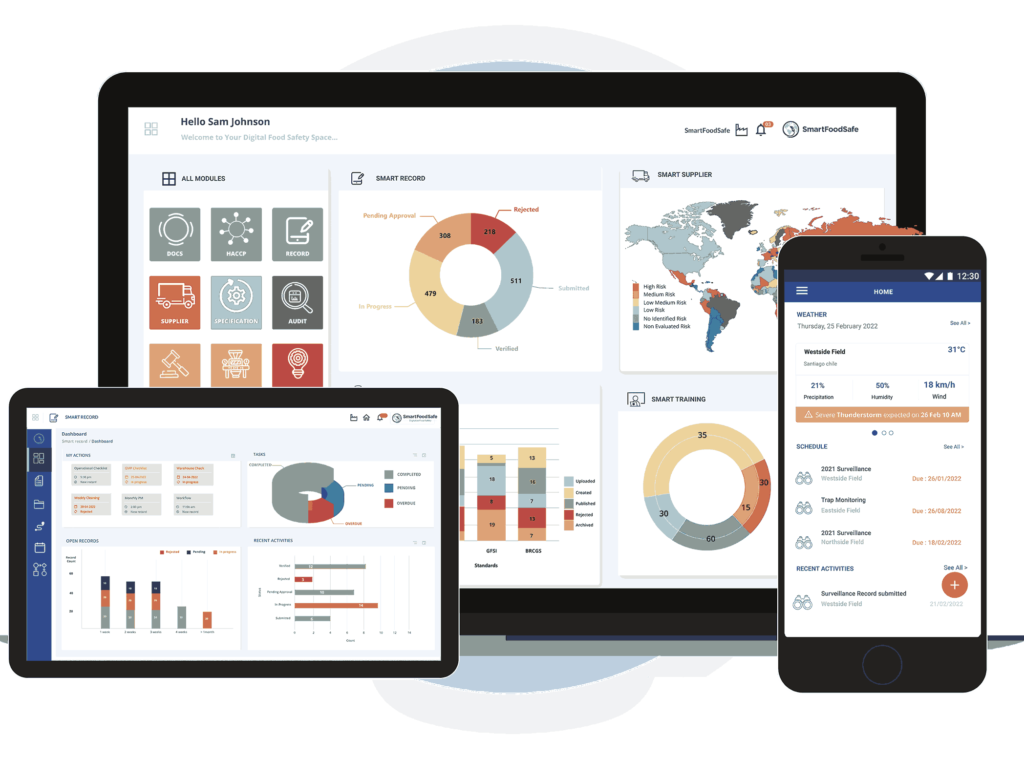
Smart HACCP is a food safety management software that automates the detection and management of food safety hazards, replacing cumbersome paper documentation with a robust digital HACCP plan. This affordable, user-friendly tool helps food companies optimize their HACCP systems by identifying and establishing critical control points (CCP) or preventive control points (PCP) using built-in risk assessment models. The application includes smart features such as hazard analysis templates, customizable risk matrices, and drag-and-drop chart components to create detailed process flow diagrams, along with notification capabilities and workflow management.
https://www.youtube.com/watch?v=TrO_69dT0rs
Receive Quality Management Updates
Subscribe Today!
What is HACCP Software ?
HACCP is a systematic, preventive approach to food safety that identifies, evaluates, and controls potential hazards in the food production process. Recognized internationally, it ensures food safety from farm to table and is applicable to all food businesses, from small restaurants to large manufacturers.
Implementing HACCP reduces the risk of foodborne illnesses and ensures food safety. However, manual implementation is often complex and time-consuming.
HACCP Software to Simplify HACCP Compliance
Digital HACCP tools assist businesses in adhering to HACCP principles and food safety regulations, which are essential for businesses of all sizes. These tools streamline the identification and prevention of potential hazards throughout food production.
History of HACCP Software
Initially deployed in the space program, HACCP has been adapted to various industries, including aerospace, automotive, electronics, and food and beverage. Traditional HACCP systems involved cumbersome paper records and disparate data collection, leading to inefficiencies. Modern HACCP software addresses these issues by providing a more streamlined and proactive approach to managing food safety.
How HACCP Software Works
HACCP software offers features that enhance the implementation and management of HACCP plans:
- HACCP Plan Creation and Management: Customize HACCP plans to fit specific needs and operations.
- Monitoring and Recording: Track critical control points in the food production process.
- Corrective Action Management: Facilitate corrective actions when critical control points fall outside acceptable limits.
- Reporting and Documentation: Generate compliance reports and maintain necessary documentation.
- Audit Trails: Maintain records of all user activities and changes for audit purposes.
- Integrations: Connect with other food safety systems like temperature monitoring and supplier management.
Who Benefits from HACCP Software?
- Food and Beverage Manufacturers – Enhance safety, comply with regulations, and optimize critical control points.
- Retail Food Establishments – Ensure food safety during preparation, storage, and serving.
- Food Distributors – Maintain safety and compliance during transportation.
- Food Service Providers – Implement HACCP across various operations, including restaurants and catering.
- Food Laboratories – Automate data collection and analysis for compliance.
- Government Agencies – Improve oversight and enforcement of food safety regulations.
- HACCP Consultants – Aid clients in maintaining effective food safety programs.
Advantages of Utilizing HACCP Software
- Enhanced Food Safety
Automates tasks to ensure consistency and reduce human error
- Streamlined Compliance
Simplifies recordkeeping, task management, and reporting
- Improved Efficiency and Productivity
Facilitates data sharing and real-time updates, improving team collaboration
- Data-Driven Insights
Provides actionable data to optimize HACCP plans and reduce waste
- Cost Savings
Reduces food waste and administrative burden, improving the bottom line
- Enhanced Traceability
Tracks data throughout production, enabling swift corrective actions
- Improved Communication and Collaboration
Centralizes information sharing among team members and regulatory authorities
- Reduced Risk of Foodborne Illnesses
Proactively addresses hazards, protecting consumers and brand reputation
Choosing the Right HACCP Software
When selecting HACCP software, it is essential to ensure that the software meets your specific HACCP requirements to maintain compliance with food safety standards. Balancing the features and functionalities with your budget is crucial to finding a cost-effective solution that provides value without overspending. Look for user-friendly interfaces to minimize training time, making it easier for your team to adopt and use the system effectively. Additionally, choose software that can grow with your business to accommodate future expansions, ensuring long-term scalability. Compatibility with your existing systems is another critical factor, as seamless integration will streamline your workflows and enhance overall efficiency.
Data security is paramount, so select software with robust security features to protect sensitive food safety information from unauthorized access. Look for providers that offer comprehensive training and ongoing support to ensure successful implementation and continued assistance when needed. Comprehensive reporting and analytics tools are essential for tracking food safety performance and identifying areas for improvement. Opt for software that can be accessed from any device, providing mobile accessibility for real-time monitoring and corrective actions. Finally, ensure that the software can function without internet access, maintaining operational continuity in remote locations or areas with unreliable connectivity.
Implementing the right HACCP software can significantly enhance food safety operations, streamline compliance, and improve overall efficiency and productivity.
Dispense Your Age-Old Paper-Based HACCP System With Smart HACCP
Smart HACCP is a food safety management software that automates the detection and management of food safety hazards, replacing cumbersome paper documentation with a robust digital HACCP plan. This affordable, user-friendly tool helps food companies optimize their HACCP systems by identifying and establishing critical control points (CCP) or preventive control points (PCP) using built-in risk assessment models. The application includes smart features such as hazard analysis templates, customizable risk matrices, and drag-and-drop chart components to create detailed process flow diagrams, along with notification capabilities and workflow management.
https://www.youtube.com/watch?v=TrO_69dT0rs