


What is CAPA ?
What is CAPA?
CAPA stands for Corrective Action and Preventive Action, a vital aspect of quality management systems in various industries, including food processing, medical device development, pharmaceuticals, and more. CAPA aims to enhance an organization’s processes to mitigate undesirable situations such as product nonconformities.
Corrective Action (CA) vs. Preventive Action (PA)
Corrective Action (CA)
Definition
- Elimination of the cause or causes of an existing nonconformity or undesirable situation to prevent recurrence.
Process
- Involves identifying the root cause following a nonconformity report, documenting the problem, and implementing solutions to eliminate the cause.
Nature
- Reactive; addresses issues after they occur to prevent future recurrence.
Preventive Action (PA)
Definition
- Identification and elimination of the cause(s) of potential nonconformities to prevent their occurrence.
Process
- Includes assessing potential risks, implementing controls to mitigate these risks, and ensuring continuous monitoring and improvement.
Nature
- Proactive; focuses on preventing issues before they happen.
Despite being lumped together in the same abbreviation, CA and PA are distinct processes. While CA is reactive, addressing problems that have already occurred, PA is proactive, seeking to prevent issues from arising in the first place. Ideally, preventive actions precede corrective actions to minimize the need for the latter.
Importance of CAPA
CAPA is crucial for maintaining quality and compliance in various industries. Standards like ISO 9000 and FDA 21 CFR 820 require documented CAPA procedures, particularly in the medical device manufacturing sector. CAPA processes also align with methodologies such as Six Sigma and PDCA (Plan-Do-Check-Act), emphasizing continuous improvement and learning from past experiences to prevent future issues.
Phases in the CAPA Process
A robust CAPA process consists of several key phases:
- Problem Identification and CAPA Initiation: Documenting and detailing the problem at hand.
- Risk Evaluation: Assessing the severity of the problem to prioritize resolution efforts.
- Investigation Procedure Preparation: Outlining the investigation approach to understand the issue better.
- Root Cause Analysis: Identifying the exact cause of the nonconformity.
- Corrective/Preventive Action Implementation: Implementing measures to resolve the issue and prevent recurrence.
- Verification of Implementation and Effectiveness: Ensuring the solutions are effective and adjusting as necessary.
- Closure and Follow-ups: Confirming the problem is resolved and documenting the process for future reference.
Applications of CAPA
CAPA principles are applicable across various disciplines, including:
- Manufacturing
- Product Design
- Testing Verification and Validation
- Distribution, Shipping, Transport, and Packaging
In particular, the food processing, medical device development, and pharmaceutical industries rely heavily on CAPA to ensure product safety and regulatory compliance.
Software Solutions for CAPA
The complexity and detail involved in CAPA processes make software solutions invaluable. These platforms can track updates, manage documentation, and maintain audit trails required for compliance with regulations such as FDA’s GMP (Good Manufacturing Practice), GLP (Good Laboratory Practice), and GCP (Good Clinical Practice). Features like online templates, automated workflows, and centralized repositories ensure that authorized users can easily access and manage the necessary documents and information, supporting efficient and effective CAPA implementation.
Get an Upper Hand on Your Enterprise’s CAPA Management With Smart Food Safe’s Smart CAPA
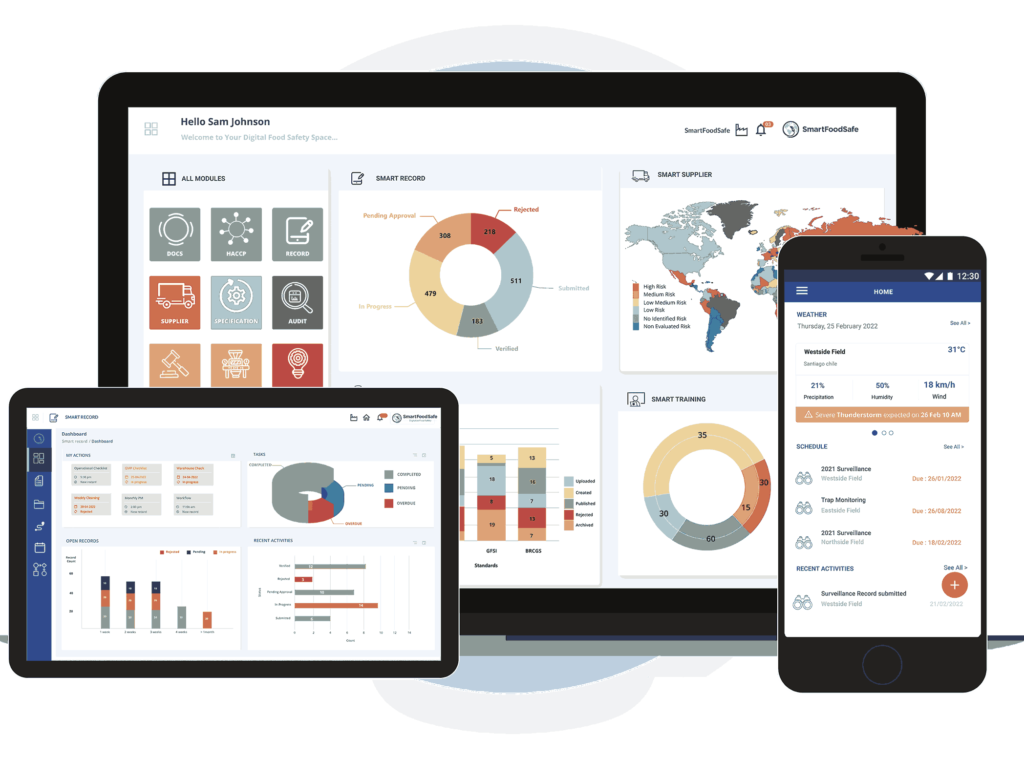
Smart CAPA is an efficient corrective and preventive action management software solution to streamline and automate the management of Complaints, Holds, and Deviations within an organization. It provides a systematic approach to identifying, investigating, and resolving issues or non-conformities while also proactively implementing measures to prevent their recurrence.
Smart CAPA Key Features:
- CAPA Management: Identify, anticipate, and correct defects and nonconformances that prevent your products or services from meeting customer requirements through the timely execution of appropriate corrective and preventive actions
- Manage Complaints, CAPA, Holds & Deviations: Pave the way to efficient tracking, resolution, and documentation of customer complaints, corrective and preventive actions (CAPA), product holds, and deviations, ensuring effective quality management and regulatory compliance
- Investigation & Root Cause Analysis: Implement a thorough investigation and root cause analysis of issues as the most significant part of a CAPA practice in the quality management system to enable users to identify underlying causes and execute appropriate corrective actions for sustained quality improvement
- Non-compliance Management: Organize identification, documentation, and resolution of any deviations from regulatory requirements, internal policies, or quality standards by properly planning the resolution activity, defining and implementing the action plan
- Reporting and Trend Analysis: Offers wide-ranging data analysis, graphical visualization, and trending capabilities, enabling organizations to identify patterns, monitor performance, and make data-driven decisions for ongoing enhancement in quality and compliance.
https://www.youtube.com/watch?v=TrO_69dT0rs
Receive Quality Management Updates
Subscribe Today!
What is CAPA?
CAPA stands for Corrective Action and Preventive Action, a vital aspect of quality management systems in various industries, including food processing, medical device development, pharmaceuticals, and more. CAPA aims to enhance an organization’s processes to mitigate undesirable situations such as product nonconformities.
Corrective Action (CA) vs. Preventive Action (PA)
Corrective Action (CA)
Definition
- Elimination of the cause or causes of an existing nonconformity or undesirable situation to prevent recurrence.
Process
- Involves identifying the root cause following a nonconformity report, documenting the problem, and implementing solutions to eliminate the cause.
Nature
- Reactive; addresses issues after they occur to prevent future recurrence.
Preventive Action (PA)
Definition
- Identification and elimination of the cause(s) of potential nonconformities to prevent their occurrence.
Process
- Includes assessing potential risks, implementing controls to mitigate these risks, and ensuring continuous monitoring and improvement.
Nature
- Proactive; focuses on preventing issues before they happen.
Despite being lumped together in the same abbreviation, CA and PA are distinct processes. While CA is reactive, addressing problems that have already occurred, PA is proactive, seeking to prevent issues from arising in the first place. Ideally, preventive actions precede corrective actions to minimize the need for the latter.
Importance of CAPA
CAPA is crucial for maintaining quality and compliance in various industries. Standards like ISO 9000 and FDA 21 CFR 820 require documented CAPA procedures, particularly in the medical device manufacturing sector. CAPA processes also align with methodologies such as Six Sigma and PDCA (Plan-Do-Check-Act), emphasizing continuous improvement and learning from past experiences to prevent future issues.
Phases in the CAPA Process
A robust CAPA process consists of several key phases:
- Problem Identification and CAPA Initiation: Documenting and detailing the problem at hand.
- Risk Evaluation: Assessing the severity of the problem to prioritize resolution efforts.
- Investigation Procedure Preparation: Outlining the investigation approach to understand the issue better.
- Root Cause Analysis: Identifying the exact cause of the nonconformity.
- Corrective/Preventive Action Implementation: Implementing measures to resolve the issue and prevent recurrence.
- Verification of Implementation and Effectiveness: Ensuring the solutions are effective and adjusting as necessary.
- Closure and Follow-ups: Confirming the problem is resolved and documenting the process for future reference.
Applications of CAPA
CAPA principles are applicable across various disciplines, including:
- Manufacturing
- Product Design
- Testing Verification and Validation
- Distribution, Shipping, Transport, and Packaging
In particular, the food processing, medical device development, and pharmaceutical industries rely heavily on CAPA to ensure product safety and regulatory compliance.
Software Solutions for CAPA
The complexity and detail involved in CAPA processes make software solutions invaluable. These platforms can track updates, manage documentation, and maintain audit trails required for compliance with regulations such as FDA’s GMP (Good Manufacturing Practice), GLP (Good Laboratory Practice), and GCP (Good Clinical Practice). Features like online templates, automated workflows, and centralized repositories ensure that authorized users can easily access and manage the necessary documents and information, supporting efficient and effective CAPA implementation.
Get an Upper Hand on Your Enterprise’s CAPA Management With Smart Food Safe’s Smart CAPA
Smart CAPA is an efficient corrective and preventive action management software solution to streamline and automate the management of Complaints, Holds, and Deviations within an organization. It provides a systematic approach to identifying, investigating, and resolving issues or non-conformities while also proactively implementing measures to prevent their recurrence.
Smart CAPA Key Features:
- CAPA Management: Identify, anticipate, and correct defects and nonconformances that prevent your products or services from meeting customer requirements through the timely execution of appropriate corrective and preventive actions
- Manage Complaints, CAPA, Holds & Deviations: Pave the way to efficient tracking, resolution, and documentation of customer complaints, corrective and preventive actions (CAPA), product holds, and deviations, ensuring effective quality management and regulatory compliance
- Investigation & Root Cause Analysis: Implement a thorough investigation and root cause analysis of issues as the most significant part of a CAPA practice in the quality management system to enable users to identify underlying causes and execute appropriate corrective actions for sustained quality improvement
- Non-compliance Management: Organize identification, documentation, and resolution of any deviations from regulatory requirements, internal policies, or quality standards by properly planning the resolution activity, defining and implementing the action plan
- Reporting and Trend Analysis: Offers wide-ranging data analysis, graphical visualization, and trending capabilities, enabling organizations to identify patterns, monitor performance, and make data-driven decisions for ongoing enhancement in quality and compliance.
https://www.youtube.com/watch?v=TrO_69dT0rs